For decades, automotive enthusiasts clung to a simple truth: bigger engines mean better performance. The mantra of “no replacement for displacement” echoed through garages and racetracks, celebrating the raw power of V8s. But the landscape has shifted. Today, Mercedes-AMG’s turbocharged four-cylinder engine, the M139, is proving that raw displacement is no longer the sole determinant of speed.
The Rise of the M139: A New Standard
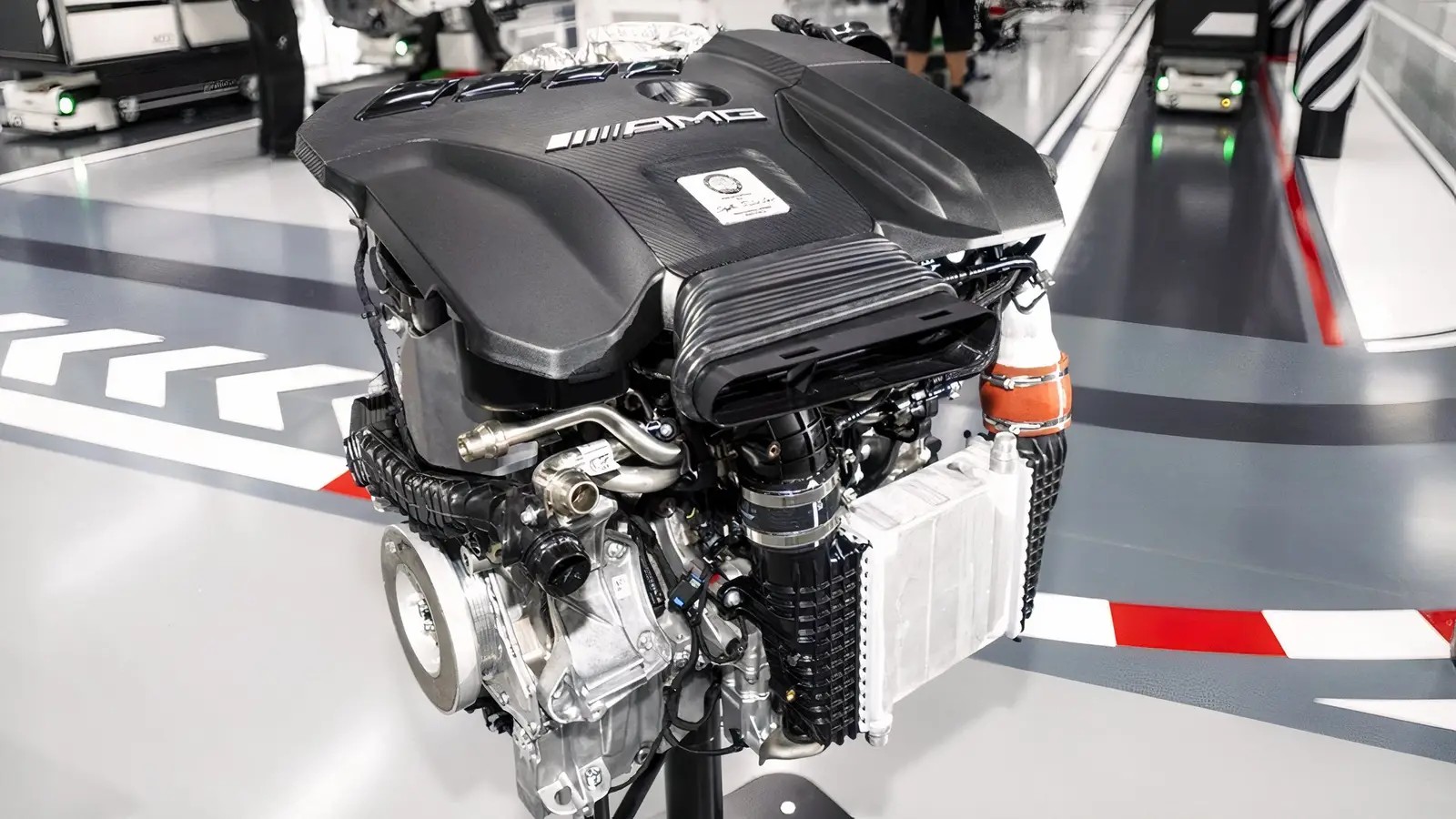
Introduced in 2019, the M139 quickly became the world’s most powerful production four-cylinder, initially producing 416 horsepower from a modest 2.0-liter displacement. Since then, continuous development has pushed its capabilities even further. The latest hybrid variants now deliver an astonishing 671 horsepower – a figure that rivals many traditional V8 engines. This isn’t just incremental improvement; it’s a fundamental shift in how performance is achieved.
The M139’s success isn’t just about peak numbers. At over 209 horsepower per liter of displacement, it redefines efficiency, extracting maximum power from a smaller package. The engine isn’t just about brute force but about maximizing every cubic centimeter.
Engineering Excellence: The “One Man, One Engine” Philosophy
Mercedes-AMG takes pride in its meticulous manufacturing process. Each M139 is hand-built by a single technician in the Affalterbach plant, culminating in a plaque bearing the builder’s signature. This “One Man, One Engine” philosophy ensures that every unit meets the highest standards of quality and performance.
This isn’t just branding; it’s a commitment to precision. The factory uses a specialized “driverless transport system” that moves the engine and tools with the technician, allowing for continuous, uninterrupted assembly. It’s a process designed to maintain consistency and pride in every engine produced.
Performance on the Track: Numbers Speak Louder Than Cylinders
The M139’s performance translates directly to real-world acceleration. In the Mercedes-AMG CLA 45 S, the 416-horsepower variant launches the car to 60 mph in around four seconds. With the hybrid system adding an extra 255 horsepower, the C 63 S Performance achieves the same feat in just 3.3 seconds, with a quarter-mile time of 11.2 seconds.
These numbers aren’t just fast; they’re competitive with many V8-powered rivals. The C 63 S E-Performance outpaces the Jaguar F-TYPE SVR (3.5 seconds to 60 mph) and even the Dodge Challenger SRT Hellcat Redeye Widebody (3.6 seconds). The GLC 63 S E-Performance, despite its larger size, hits 60 mph in 3.5 seconds, establishing itself as one of the quickest hybrid four-cylinder SUVs available.
Beyond Mercedes-AMG: A Broader Impact
The M139’s influence extends beyond Mercedes-AMG. The 2026 Lotus Emira also features an AMG-sourced 2.0-liter four-cylinder, demonstrating the engine’s versatility and demand. Even with less power (360 horsepower), the Lotus Emira sprints to 60 mph in just 4.3 seconds, proving that the M139’s core technology can thrive in different applications.
The Future of Performance
The M139 challenges the long-held belief that displacement is king. While some enthusiasts may still prefer the sound and feel of a V8, the engine’s raw performance numbers are undeniable. The M139’s success suggests that turbocharging, hybridization, and precision engineering can deliver power once reserved for much larger engines.
The automotive world is at a crossroads. The “no replacement for displacement” adage may soon become a relic of the past. Mercedes-AMG’s M139 proves that sometimes, less truly is more.