


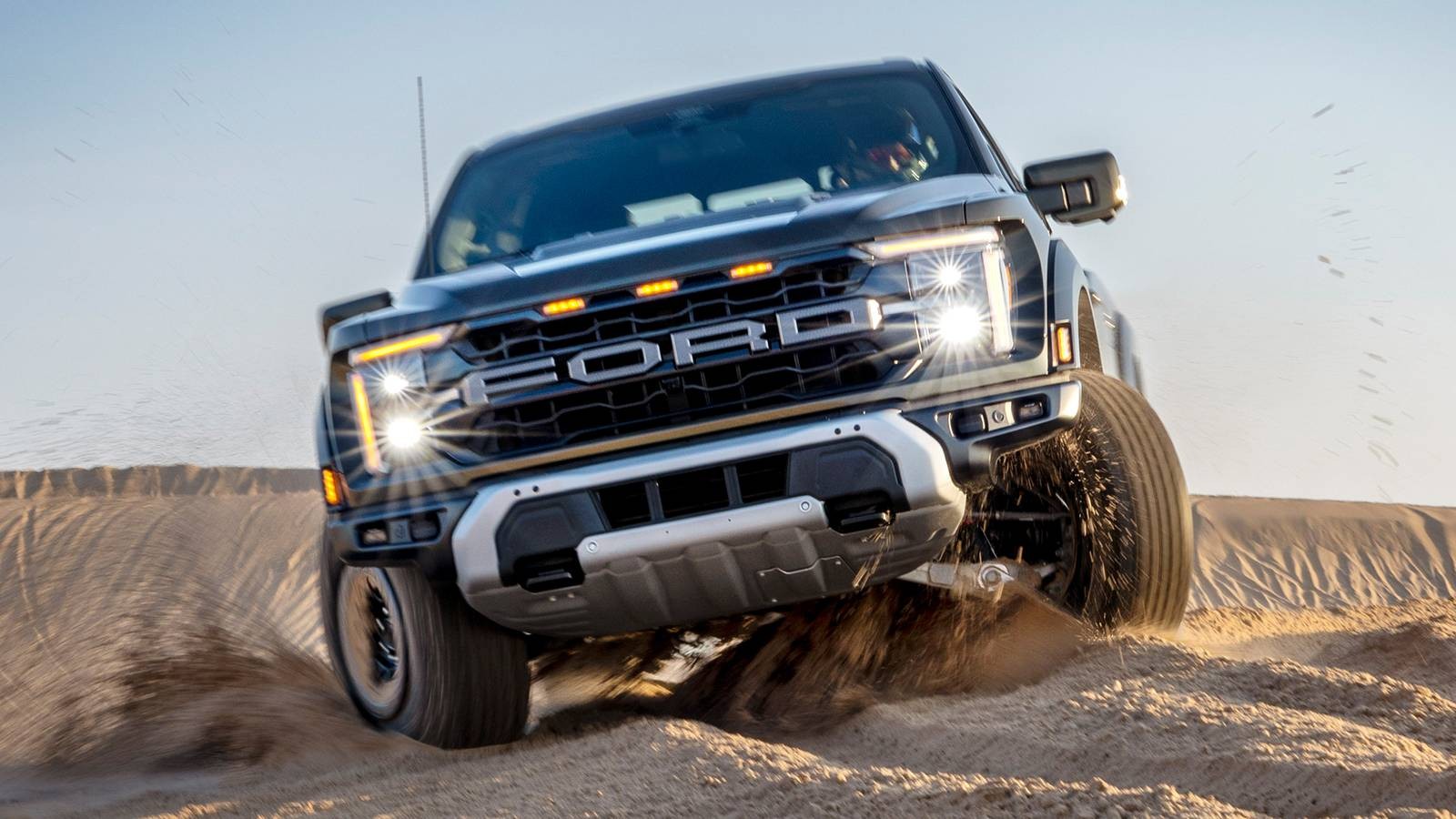
Ford has long been a leader in off-road vehicle design, starting with the original Bronco in 1966 and culminating in today’s high-performance Raptor and Bronco Raptor models. The Raptor line reshaped the pickup truck segment in 2010, blending capability with on-road comfort. While each generation has improved, the differences in performance are significant. This ranking breaks down how each Raptor and the Bronco Raptor stack up in terms of raw off-road prowess.
Early Steps: The First Generation Raptor (2010)
The original 2010 Ford F-150 SVT Raptor was groundbreaking for its time, but by modern standards, its technology is dated. Equipped with a 6.2-liter V8 engine producing 434 lb-ft of torque, it relied on its size and FOX Racing 2.5-inch shocks to absorb impacts. Its off-road “tech” was limited to a throttle response adjustment for traction control, making it an analog experience by today’s standards. Despite this, the Raptor’s wide stance and durable hardware proved its capability.
The Second Generation: Aluminum & Active Shocks (2017)
The 2017 F-150 Raptor marked a major overhaul. Weight was reduced by 500 pounds through military-grade aluminum construction, increasing agility. FOX shocks were upgraded to active damping, adjusting 500 times per second, and wheel travel increased by two inches. The addition of Baja mode with turbo anti-lag and a 10-speed transmission further improved performance. This model represented a substantial leap forward in off-road tech.
Modern Suspension: Coil Springs & Advanced Sensors (2021)
The 2021 F-150 Raptor introduced a five-link rear coil suspension with 24-inch trailing arms, eliminating the common leaf spring axle hop. This improved traction and comfort on rough terrain. The FOX 3.1-inch shocks incorporated steering angle, throttle position, and flight sensors for real-time damping adjustments. One-pedal climbing using just the accelerator made tackling obstacles easier.
Power & Refinement: The Raptor R (2023+)
The Raptor R brought a significant power boost with a 5.2-liter supercharged V8 engine, initially at 700 horsepower and later upgraded to 720 for 2024. Strengthened differentials, an improved 10-speed transmission, and 37-inch tires complemented the increased power. The shocks were further advanced for a smoother ride. While not a revolutionary upgrade, it pushed performance higher.
Desert Endurance: The Shelby Baja Trim (2024)
The 2024 Shelby Baja Raptor addressed the Raptor R’s overheating issues in extreme conditions. Upgraded cooling systems allowed for sustained high-speed off-roading without computer throttling. Baja-spec lighting, including amber modes and long-range spotlights, enhanced visibility in dusty environments. An optional 900-horsepower upgrade kit pushed the boundaries of performance further.
The Ultimate All-Rounder: The Bronco Raptor (2022)
The 2022 Ford Bronco Raptor stands out as the most capable off-road vehicle in this lineup. Its compact size provides superior approach and departure angles, allowing it to tackle terrain the larger F-150 Raptors cannot. Pivot tech, rock crawl mode, Baja mode, and high-performance HOSS suspension with FOX 3.1 Live Valve shocks deliver unparalleled versatility. The Bronco Raptor excels in both high-speed jumps and tight woodland trails, making it the most well-rounded off-road machine.
In conclusion: Ford’s Raptor and Bronco models represent a continuous evolution of off-road performance. While the F-150 Raptors prioritize power and speed, the Bronco Raptor’s agility and versatile technology make it the ultimate all-terrain vehicle. Each generation has built upon the last, but the Bronco Raptor’s superior geometry and intelligent features give it a decisive edge in real-world off-road scenarios.


