


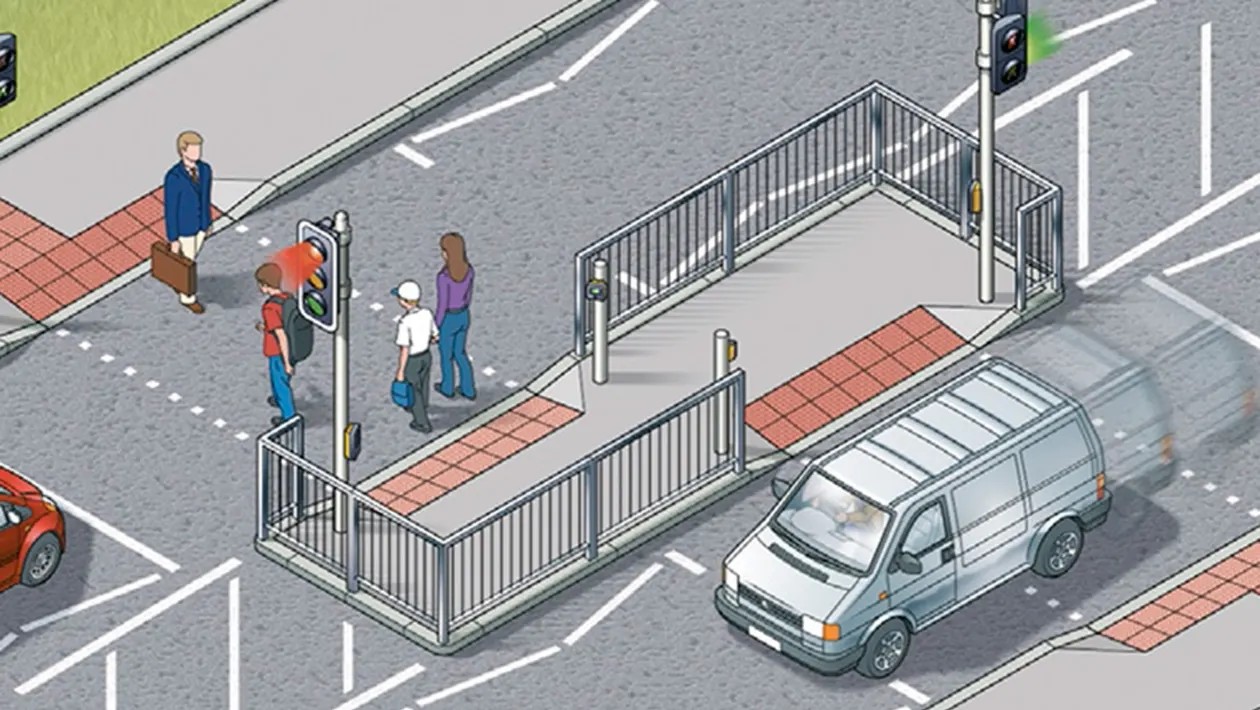
Staggered pedestrian crossings are designed to make wider, busier roads safer for people walking. These crossings use a central refuge island—a raised area in the middle of the road—to split the crossing into two stages. This approach reduces wait times for both pedestrians and drivers, and helps prevent traffic congestion.
Why Staggered Crossings Matter
Staggered crossings are most common on dual-carriageway roads, where pedestrians have to cross multiple lanes of traffic. Without them, crossing can be dangerous and slow. The island provides a safe spot to pause between crossing each half of the road.
How They Work for Pedestrians 🚶
Using a staggered crossing is straightforward, but requires two separate steps:
- Press the “WAIT” button for the first set of lights and cross to the central island.
- Once on the island, press the “WAIT” button again for the second set of lights and complete the crossing.
Important: Each set of lights operates independently. Don’t assume they are synchronized, and always wait for a clear green signal before proceeding.
What Drivers Need to Know 🚗
Staggered crossings can include different types of controlled crossings—Pelican (push-button operated), Puffin (pedestrian user-friendly intelligent crossing), or Toucan (for cyclists and pedestrians). The rules vary accordingly:
- Pelican crossings: Proceed cautiously on a flashing amber light only if all pedestrians have cleared the road.
- High-speed roads: Be extra vigilant as staggered crossings on faster roads will have warning signs. Maintain a safe stopping distance and reduce your speed.
Staggered crossings are a practical solution for safely navigating wider roads, but require awareness from both pedestrians and drivers. By understanding how they operate, everyone can contribute to safer road use.


