For four decades, the BMW M3 has defined the high-performance compact sedan. Starting as a homologation special for touring car racing in 1986, it has evolved into a cultural touchstone, setting the standard for luxury automakers aiming to blend track prowess with daily drivability. The M3’s journey hasn’t been smooth—bigger engines, more doors, and increasingly competitive rivals have all shaped its identity. Here’s a breakdown of each generation, from its origins to its modern form.
E30 M3 (1986–1991): The Foundation
The original M3 was born from necessity: BMW needed 5,000 road-legal cars to qualify for Group A touring car racing. The result was a stripped-down 3 Series with a high-revving 2.3-liter four-cylinder engine producing 192-197 horsepower (depending on the market, with US models detuned for catalytic converters). Its aggressive suspension, borrowed braking components from the 5 Series, and flared wheel arches set it apart.
The E30 M3 wasn’t just fast; it dominated racing, winning championships in World Touring Car, BTCC, and DTM. Critics praised its handling and engine, while modern enthusiasts celebrate its raw, unfiltered driving experience—a stark contrast to today’s refined performance cars. Its legacy is undeniable; it normalized the idea of a high-performance compact sedan, paving the way for countless imitators.
E36 M3 (1992–1999): The Six-Cylinder Shift
The E36 M3 marked a significant change with its smooth 3.0-liter straight-six engine. Output ranged from 240 to 282 horsepower, depending on the region. For the first time, an M3 was available as a sedan or with an automatic transmission, signaling a move towards broader appeal.
Despite the evolution, the E36 retained a focus on performance, with reviews highlighting its potent powertrain and exceptional handling. Yet, it often gets overlooked as the “forgotten” M3—not as revered as its predecessor or successor. Its understated design and relative affordability make it a solid choice for enthusiasts seeking classic BMW dynamics without breaking the bank.
E46 M3 (2000–2006): The Fan Favorite
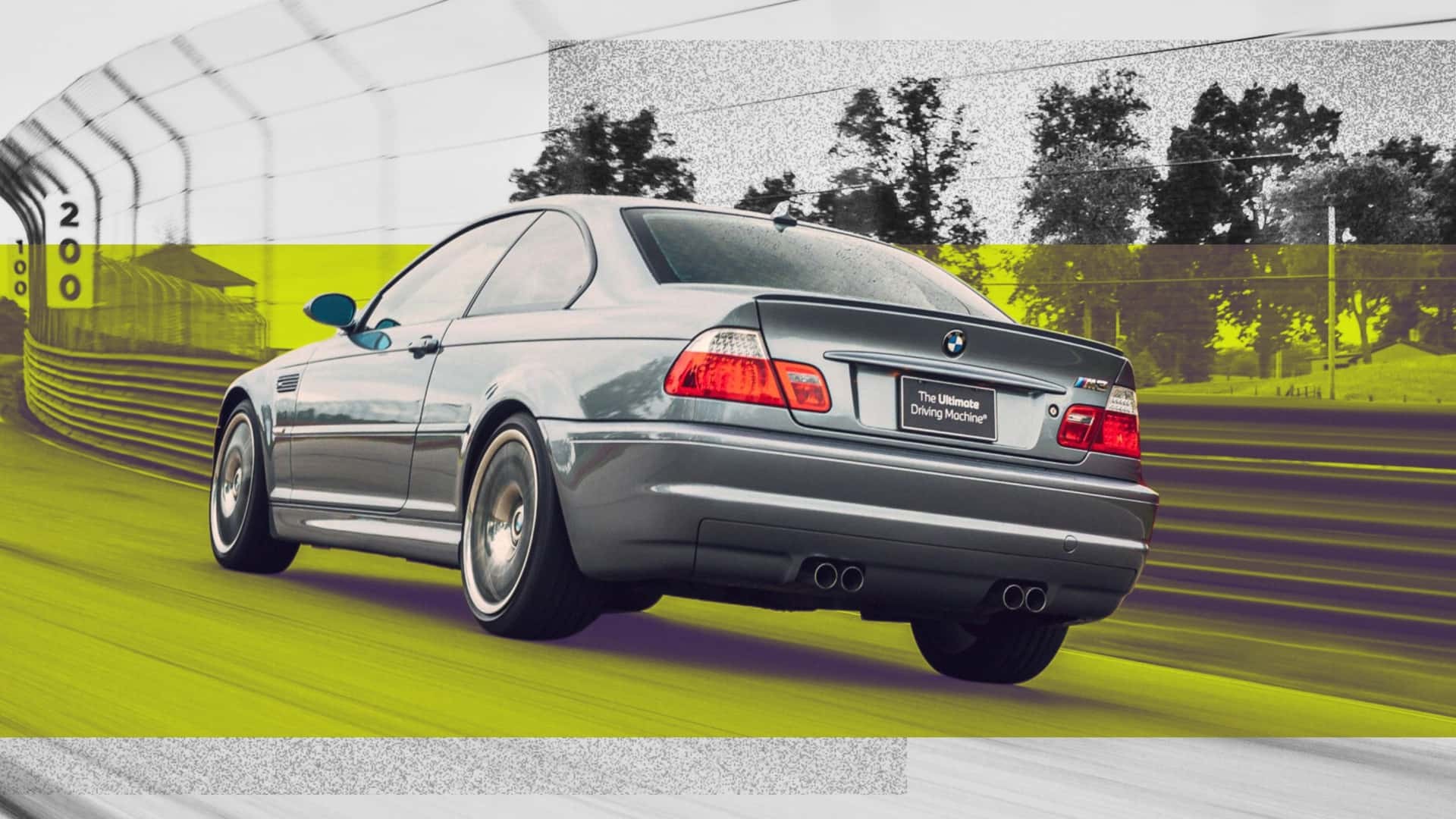
Many enthusiasts consider the E46 M3 the pinnacle of the lineage. Powered by a 3.2-liter S54 straight-six producing 333 horsepower, it was widely praised for its balanced handling, precise steering, and exhilarating engine. The E46 was available as a coupe or convertible, though a station wagon prototype never made production.
The M3 CSL, a track-focused variant, further cemented the E46’s reputation. With a 355-horsepower engine, reduced weight, and aggressive aero, it set a benchmark for performance in its era. Today, the E46 is universally recognized as an all-time great, transcending its badge to become a symbol of driving purity.
E90 / E92 / E93 M3 (2007–2013): The V8 Era
The E9x M3 introduced a 4.0-liter V8 engine, producing 414 horsepower and revving to 8,300 rpm. This marked the highest displacement engine ever used in an M3. The generation also saw the return of the sedan body style, alongside the coupe (E92) and convertible (E93).
The V8 M3 retained BMW’s focus on refinement, with features like a carbon fiber roof and adjustable dampers. While it didn’t reach the same cult status as the E46, it remains a popular choice among enthusiasts, offering a blend of power, luxury, and track capability.
F80 / F82 / F83 M3 (2014–2018): The Turbocharged Transition
The F80 M3 marked a controversial shift with the introduction of a twin-turbocharged 3.0-liter straight-six. Output ranged from 425 to 493 horsepower in the Competition models. Electric power steering and the renaming of the two-door version to M4 further divided opinions.
Despite the purist backlash, the F80 delivered strong performance, with the turbo engine providing ample power and responsiveness. The M4 GTS, a track-focused variant, pushed boundaries with a 493-horsepower engine and aggressive aero. While not universally loved, the F80 M3 remains a capable and reliable track weapon.
G80 / G82 / G83 / G81 M3 (2021–Present): The Modern Machine
The current G80 M3 continues the turbocharged evolution with another twin-turbo 3.0-liter straight-six, now producing up to 543 horsepower in Competition guise. The controversial front-end styling has sparked debate, but the underlying performance remains impressive.
The G80 offers all-wheel drive for the first time and introduces a production wagon version (M3 Touring). Modern reviews praise its balance of power, handling, and daily drivability, solidifying its position as a benchmark in the high-performance compact sedan segment.
The M3’s journey illustrates a relentless pursuit of performance and refinement. From its humble racing origins to its modern turbocharged form, the M3 has evolved while retaining its core identity: a driver-focused machine that continues to push boundaries.