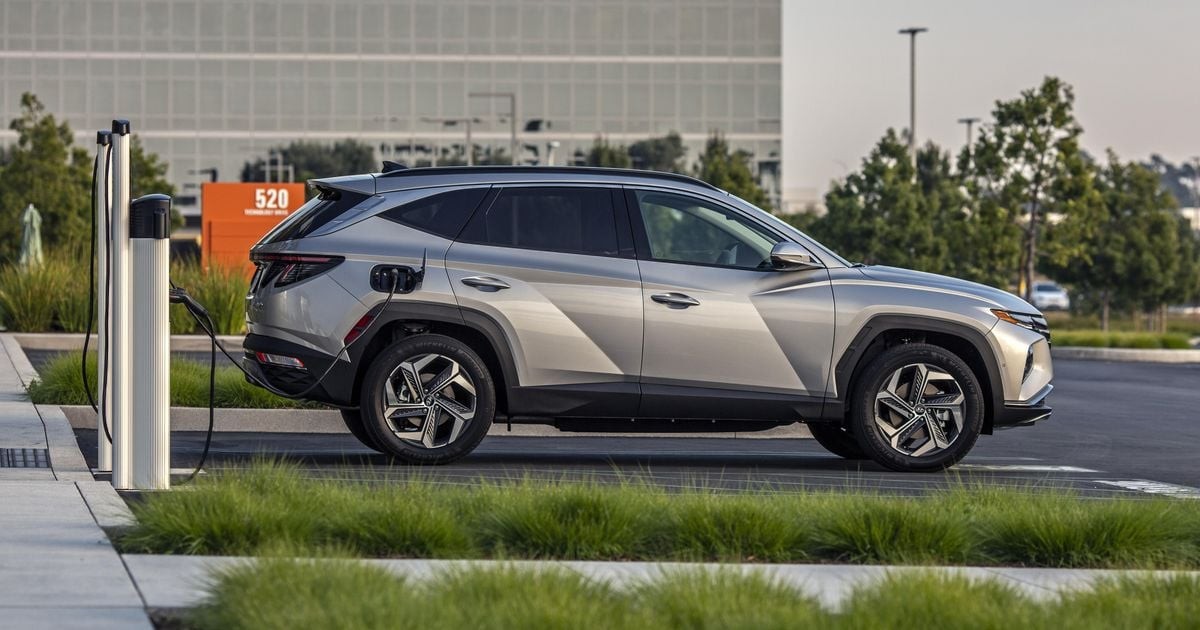
Hyundai Australia is carefully evaluating whether to introduce plug-in hybrid (PHEV) versions of its popular Tucson and Santa Fe SUVs, despite strong growth in the Australian PHEV market. The company’s product planning manager, Tim Rodgers, expressed uncertainty over consumer willingness to pay a premium for PHEV technology.
Market Trends and Pricing Concerns
PHEV sales in Australia surged by 130.9% in 2025, reaching 53,484 units—roughly half of all electric vehicle (EV) sales. This growth is largely driven by cheaper Chinese brands like BYD and GWM Haval, which are flooding the market with competitively priced PHEV models.
Hyundai is hesitant because PHEVs typically command higher prices than standard hybrids. Rodgers noted that current market offerings often price PHEVs at the same level as hybrids, raising questions about whether customers are choosing the technology itself or simply the price point.
“We mapped out and studied what a plug-in hybrid price walk would be above our hybrids, and I’m not really sure if customers are ready for that yet, the way we would have to offer it.” – Tim Rodgers, Hyundai Australia Product Development Manager
Regulatory Pressure and Emission Standards
The looming New Vehicle Efficiency Standard (NVES) is also a key consideration. The NVES CO2 cap for passenger vehicles will tighten progressively, reducing to 92g/km by 2027. PHEVs, particularly the Santa Fe, could help Hyundai meet these standards by lowering average CO2 emissions. The Kia Sorento PHEV, for instance, emits just 37g/km of CO2 compared to 129g/km for the hybrid version.
The current Tucson and Santa Fe hybrid models already exceed the 2026 cap (121g/km for Tucson Hybrid), adding further pressure to consider lower-emission PHEV alternatives.
Hyundai’s Strategy and Competition
Hyundai’s global PHEV lineup includes the Tucson and Santa Fe, but the company is prioritizing hybrids for the next 12-18 months, following a successful 2025 where it ranked second in sales behind Toyota.
The brand’s leadership has openly stated ambitions to dominate sales charts, suggesting PHEVs could be crucial for reaching a rapidly expanding customer base if pricing can be optimized.
The bottom line: Hyundai is watching the market closely, assessing whether customers will pay extra for PHEV technology, while also factoring in regulatory changes that incentivize lower-emission vehicles. The decision will likely hinge on balancing profitability with compliance and competitive pressures from Chinese brands.