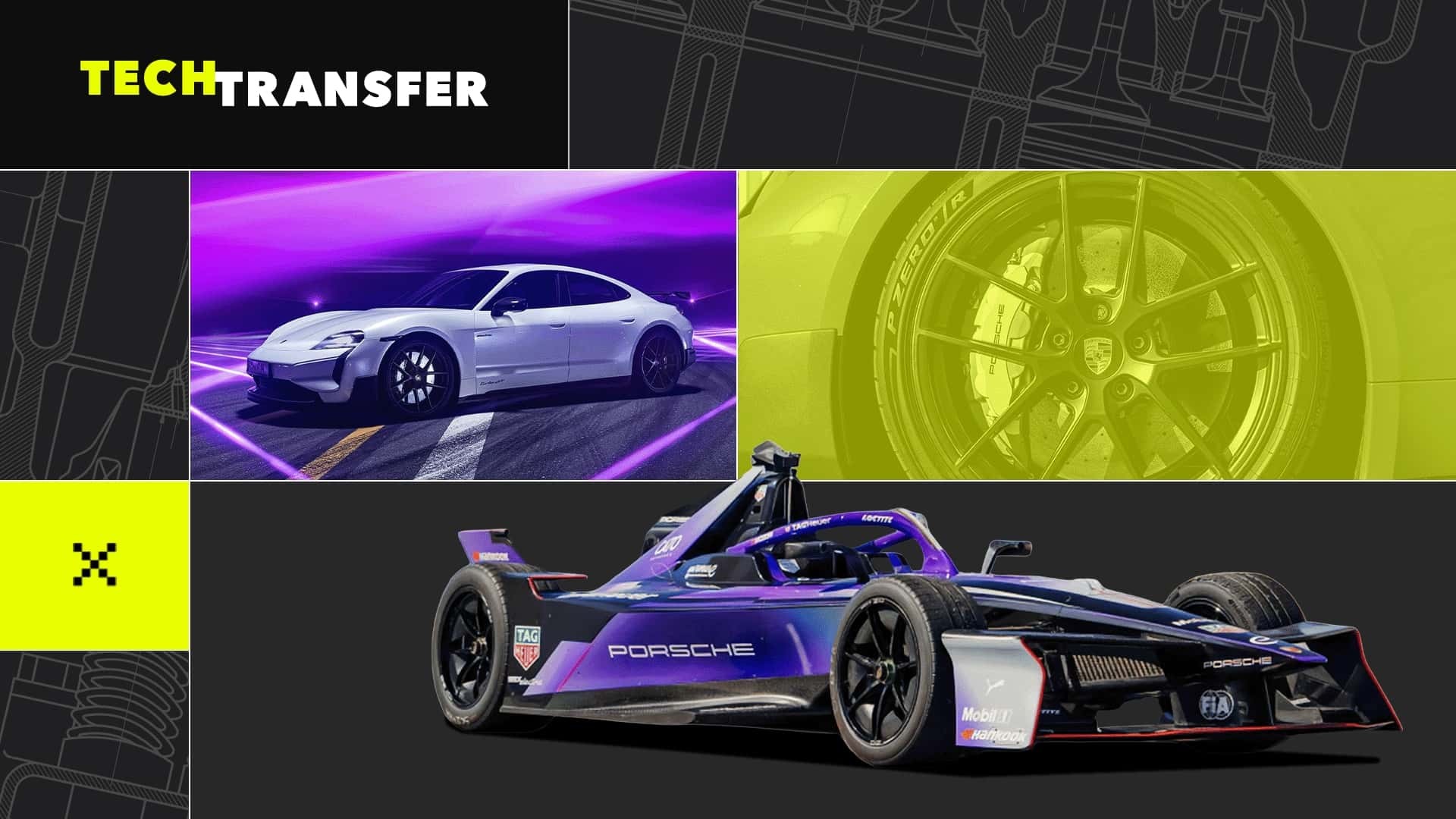
For over seven decades, motorsports have functioned as the ultimate proving ground for automotive engineering. What begins as a relentless pursuit of speed on the track inevitably filters down into the cars consumers drive every day. Now, that principle is being aggressively applied to electric vehicles (EVs), with Porsche leading the charge.
The brand’s deep involvement in Formula E isn’t just about trophies; it’s about rapid technological development. Since entering the series in 2019, Porsche has secured multiple championships, leveraging the competition to refine EV technology that directly benefits its road cars.
The Power of Regeneration: A Breakthrough in Energy Recovery
One of Porsche’s most significant Formula E advancements lies in energy recuperation. Current Gen 3 race cars can recover up to 600 kilowatts of energy during braking – more than double the initial 265 kilowatts in the first Taycan and exceeding the latest Macan EV’s 240 kilowatts.
This system is so efficient that, on many tracks, hydraulic brakes are almost entirely redundant. As Porsche Formula E Team Principal Florian Modlinger explains, “During normal driving, only the hydraulic brakes on the front axle are active… On the rear, you have no brake disc, no brake caliper. That’s only an emergency brake.”
This isn’t just a racing advantage; it translates directly to road-legal vehicles. The upcoming 2026 Cayenne Electric will feature the same 600 kW regenerative braking capacity, allowing for increased energy recovery and reduced wear on conventional brakes. Modlinger notes, “The more recuperation you have, the smaller you can build your batteries with the same range.”
Balancing Efficiency and Practicality
While Formula E cars utilize compact 38.5-kWh batteries (increasing to ~55 kWh in Gen 4), Porsche’s road EVs employ larger 108-kWh units in the Cayenne. The difference isn’t about inferior racing tech; it’s about optimizing for different priorities. On the track, efficiency and weight are paramount, while road cars must balance range with practicality.
Despite this, Porsche applies weight-reduction lessons from Formula E to its EVs, focusing on battery placement, cooling systems, and overall packaging. The Cayenne Electric, at 5,831 pounds, demonstrates that weight remains a challenge, but Porsche continues to prioritize it.
Liquid cooling for the electric motor, as used in Formula E, is another key takeaway. According to Modlinger, this method reduces weight and improves long-term performance compared to traditional air cooling.
Software: The Undervalued Advantage
Beyond hardware, Porsche’s success hinges on proprietary software. While Formula E regulations standardize aerodynamics and motors, the unique software developed in-house gives each team an edge. This technology controls regenerative braking, throttle response, and energy recuperation. Adapted for road use, it enhances the performance of vehicles like the Taycan and Cayenne.
The Future of Formula E: Closing the Gap
Porsche aims to further narrow the performance gap between Formula E and Formula 1. Currently, F1 cars are roughly 18 percent faster on the same circuits, but Formula E is closing that gap rapidly.
The series faces challenges, including automakers like Audi and Mercedes-EQ withdrawing after short tenures, alongside broader EV market uncertainty. However, Porsche remains committed, seeing Formula E as a crucial platform for shaping electric motorsport.
“If you want to be active and shape electric motorsport, the place to be is here.”
Porsche’s investment in Formula E isn’t just about winning races; it’s about accelerating the evolution of EV technology, ensuring that the innovations born on the track translate into better, more efficient, and higher-performing electric vehicles for consumers.