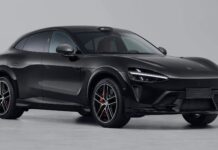
Chery Automobile unveiled significant progress in battery technology at its “2026 Chery Automobile Battery Night” event, with a strong focus on solid-state batteries and its integrated smart energy ecosystem. The company announced a breakthrough in solid-state cell energy density, reaching 400Wh/kg, and aims to push this further to 600Wh/kg. This advancement promises electric vehicles with a range exceeding 1500 km (approximately 932 miles).
Solid-State and Hybrid Battery Rollout
Chery’s “Rhino Battery” lineup features both liquid and solid-state technologies. The solid-state Rhino S series (models S1000, S1200, and S1500) is at the forefront of this effort. The automaker plans to integrate solid-liquid hybrid batteries into the Exeed EX7, a five-seater luxury SUV, by the end of this year. More critically, the Exeed ES8 will be the first vehicle to utilize full solid-state batteries, with testing scheduled for completion within the next 12 months.
Massive Investment in R&D
To support these advancements, Chery has invested over 10 billion yuan into battery research and development. The company’s dedicated team comprises over 1,200 professionals, with 90% holding advanced degrees. Key technological improvements include electrolyte lattice anchoring, cathode shield technology, and anode stress relief, alongside optimized manufacturing processes such as ultra-thin coating and warm isostatic pressing. Artificial intelligence is also being used to accelerate the R&D timeline.
Liquid-State Battery Capabilities
In parallel with solid-state development, Chery continues refining its liquid-state Rhino batteries. These are available in LFP short blade, LFP/NCM prismatic, and NCM large cylindrical formats. These batteries offer fast charging – achieving a 500 km range in just 8 minutes – and boast a lifespan of 5,000 cycles.
Industry Context: Charging Speed Remains a Key Challenge
Despite the significant advancements in energy density, a notable omission from Chery’s presentation was the charging rate of its solid-state batteries. This silence mirrors a broader industry trend: solid-state technology still struggles to match the charging speeds of advanced liquid-state batteries. For example, while Dongfeng has tested solid-state batteries at 350Wh/kg, its charging rate is reportedly limited to 1C, a comparatively slow speed compared to BYD’s Blade Battery 2.0, which can charge from 10% to 97% in 9 minutes.
The race for solid-state batteries is not only about energy density but also about delivering practical charging performance. The market will determine whether these new technologies can truly compete with existing solutions.