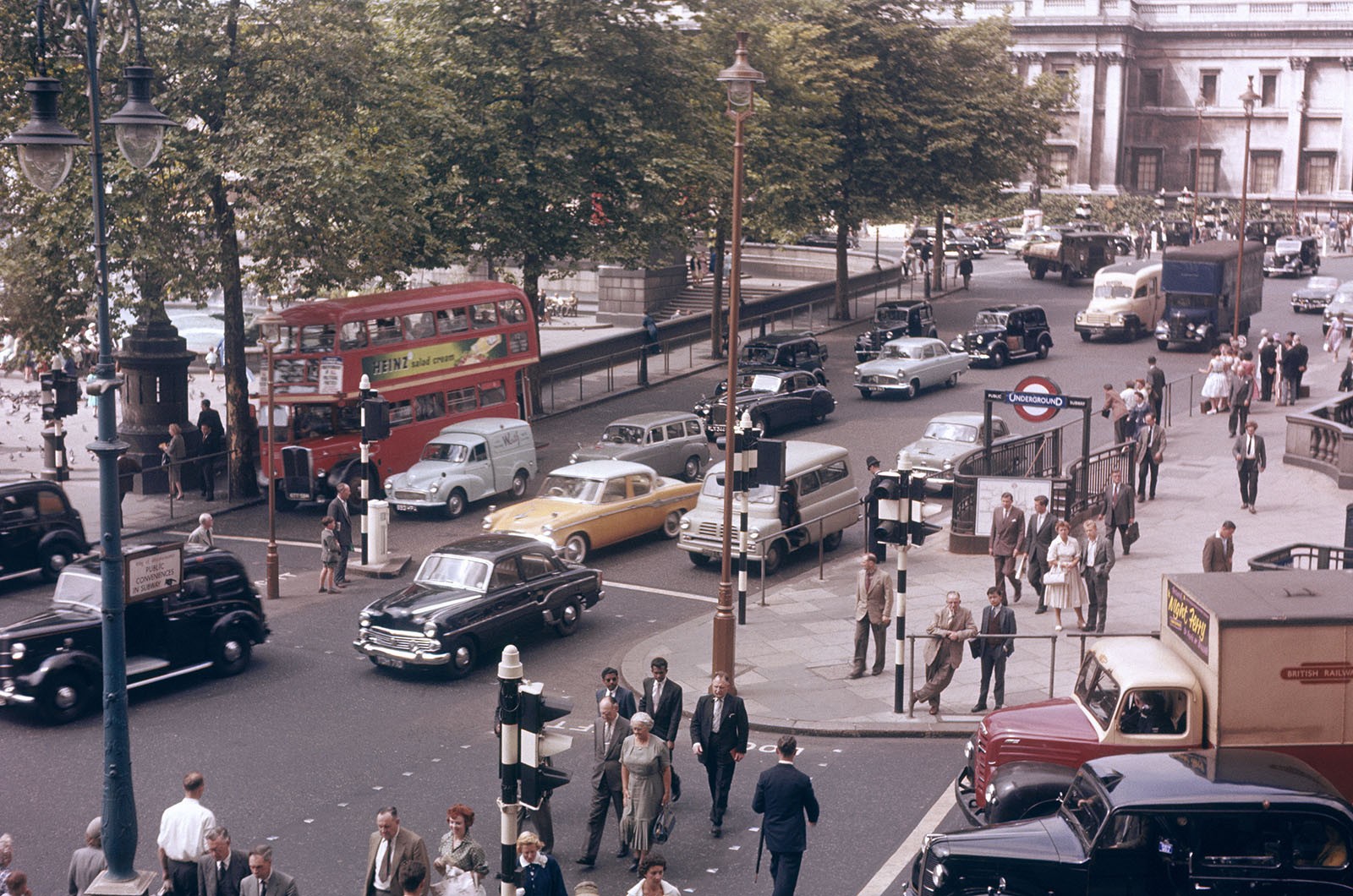
London’s roads in the 1950s weren’t governed by strict rules, but by an unspoken agreement among drivers – a complex system of signals, lane-switching, and mutual tolerance. As Autocar magazine observed in 1952, traffic flowed not by the Highway Code, but through a “queer but practical code” of bids, leads, and responses. This wasn’t simply disregard for regulations; authorities at the time “tolerated and even approved unofficially” bending the rules to keep the city moving.
A Different Roadscape
The physical landscape of London roads in the 1950s contributed to this chaos. Lanes were often undefined, vehicles were narrower, and three cars could comfortably occupy a space where today only two would fit. Traffic lights were scarce, and turn signals were either mechanical “trafficators” or entirely reliant on hand gestures.
This meant drivers needed a more nuanced understanding of each other’s intentions. The left lane was reserved for slow vehicles, those preparing to turn left, or those stopping soon. The outside lane was for those turning right. Merging wasn’t a matter of right-of-way, but of timing, negotiation, and occasionally, gentle coercion.
The Unspoken Language
Beyond official signals, London drivers developed a secret language of gestures. A palm extended backward signaled a pedestrian hazard ahead. A nod of the head invited a waiting driver to merge from a side street. A driver stuck beyond the lights communicated their predicament with a flick of the wrist.
Autocar noted that while “thrusters” who aggressively forced their way into lanes were seen as selfish, the prevailing ethos was compromise. The expectation was to stick to one’s lane, but enforcement fell to peer pressure rather than law enforcement.
Why It Matters
This system worked because it had to. Without today’s surveillance and strict penalties, Londoners adapted to survive in dense traffic. The 1950s traffic code wasn’t about efficiency so much as mutual survival. It highlights how rules emerge organically when formal control is lacking, and how shared understanding can sometimes function better than rigid enforcement. The contrast with modern, heavily regulated traffic reveals a fundamental trade-off: control versus adaptability.