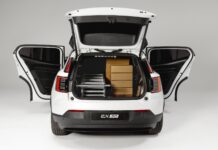
The SUV market has fundamentally changed. Once defined by basic functionality, today’s crossovers are judged first by their looks, and only second by how much they cost. The Mazda CX-30 demonstrates this shift perfectly: it looks far more expensive than it is, blending upscale styling with accessible pricing.
Why Appearance Matters Now
Consumers no longer settle for purely practical SUVs. They want vehicles that feel premium without needing a luxury price tag. This means design cues like sleek lighting, refined interiors, and a sense of overall quality. The CX-30 taps into this demand by delivering a look that punches above its class.
The CX-30’s Design: Premium Without Pretense
The 2026 Mazda CX-30 competes in the subcompact SUV segment (against rivals like the Honda HR-V and Toyota Corolla Cross). However, its design suggests it belongs in a higher bracket. Mazda’s “Kodo” design language delivers a clean, sculpted shape that avoids the busy styling common in this price range.
The CX-30’s front features a wide grille and narrow LED headlights, creating a modern, sharp look. The side profile is understated yet elegant, with subtle curves that catch light. At the rear, signature lighting reinforces the upscale impression. Crucially, it avoids aggressive or overly sporty styling, opting for a more mature aesthetic.
Inside: Details That Elevate the Experience
The CX-30’s interior mirrors its exterior refinement. Mazda has a reputation for interiors that exceed expectations for the price, and this model is a prime example. The cabin layout is clean and driver-focused, with logically placed controls. Materials are soft-touch, and subtle textures add a sense of sophistication.
Higher trims offer features like premium Bose sound systems, contrast stitching, and leather upholstery. The infotainment system includes Apple CarPlay and Android Auto, controlled by a rotary dial rather than solely through touch inputs. This makes the system easier to use while driving.
The CX-30’s interior isn’t about flashy features; it’s about a cohesive experience that feels more expensive than it is. The front seats are comfortable, and the rear seats are adequate for daily use. Cargo space is competitive for the segment, making it practical for errands and weekend trips.
Performance and Practicality: A Balanced Approach
The CX-30 offers two engine options: a standard 2.5-liter four-cylinder (186 hp) and a turbocharged version (up to 250 hp). Both engines balance performance and efficiency. The standard engine provides reasonable fuel economy (24 mpg city / 31 mpg highway). The turbo option delivers more power without sacrificing everyday usability.
The CX-30 handles well, with responsive steering that makes driving more engaging. It’s not a sports SUV, but it feels composed and stable on the road. All-wheel drive is standard, adding confidence in various weather conditions.
Pricing and Value: The Sweet Spot
Despite its upscale feel, the CX-30 remains affordable, with prices starting in the mid-$20,000s and reaching the mid-$30,000s for fully equipped models. This competitive pricing makes it an attractive option for buyers who want premium style without a luxury budget.
The CX-30’s combination of design, interior quality, and driving feel sets it apart from rivals. It is compact enough for urban driving while still being practical for everyday needs.
The Mazda CX-30 succeeds because it understands what modern buyers want: a vehicle that looks and feels more expensive than it actually is. It proves that style and quality don’t have to come with a luxury price tag.