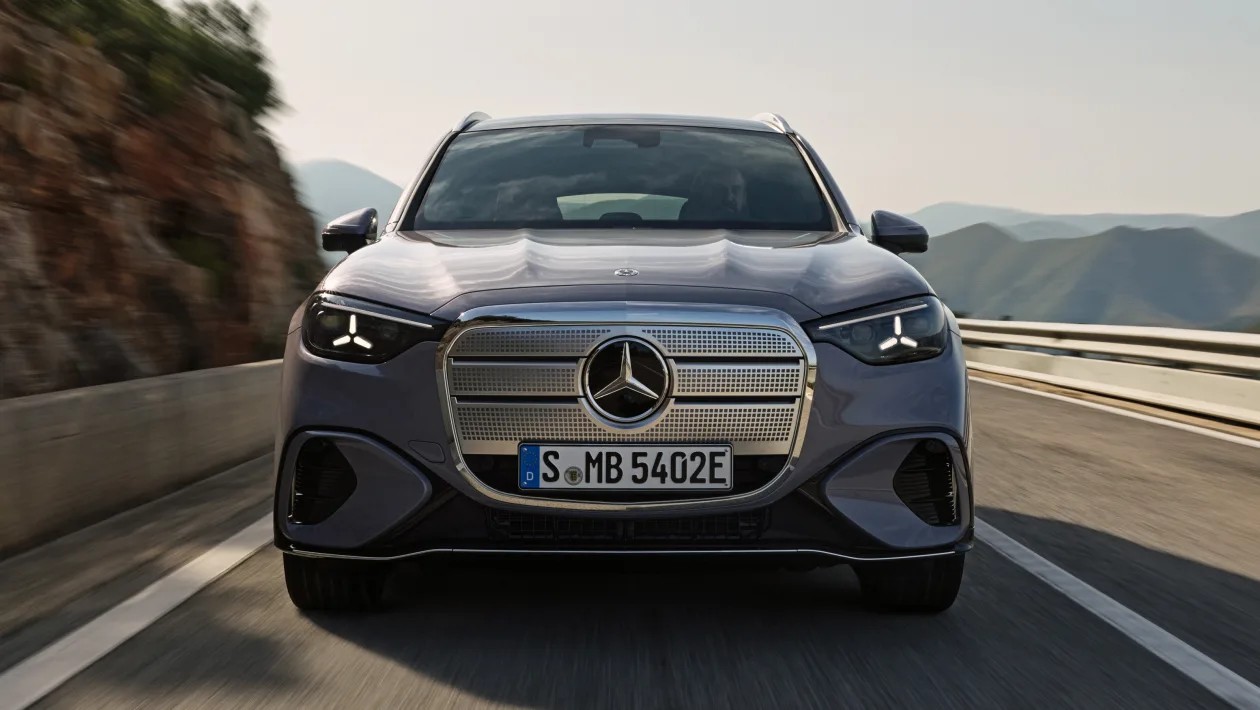
While competitors like BMW and Audi are currently undergoing radical design revolutions, Mercedes-Benz is opting for a different path. Following the departure of long-time design director Gorden Wagener, the company has appointed Bastian Baudy to lead its aesthetic future. However, unlike other luxury automakers who are hiring “outsider” talent to spark change, Mercedes is doubling down on its tradition of internal promotion and gradual evolution.
The “Mercedes-Bred” Philosophy
The appointment of Bastian Baudy marks a continuation of a deeply rooted corporate philosophy. Unlike Audi, which recently hired Massimo Frascella from Land Rover to refresh its look, Mercedes has chosen a leader who rose through its own ranks.
Baudy’s trajectory—from intern to AMG design head, and now to the top of the Mercedes hierarchy—follows the footsteps of legendary designers like Bruno Sacco and Friedrich Geiger. This “homegrown” approach serves a specific purpose: maintaining design continuity.
According to veteran designer Achim Badstübner, Mercedes does not view design as a series of annual trends, but as a long-term legacy. This internal promotion model ensures that new leadership understands the brand’s DNA before attempting to evolve it.
Speedboats vs. Tankers: Bringing Agility to a Giant
One of the most significant shifts expected under Baudy’s leadership is a change in organizational energy. Having previously led the design team at AMG, Baudy is expected to inject a sense of agility into the broader Mercedes lineup.
Badstübner uses a striking metaphor to describe the challenge ahead:
“Mercedes is a tanker and AMG is a speedboat. A little bit more speedboat will be good. But he’s aware that we’re a tanker, and what he can and can’t change organizationally.”
This suggests that while the core identity of Mercedes will remain stable, the process of design and implementation may become faster, leaner, and more responsive to modern demands.
Resisting the Pressure of Trends
Mercedes is currently navigating a period of intense scrutiny. The brand has faced criticism regarding the aesthetics of its early electric vehicle (EQ) lineup and certain mixed-powertrain models. In an era where social media and instant feedback can dictate design trends, Mercedes is taking a cautious stance.
The company’s design philosophy focuses on three key pillars:
* Internal Comparison: Rather than benchmarking against rivals, Mercedes compares new models against its own previous generations to ensure a meaningful leap in progress.
* Avoiding “Design by Committee”: Badstübner warns against listening too closely to the “20,000 answers” provided by the public, fearing that excessive external influence could dilute the brand’s essence.
* Ignoring the Competition: In a move that contrasts with much of the industry, Mercedes explicitly states that they do not look to BMW or Lexus for direction.
The Competitive Landscape
This “slow and steady” approach comes at a high-stakes moment for the luxury automotive sector. The industry is currently in the midst of a massive aesthetic shift:
– BMW is aggressively rolling out its Neue Klasse architecture.
– Audi is preparing for a major design revolution slated for 2027.
– Volkswagen is entering a new era of design language.
By choosing continuity over revolution, Mercedes is betting that its heritage and steady evolution will be more effective than the radical pivots being attempted by its rivals.
Conclusion
Mercedes-Benz is prioritizing brand stability and internal expertise over rapid, external-driven change. While this approach promises a seamless transition, the ultimate test will be whether this “speedboat” mentality can move the “tanker” fast enough to keep pace with a rapidly evolving market.