


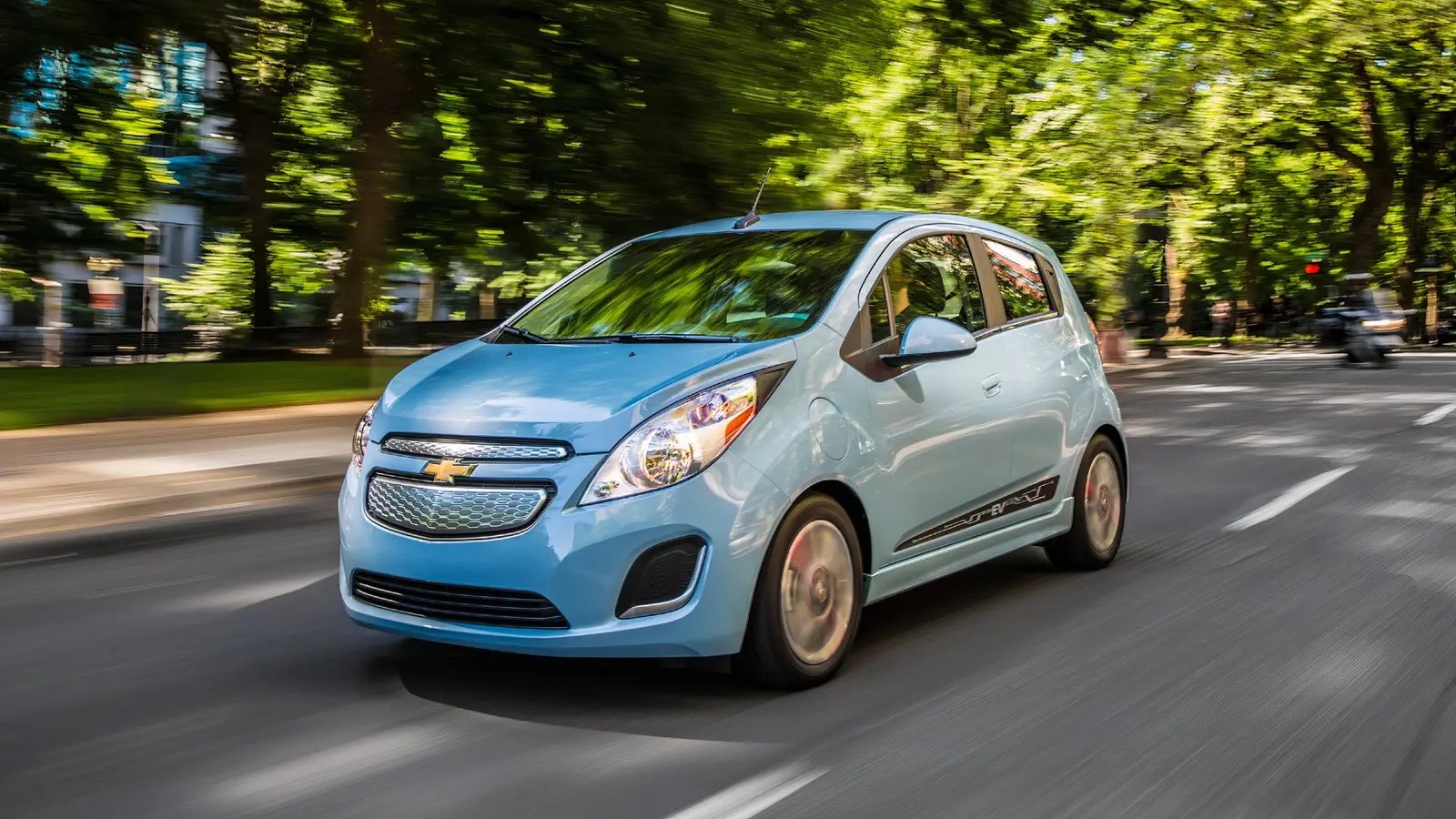
In today’s automotive landscape, electric vehicles (EVs) have transitioned from niche “alternative fuel” oddities to mainstream heavyweights. Modern EVs are often defined by luxury, high-performance specs, and—increasingly—staggering price tags. However, there was a time when Chevrolet offered a different vision: a compact, punchy, and genuinely affordable electric car.
The Chevrolet Spark EV may have been a commercial underdog, but it represented a critical moment in General Motors’ electric evolution.
A Brief History of the Spark Nameplate
To understand the EV, one must understand the platform. The Chevrolet Spark traces its lineage back to the Daewoo Matiz, launched in 1998. After Chevrolet acquired Daewoo in 2002, the model was rebranded and eventually brought to the US market in 2012.
Throughout its lifespan, the Spark was celebrated as a quintessential city car. It was:
– Highly maneuverable for dense urban environments.
– Economical to operate and maintain.
– Surprisingly spacious for a subcompact vehicle.
While the gas-powered Spark was a reliable budget option, Chevrolet decided to experiment with a high-voltage twist.
The Spark EV: More Than Just a Small Battery
Released between 2014 and 2016, the Spark EV was a landmark for General Motors. It was the company’s first all-electric passenger car since the ill-fated EV1 of the late 90s, and notably, it was the first offered for retail sale rather than just through restrictive leasing programs.
Despite its small stature, the Spark EV was far from a “golf cart.” It featured several aerodynamic enhancements, such as an automatic shutter system in the grille and underbody panels, to maximize efficiency.
Surprising Performance
While its range was modest by modern standards, its power delivery was legendary among enthusiasts:
– Torque: A massive 400 lb-ft of torque —extraordinary for a car of this size.
– Acceleration: It could sprint from 0 to 60 mph in approximately 7.6 seconds.
– Range: An EPA-estimated 82 miles per charge.
This combination of low weight and high torque gave the Spark EV a “peppy” character that outperformed many of its contemporaries.
Practicality and Interior Design
The interior remained true to the Spark’s budget-friendly roots. It wasn’t luxurious, but it was functional. The cabin utilized durable materials and a clean dashboard layout that integrated EV-specific controls without overwhelming the driver.
However, the electric powertrain did come with a trade-off: cargo space. Because of the battery placement, the trunk was limited to just 1.8 cubic feet with the seats up, though it expanded to 7.8 cubic feet when the rear seats were folded.
Why Did It Fail to Gain Traction?
Despite its merits, the Spark EV was a limited run, sold only in California and Oregon. Only about 7,300 units were ever sold. Several factors contributed to its quiet exit:
- Market Readiness: In 2014, the infrastructure for EVs was sparse, and consumer anxiety regarding range was much higher than it is today.
- Limited Availability: By restricting sales to two states, Chevrolet prevented the model from achieving the scale necessary to become a household name.
- Perception: Many consumers viewed it as a “compromise” car rather than a primary vehicle.
The Used Market: A Modern Opportunity?
Today, the Spark EV has entered the used market, often appearing at highly accessible price points. Estimates suggest used models can be found for between $4,200 and $4,600.
For those looking for a cheap, urban commuter or a “quirky” second vehicle, it remains an option. However, potential buyers should exercise caution: because the model is discontinued and was produced in limited numbers, a thorough mechanical and battery inspection is essential before purchase.
The Chevrolet Spark EV was a victim of timing. It offered the exact formula the current market craves—affordability and torque—but arrived before the world was ready for it.
Conclusion: The Spark EV serves as a reminder that high-performance electric mobility doesn’t always require a luxury price tag. While it missed its moment in the mid-2010s, its legacy lives on in the ongoing industry struggle to balance EV technology with consumer affordability.


