


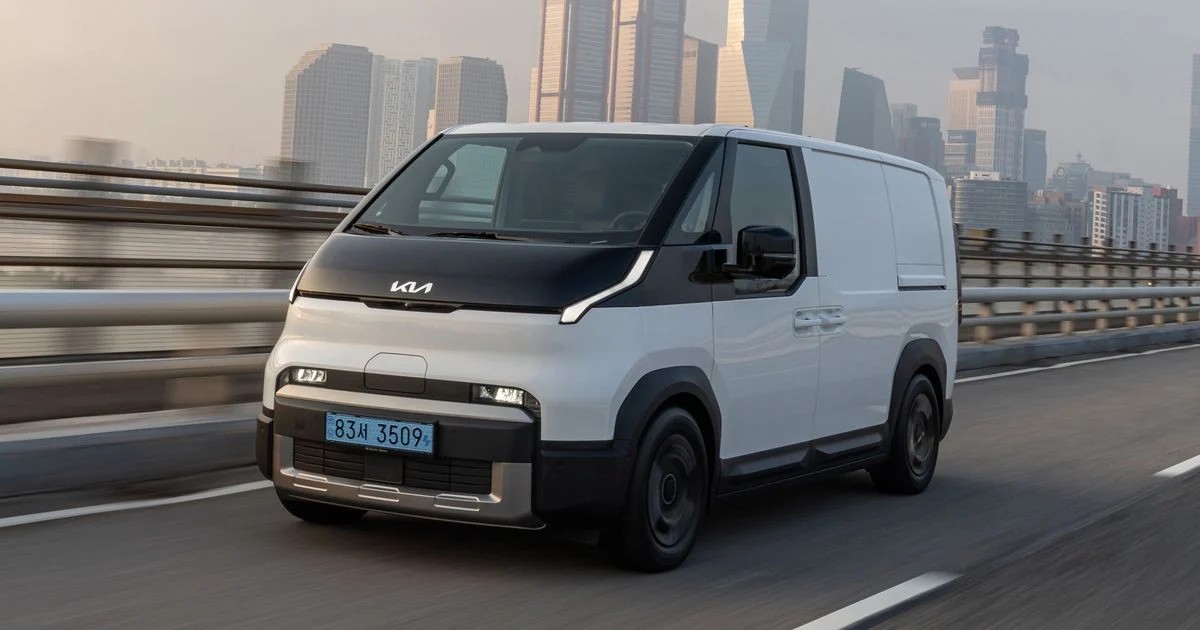
Kia is set to disrupt the Australian commercial vehicle market with the introduction of the PV5 Cargo, positioned as the most budget-friendly electric van in the country. Scheduled to arrive in showrooms in late May 2026, the vehicle marks a significant strategic shift for the brand.
Competitive Pricing and Market Positioning
The PV5 Cargo will enter the market with a starting price of $55,990 (before on-road costs). This aggressive pricing strategy places it significantly below its primary competitors:
- Peugeot e-Partner: $61,990
- LDV eDeliver 7: From $69,463
- Volkswagen ID. Buzz Cargo: From $69,990
By undercutting established players, Kia is targeting small businesses and fleet operators looking to transition to electric mobility without the high capital barrier typically associated with EVs. This move also marks Kia’s return to the Australian cargo segment, filling a void left by the discontinuation of the Pregio nearly two decades ago.
Range and Performance Capabilities
One of the most critical factors for commercial operators is “range anxiety”—the fear that a vehicle will run out of power before a job is complete. The PV5 addresses this by offering a claimed WLTP range of 416km, making it one of the longest-range electric vans available locally.
For comparison, its range outperforms several key rivals:
* Kia PV5: 416km
* Volkswagen ID. Buzz Cargo: 431km
* LDV eDeliver 7: Up to 328km
* Ford E-Transit Custom: Up to 307km
The vehicle is powered by a 71.2kWh nickel cobalt manganese (NCM) lithium-ion battery driving the front wheels. To support high-intensity workdays, the PV5 supports DC fast charging, capable of a 10% to 80% charge in approximately 30 minutes, which provides enough energy for roughly 330km of driving.
Practicality and Cargo Utility
Designed under Kia’s new Platform Beyond Vehicle (PBV) strategy, the PV5 is built with utility at its core. It has already earned the title of 2026 International Van of the Year, a testament to its functional design.
Key specifications for logistics include:
* Capacity: Based on international specs, it offers up to 4.4 cubic metres of cargo space, surpassing the ID. Buzz Cargo’s 3.9 cubic metres.
* Loading Efficiency: The design accommodates two Euro pallets, features rear barn doors that open 180 degrees, and maintains a low load height of 419mm for easier access.
* Versatility: The inclusion of Vehicle-to-Load (V2L) technology allows the van to act as a mobile power source, potentially powering tools or equipment directly from the vehicle’s battery.
Technology and Driver Safety
The interior is designed to balance commercial utility with modern connectivity. The cabin includes a 12.9-inch infotainment touchscreen with Apple CarPlay and Android Auto, alongside a 7.5-inch digital instrument cluster.
Safety remains a priority with a suite of standard driver-assist technologies, including:
* Blind-spot collision avoidance
* Navigation-based adaptive cruise control
* Lane-keep assist and lane-centering
* Parking collision avoidance assist
Summary
The Kia PV5 Cargo represents a major push into the electric commercial sector, combining competitive pricing with industry-leading range and cargo capacity. Its arrival in 2026 could significantly lower the barrier to entry for Australian businesses transitioning to zero-emission fleets.


