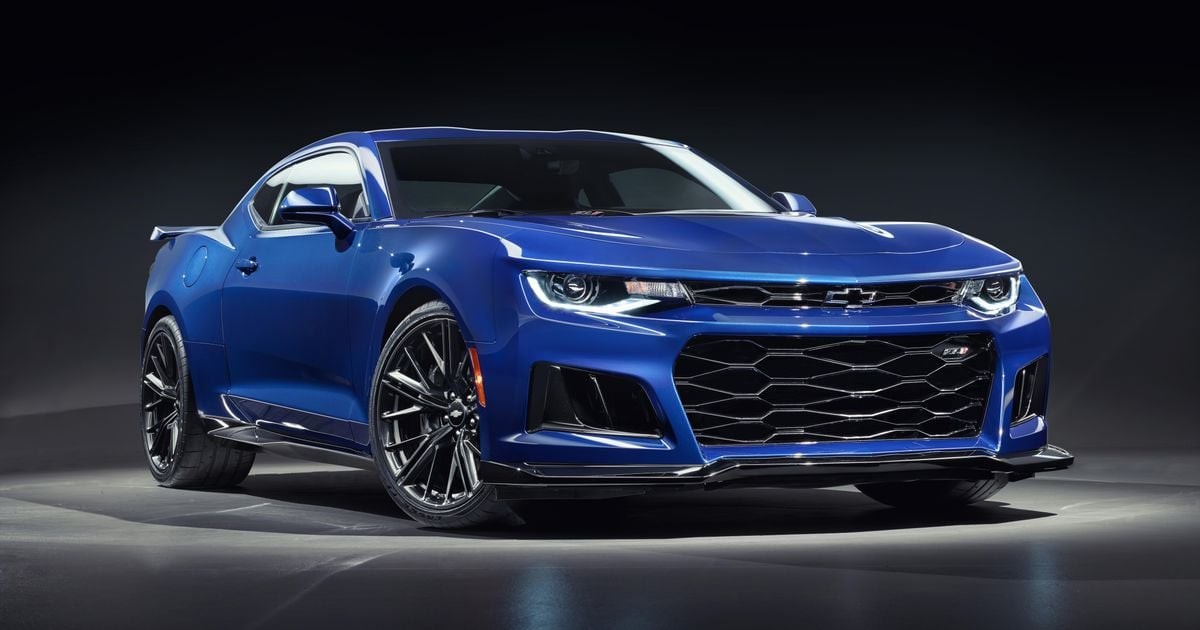
After a sudden exit from the market in 2023, the Chevrolet Camaro appears to be preparing for a comeback. Recent reports suggest that General Motors (GM) is not finished with its legendary muscle car rival, aiming to reintroduce the nameplate to compete once again with the Ford Mustang.
A Timeline for Production
According to industry sources, the seventh-generation Camaro is scheduled to enter production in late 2027. If these reports hold true, the hiatus for the iconic badge will last only about four years—a significantly shorter gap than the seven-year break seen between the fourth and fifth generations.
The new model is expected to be manufactured at the Lansing Grand River plant in Michigan, the same facility that housed the sixth-generation Camaro.
Platform and Performance: What to Expect
For enthusiasts worried that the “Camaro” name might be applied to an electric crossover, the technical details offer some reassurance. The upcoming model is reportedly slated to utilize the Alpha II rear-wheel drive platform.
This platform has a proven pedigree, having underpinned the recent Cadillac CT4 and CT5 models. Key technical takeaways include:
– Engine Versatility: The platform supports four-, six-, and eight-cylinder engines.
– High Performance: It has previously hosted the supercharged 6.2-litre ‘LT4’ V8, used in the high-performance ZL1.
– Powertrain Uncertainty: While the platform is built for internal combustion, no Alpha II-based vehicle has yet transitioned to a hybrid or fully electric powertrain.
However, there is a catch. Insiders suggest the new Camaro “might not be exactly what you would expect.” One prevailing theory is that Chevrolet may introduce a sedan body style —a first for the Camaro. This would align with broader industry trends, such as the Dodge Charger’s transition to a four-door layout and reports that Ford is considering a sedan version of the Mustang.
The Broader GM Strategy
The return of the Camaro is part of a larger reshuffling of GM’s portfolio. As the Cadillac CT4 is being phased out, the Alpha II platform will still be utilized for other vehicles, including a new, unnamed Buick sedan.
This move marks a significant pivot for Buick, which has focused almost exclusively on premium SUVs in the U.S. since 2020. The introduction of a rear-wheel-drive sedan would be a major departure for the brand, which has not offered such a vehicle in the American market since the mid-1990s.
Market Outlook and Sales Goals
The decision to bring back the Camaro seems driven by a desire to recapture lost market share.
– Production Targets: Suppliers indicate that GM expects to produce between 60,000 and 70,000 units annually across the CT5 and Camaro lines.
– The Challenge of Affordability: To succeed, GM sources emphasize that the seventh-generation Camaro must be both “affordable and attainable.”
This is a crucial point; the previous generation saw a steady decline in sales, dropping from over 72,000 units in 2016 to roughly 21,000 in 2021. By focusing on accessibility, Chevrolet aims to prevent the brand from becoming a niche, high-priced luxury item that loses ground to more competitively priced rivals like the Ford Mustang.
Summary: Chevrolet is preparing to revive the Camaro in 2027 using a proven rear-wheel-drive platform, potentially introducing a new body style to ensure the nameplate remains a competitive and attainable force in the muscle car market.