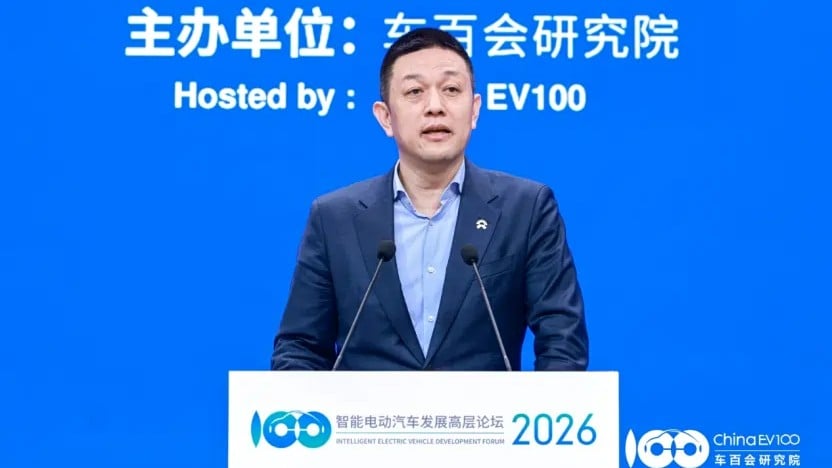
At the Intelligent Electric Vehicle Development Forum in Beijing, Nio CEO William Li issued a provocative challenge to the automotive sector: standardize batteries and semiconductors to unlock massive cost savings. Li estimates that if the industry adopts unified standards, it could save more than 100 billion yuan ($14.5 billion USD) across the entire electric vehicle (EV) ecosystem.
The Dilemma: High Volume, Low Profit
Despite a surge in deliveries, Li warned that the EV industry is caught in a dangerous cycle. While sales volumes are rising, companies are struggling to turn those sales into sustainable profits. This phenomenon—increasing revenue without increasing profit —is driven by the rapid pace of technological evolution.
As smart features, advanced lighting, and new battery technologies emerge, the lifecycle of a vehicle model has shortened significantly. This creates a “boom and bust” supply chain cycle:
– The Surge: Manufacturers ramp up production to meet the initial hype of a new model.
– The Crash: By the time supply chains are fully optimized, a newer, more advanced model is already being released, causing demand for the previous one to plummet.
– The Result: Massive resource waste, where companies lose hundreds of millions of yuan on single models due to misaligned production capacities.
Two Pillars of Inefficiency: Batteries and Chips
Li identified two specific areas that account for over 50% of a vehicle’s total cost : battery cells and semiconductors. Currently, the lack of uniformity in these components creates friction throughout the manufacturing process.
1. The Battery Bottleneck
Currently, the industry lacks a unified specification for battery cells, which prevents manufacturers from flexibly allocating capacity across the supply chain. Li suggested that the industry should follow the model of consumer electronics—such as the standardized AA and AAA batteries we use every day.
“Battery technology has now sufficiently converged,” Li stated, noting that standardizing mid-nickel and high-nickel ternary cells is both timely and technically feasible.
2. The Semiconductor Complexity
The complexity of modern “smart” vehicles is staggering. For example, Nio’s latest ES9 model utilizes over 4,000 individual chips across more than 1,000 different part numbers.
To combat this, Nio is attempting to consolidate its own internal requirements from 1,000 varieties down to 400. However, Li argues that individual company efforts are not enough. He called on regulators and automakers to establish unified chip categories with interchangeable standards. This would:
– Strengthen supply chain resilience.
– Make it more economically viable for manufacturers to adopt domestic semiconductor technologies.
The Bottom Line
The move toward standardization is not about limiting innovation, but about creating a stable foundation for it. By reducing the sheer variety of components required, the industry can achieve economies of scale that are currently impossible.
If successful, Li predicts these changes could reduce costs by several thousand yuan per vehicle, allowing manufacturers to maintain healthy margins even as they compete in a crowded, rapidly evolving market.
Conclusion: By standardizing the two most expensive components of an EV—batteries and chips—the industry can move away from wasteful, short-lived production cycles and toward a more stable, profitable, and resilient global supply chain.