


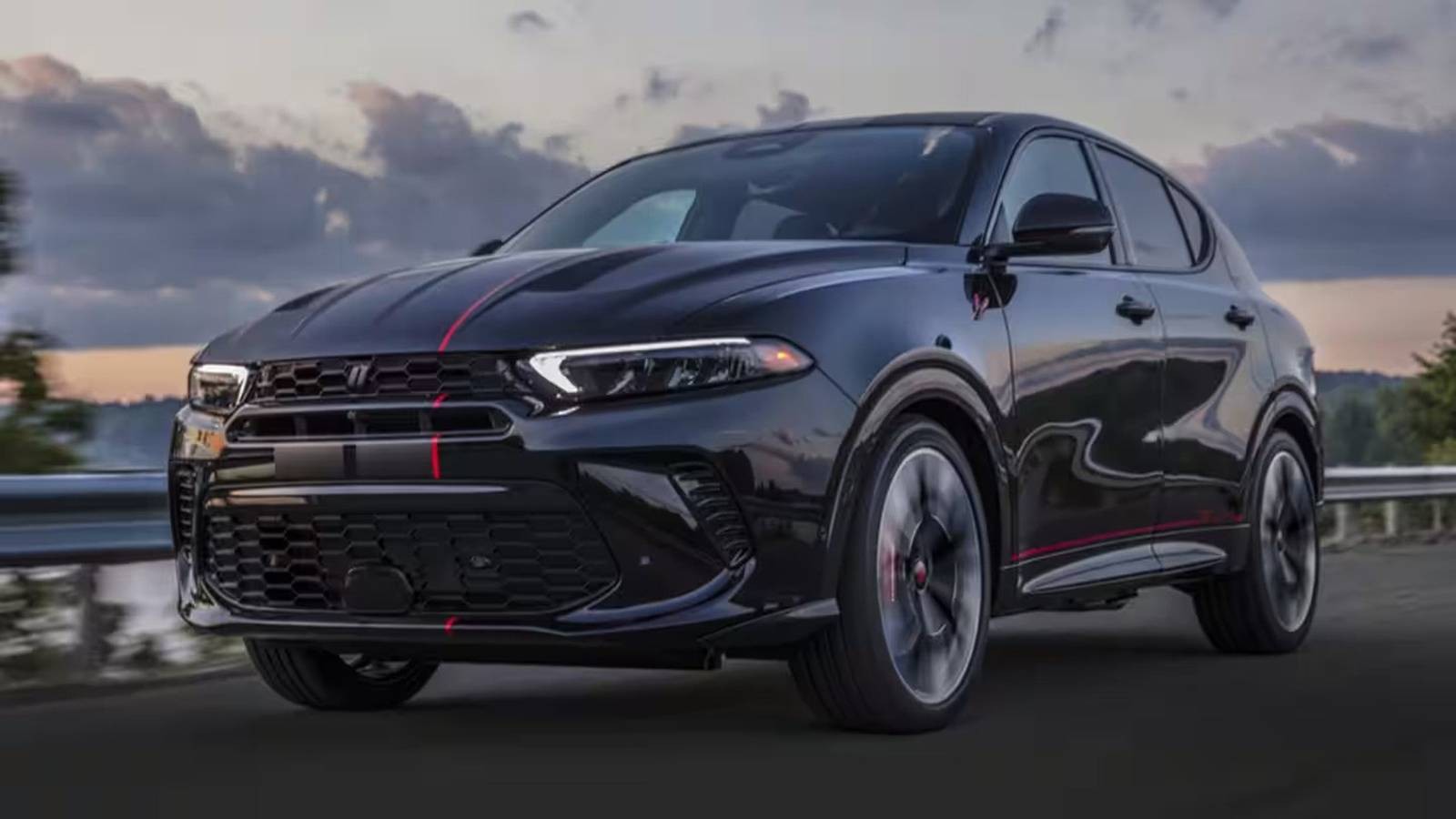
The Dodge Hornet was a vehicle caught between two worlds. Launched as Dodge’s foray into the compact crossover market, it struggled to reconcile its European DNA with a brand identity built on heavy-hitting American V8 muscle. Following its discontinuation in August 2025, the Hornet has transitioned from a polarizing, overpriced newcomer to a potentially savvy choice for budget-conscious drivers.
The Identity Crisis: Why the Hornet Struggled
From its inception, the Hornet faced a difficult uphill battle due to its origins and positioning. Essentially a rebadged Alfa Romeo Tonale, the Hornet utilized the Stellantis Small Wide 4×4 LWB platform. While this gave the vehicle a sophisticated European driving feel, it created several friction points for consumers:
- Price vs. Perception: Buyers often viewed the Hornet as an expensive “rebadge” of the Alfa Romeo. In a crowded segment featuring the Mazda CX-50, Honda CR-V, and Ford Bronco Sport, the Hornet’s premium pricing made it difficult to justify its value.
- Brand Mismatch: Dodge enthusiasts typically seek raw power and traditional muscle, while SUV buyers prioritize practicality and reliability. The Hornet sat awkwardly in the middle, failing to fully satisfy either demographic.
- Market Volatility: High sticker prices, compounded by dealer markups and import tariffs, made the Hornet significantly more expensive than its direct competitors during its production run.
Performance and Interior: Substance Beneath the Surface
Despite the criticisms, the Hornet was never a “boring” SUV. It maintained Dodge’s performance-oriented ethos through competent engineering:
Driving Dynamics
The Hornet offered two distinct flavors of performance that punched above their weight class:
1. The GT Trim: Features a 2.0-liter turbocharged four-cylinder engine producing 268 horsepower and 295 lb-ft of torque.
2. The R/T PHEV: A plug-in hybrid powertrain that delivers 288 horsepower and 383 lb-ft of torque, capable of hitting 0-60 mph in just 5.6 seconds.
Tech-Forward Cabin
The interior mirrors the Tonale’s driver-centric design, featuring a high-tech suite including a 10.3-inch infotainment touchscreen and a 12.3-inch digital gauge display. While the cabin is spacious for the driver, it remains somewhat cramped for rear passengers—a trade-off for its sporty silhouette.
The 2026 Opportunity: Finding a Deal
The very factors that led to the Hornet’s discontinuation now work in the buyer’s favor. Because demand was low and the product is now “abandoned,” the market is flooded with inventory.
Negotiating New “Leftovers”
Data from late 2025 indicated that a massive portion of unsold 2024 model-year units were Dodge Hornet PHEVs. For buyers in 2026, this represents a massive negotiation lever. Dealers are often highly motivated to clear out these “dead” models, offering deep discounts on brand-new units that still carry full warranty protection.
The Used Market Advantage
If you are looking to maximize savings, the used market offers even more dramatic price drops.
– Entry-level models: While a new 2025 GT might start near $30,000, used 2023/2024 models can be found for approximately $20,600–$22,275.
– High-end trims: The R/T trim, which originally commanded upwards of $41,000, can be acquired used for roughly $25,325 —a saving of over $15,000.
A Note of Caution: Reliability and Maintenance
Prospective buyers should not ignore the Hornet’s Achilles’ heel: reliability.
J.D. Power has given the 2024 Hornet a “Fair” rating of 66/100, noting higher-than-average maintenance costs.
With an estimated ten-year repair cost significantly higher than the industry average, buyers should:
* Verify the full service history of any used vehicle.
* Ensure all manufacturer recalls have been addressed.
* Budget for potential long-term maintenance to offset the initial purchase savings.
Conclusion
The Dodge Hornet is a misunderstood vehicle that was simply priced out of its own segment during its prime. In 2026, its transition into the used and “clearance” markets makes it an excellent value proposition for those seeking a stylish, performance-oriented compact SUV at a fraction of its original cost.


