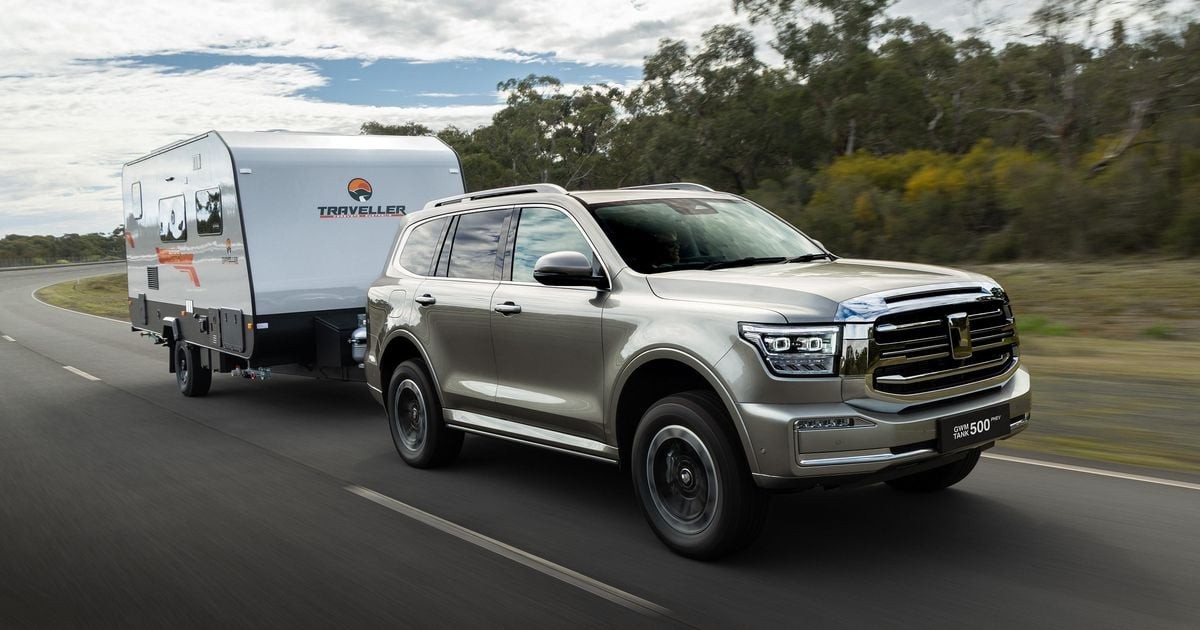
In a significant pivot for its global engineering strategy, GWM has admitted that its initial chassis and suspension tuning failed to meet the expectations of drivers in the Australia and New Zealand (ANZ) markets. Rather than dismissing these criticisms, the manufacturer has launched a dedicated refinement program that will now serve as the blueprint for its vehicles worldwide.
Listening to the Market: The “AT-1” Initiative
The shift began when GWM received consistent feedback from Australian and New Zealander customers regarding suboptimal ride quality and handling. According to GWM Chief Technology Officer Nicole Wu, there was initially internal skepticism at headquarters, where engineers believed the existing chassis was “perfect.”
However, after deploying engineers to the ANZ region to conduct real-world testing alongside local drivers, the company acknowledged the gap between their global engineering standards and local driving preferences. This realization led to the creation of AT-1 (pronounced “at one”), a specialized tuning project designed to optimize vehicle performance for demanding environments.
To facilitate this, GWM has established a permanent presence at the former Holden proving ground in Lang Lang, Victoria, led by veteran engineer Rob Trubiani.
Precision Engineering: Beyond a “One-Size-Fits-All” Approach
The AT-1 program is not merely a minor adjustment; it is a deep technical overhaul of how vehicles interact with the road. Rather than applying a single setting to an entire model range, GWM is moving toward a highly customized calibration strategy.
Key aspects of the refinement process include:
– Granular Tuning: For the Haval H6, different variants receive unique calibrations rather than a universal setting.
– Extensive Testing: Each variant undergoes rigorous testing, involving approximately 24 front and 40 rear suspension damper tunes, alongside precise steering calibrations.
– Comprehensive Optimization: The goal is to balance ride comfort with handling capability, specifically addressing towing performance and the refinement of Advanced Driver Assistance Systems (ADAS).
Rollout and Global Impact
The AT-1 tuning is already being implemented across several key models. Currently, the updates are available for:
– The Cannon Alpha ute
– Haval H6 and Haval H6 GT SUVs
– The Tank 500 plug-in hybrid SUV
Future updates are slated for the Tank 300 (specifically diesel and hybrid variants) and the upcoming Ora 5 electric SUV.
Crucially, the lessons learned in Australia are being exported globally. GWM confirmed that the AT-1 philosophy will be rolled out to other major markets, including South Africa, Europe, and Brazil. The company noted that driving habits in South Africa closely mirror those in Australia, making the ANZ testing grounds a vital laboratory for global success.
An Ongoing Evolution
GWM has emphasized that AT-1 is not a “one-and-done” fix but a continuous improvement cycle. For existing owners, the brand intends to provide ongoing refinements through:
– Over-the-air (OTA) software updates for driver-assist technology.
– Dealership service updates for physical mechanical refinements.
“When we solved the problem from Australia and New Zealand, it turns out that other areas… their customers are also satisfied,” said Nicole Wu.
Conclusion
By transforming local consumer criticism into a sophisticated global engineering standard, GWM is attempting to bridge the gap between mass-market manufacturing and the nuanced expectations of regional drivers. This move signals a shift toward more localized, high-precision vehicle development for the brand’s international expansion.