Depreciation has a reputation. It is usually seen as the invisible tax levied against anyone who buys a new car. A sticker shock in 2013. A wipeout by 2018. For most buyers, losing half your investment on the driveway feels like failure.
But for the right shopper? It’s a gift.
Look at the European flagship luxury sedan market. A car that used to cost six figures to drive off the lot can now be purchased for less than a top-trim 2026 Toyota Camrys. And you don’t sacrifice performance. Or prestige. Or features that are still considered benchmarks a decade later.
Why Flagship Depreciates Faster Than Mass Market Sedans
It isn’t accidental that luxury cars tank in value. It is structural. These vehicles are engineered to feel technologically “current” for exactly one model cycle. The moment the next redesign lands, the old model’s infotainment, safety sensors, and styling instantly read as outdated. Even if the engine is bulletproof, the tech feels ancient overnight. Buyers chase novelty. Resale values pay the price.
Consider who buys these cars. Corporations. Executives on two-year lease cycles. People who upgrade before their payments are finished. This floods the used market with low-mileage, well-maintained examples that have already absorbed the steepest hit from their original owners.
Add in the rumor mill—that German maintenance is exorbitant—and the used buyer hesitates. Supply goes up. Demand stays low. Result? You can buy a true flagship for peanuts.
2014 vs. 2026: The Price Discrepancy
The math is undeniable when you look at specific models. Take the 2014 Mercedes-Benz S550. When it debuted, it started around $95,000 for the rear-wheel drive. Add 4MATIC all-wheel drive, and you were looking at nearly $100k. This was the flagship.
Fast forward to today.
A clean 2014 S500 with 4MATIC can be snagged privately for anywhere between $16,600 and $19,450. It depends on mileage, condition, and luck. That is barely half the sticker price of a mainstream mid-sedan today.
Now, look at the Toyota.
A base 2026 Camry XSE starts around $35,000. But let’s say you actually want the options. The Premium Plus Package? The XLE AWD? Add the destination charge. You are easily pushing past $40,000, maybe $36,425 just to get all the boxes ticked before you even select exotic paint.
Put them side-by-side. One is a modern, efficient, sensible Toyota Camry configured with every dot on the checklist. The other is a German V8 limousine that costs roughly 45-50% less than the fully loaded Camry. You aren’t just buying a used car. You’re arbitraging luxury depreciation.
A Twin-Turbo V8 and Tech That Still Holds Up
The price is the hook. What happens when you drive it?
Under the hood sits a 4.7-liter twin-turborcharged V8. It makes 449 horsepower. Torque hits at just 1,800 RPM—516 lb-ft of immediate, effortless shove. Paired with a seven-speed automatic, this powertrain still feels fast. Modern sedans use forced-induction four-cylinders that simulate weight; this car feels like weight. It provides a wave of power that few mainstream cars can match, regardless of price.
But the chassis is where it separates from a Camry.
Mercedes offered Magic Body Control. Stereo cameras scan the road, talking to the suspension before a bump hits the wheels. It’s not just comfort. It’s engineering theater. Standard Airmatic air suspension adds to it. The car sits high and composed, isolating occupants from the jagged reality of the highway. It rides like a proper flagship should: firm enough to control, soft enough to dream.
Inside: Features Mainstream Cars Still Pay Extra For
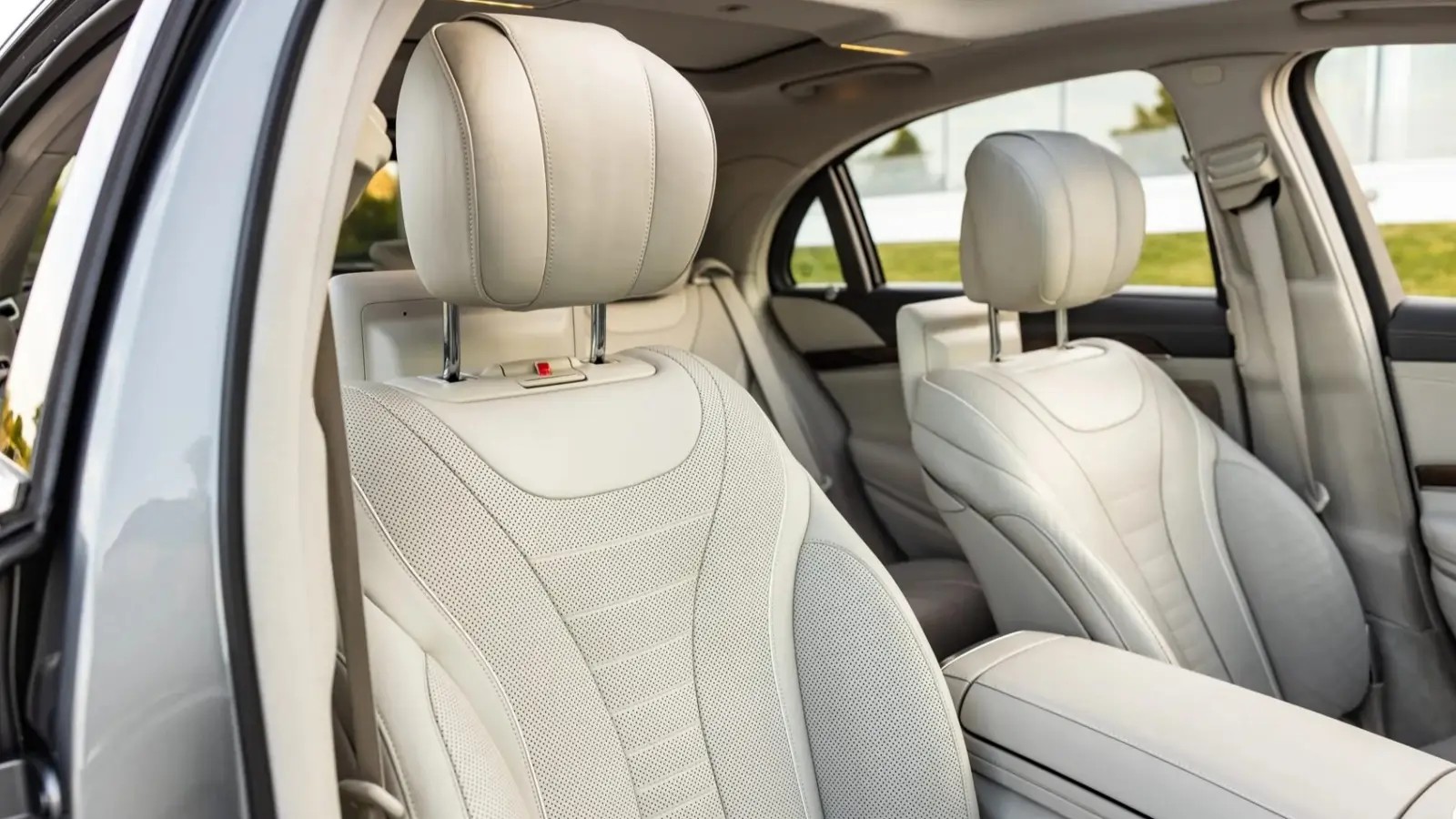
Open the door and the feature list looks expensive even now.
- Burmester surround sound: Widely regarded as one of the best factory systems ever fitted. The clarity remains unmatched by many modern touchscreen interfaces.
- Rear Seat Entertainment: Heated, ventilated, and massaging seats. Four-zone climate. Power footrests.
- Night View Assist Plus: An infrared system that highlights pedestrians.
- Head-Up Display: Projects navigation at highway speeds.
These weren’t novelties in 2014. They were requirements for a S-Class. Today? Toyota is happy if the base model has blind-spot monitoring.
The Trade-Offs You Can’t Ignore
Here is the reality check. Do not buy this car for reliability stats. Do not buy it to ignore maintenance.
The biggest vulnerability in a W222 generation S-Class? Airmatic air suspension.
The air springs dry out. The compressors die. If multiple components fail, the repair bill lands in the thousands. It is a known wear item. You must inspect this before purchase. Factor it into your budget. If you see a 2014 S-Class advertised as cheap but lacking a maintenance record, walk away.
Parts availability for the mechanical bits is decent; these cars moved in volume. But complex electronics—COMAND infotainment, adaptive lighting modules, radar sensors—get pricey to replace. You cannot DIY these failures with ease.
Use an independent Mercedes specialist. Dealerships exist for service. Specialists exist for survival. The difference in labor rates is massive.
Fuel economy will not win awards. EPA ratings sit around 17 mpg city and 25 mpg highway. It is a V8. Expect to stop for gas more often than your Camry friends. But who are they going to impress on Friday night? You? Or them?
Is the S550 Worth the Risk?
For the right buyer? Yes.
The 2014 Mercedes Benz S550 appeals to enthusiasts who value presence over warranty coverage. It rewards owners who proactively budget for repairs. If you go in informed, treat the suspension as a maintenance schedule rather than an afterthought, this car is a steal.
If you want low ownership costs, zero surprises, and a dealership warranty? Stay in the Camry lane.
But if you want genuine luxury motoring—a V8 rumble, first-class rear seats, and technology that still commands respect—without the depreciation guilt… this is how you do it.
The curve has bottomed out. The question is just how long you are willing to commit to the upkeep.