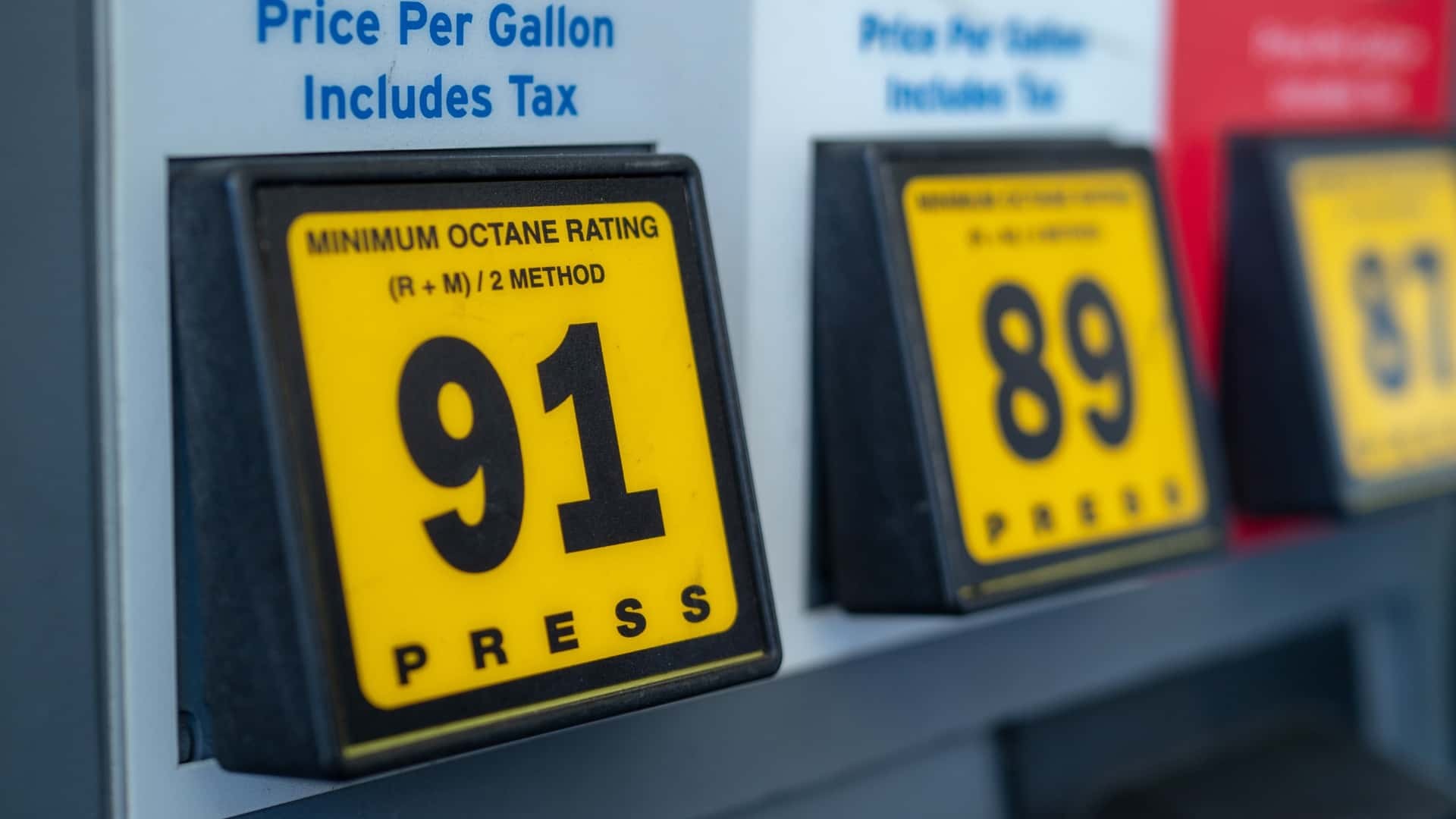
Most drivers assume the three buttons on a pump correspond to three underground tanks.
Wrong.
If you’re pumping regular (87), you’re drawing from Tank A. If you choose premium (91/93), you’re drawing from Tank B.
But what about that 89? Mid-grade.
It doesn’t live in a third tank. It’s not waiting underground for you.
The station blends it on the spot.
Two fuel lines. Two storage tanks. Three options.
It sounds like a trick. It’s actually just efficient engineering.
The Mechanics of Mid-Grade Fuel
Here is the secret most people miss.
When you hit the 89 button, the pump doesn’t open a valve for a “mid-grade” reservoir. That tank doesn’t exist.
Instead, the dispenser’s computerized metering system activates.
It draws fuel from both the regular and premium lines simultaneously.
It calculates a precise ratio. Maybe it’s 50/50. Maybe it’s 60/40, depending on the specific chemistry required to hit exactly 89 octane.
This happens in seconds.
By the time the fuel hits your engine, it is exactly the grade you requested. It never existed as a standalone product in storage.
So why not just store it?
Why Two Tanks Are Better Than Three
Cost. And space.
Installing an underground fuel storage tank is no small feat. You’re talking about excavation, heavy-duty steel tanks, leak detection sensors, and environmental compliance.
It costs thousands, sometimes tens of thousands, of dollars.
Mid-grade gas doesn’t account for the majority of sales.
If a station invested in a third tank, it would likely sit partially full for months. That’s dead capital. It’s wasted money.
Blending saves them the overhead. It requires only two tanks: the ones people actually buy in volume. Regular is the volume driver. Premium is the margin driver. Mid-grade is the niche.
The pump handles the rest.
Is Blended Fuel Lower Quality?
No.
If you hear a gas station attendant say, “We mix that on the fly,” some drivers get suspicious. They assume it’s a cut-rate solution.
It’s not.
Modern fuel dispensers are calibrated with extreme precision. They are tested and verified by state weights and measures agencies.
These inspectors check two things: volume accuracy and octane consistency.
If a pump delivers the wrong amount of gas, or if the blend is off by even a fraction, the pump is shut down. It must be recalibrated before it can serve another customer.
So when you pump 89, you’re getting a chemically precise mixture that matches the manufacturer’s standard.
It’s not a shortcut. It’s standard industry practice.
Octane: What It Actually Measures
A quick refresher on what you’re actually paying for.
Octane rating measures knock resistance.
It’s not about energy content. It’s not about cleanliness.
It’s about whether the fuel explodes too early in your cylinder.
Low octane? Your engine knocks. Detonates. Bad for your engine over time.
High octane? Your high-compression engine stays calm. Runs smooth.
The blend inside the pump delivers that resistance.
Whether the 89 was stored in a tank or mixed via two lines doesn’t change its ability to protect your engine.
The Bottom Line
Next time you’re at the pump, look at the hoses.
Two lines.
One for regular. One for premium.
The 89 is just math happening in real-time.
It’s clever. It’s cheap. And it’s invisible to you.
You get what you pay for. Even if it didn’t exist five seconds ago.