


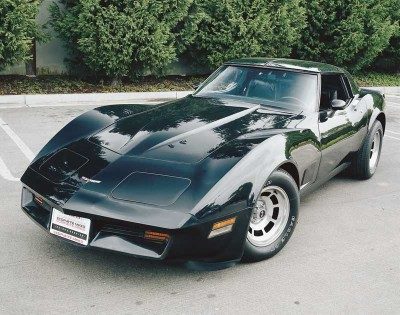
The era of the heavy American muscle car was hitting a wall. Corporate Average Fuel Economy (CAFE) standards weren’t just suggestions; they were survival requirements. For General Motors, that meant the 1980 Corvette had to shed pounds or face extinction. The result wasn’t a redesign. It was a surgery.
GM started cutting weight wherever it could find it. The differential housing and front-frame crossmember switched from steel to aluminum. Plastics replaced metal in panels and interior trim. The net result? A 250-pound reduction. Lighter. Leaner. Desperate.
The Engine Bay: A Tale of Two Blocks
Under the hood, the changes were specific and somewhat cruel. The aluminum intake manifold, previously reserved for the high-performance L82 engine, was pushed down to the base L48 block. But there was a catch. To meet stricter emissions targets, the base engine lost power. It dropped to 190 bhp at 4,400 rpm and 280 lbs/ft of torque at 2,400 rpm.
The L82, however, got a tiny boost. Five more horses brought its total to 230 bhp. Small win. Big headache.
California buyers got the raw deal. The Golden State’s emissions laws were unforgiving. The only engine available to Cal drivers was a detoxed 305 cubic-inch small-block producing just 180 bhp. And you couldn’t even shift it manually. It came with an automatic transmission only. If you wanted power in California, you paid for it elsewhere or you didn’t drive.
Aerodynamics and Aesthetics
Speed isn’t everything when you’re worried about getting 15 mpg. But drag kills mileage. GM tackled the airflow with subtle tweaks. The front and rear spoilers, once optional add-ons, were molded directly into the bodywork. The grille was raked back slightly.
These changes dropped the coefficient of drag (Cd) from 0.503 to 0.443. Still high by modern standards. But an improvement nonetheless.
Chrome was stripped away. The crossed-flags emblems on the front fenders vanished. Less shine. Less weight. Less reflection.
The Cabin: Government-Mandated Compromises
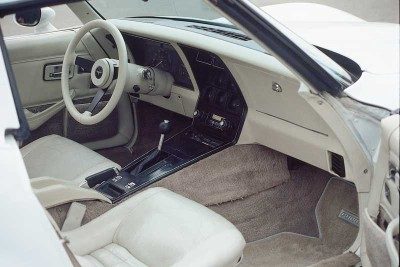
Inside, the 1980 model year brought a mix of conveniences and absurdities. Air conditioning became standard. So did the tilt-and-telescope steering wheel. Power door lock buttons moved to a more logical spot.
Then came the speedometer. Calibrated to a maximum of 85 mph. A direct result of government regulations. Why go faster if you can’t legally prove it?
Storage changed, too. The two small compartments behind the seats were merged into one. The battery, however, stayed in its own isolated cubbyhole behind the driver. A place for sparks. A place for danger. A place for logic that didn’t fit elsewhere.
The 1980 Corvette survived the fuel crisis. But it did so by shrinking. By simplifying. By losing some of its soul to save the rest.
It looked different. It felt different. It drove differently. But it was still a Corvette. For now.

By early 1979, the weight-saving tricks Chevy had stuffed into the C3 were no longer just engineering exercises. They were survival gear. The Iran revolution had toppled the Shah, sending shockwaves through global oil markets. OPEC wasn’t the primary driver this time, but the result was identical. Gas vanished from pumps. Prices skyrocketed. The American auto industry hit a wall.
The Corvette’s future looked grim. Again.
Sales volume dropped by roughly 20 percent in 1979. But then came 1980. Chevy moved 40,614 units. That is not a small number. Not for a car that weighed as much as a small house and guzzled fuel like a race car. The base price had climbed to $13,140.24 without options. That was a steep hike for the average buyer, yet demand held steady. The Corvette remained a beacon, even as the lights flickered elsewhere.
Mixed Reviews for the Slimmed-Down Shark
Critics had their work cut out for them. The press opinion remained as polarized as ever. Some loved the new efficiency. Others hated the compromises.
The headline stat? 0-60 mph times. The L82 engine still managed the sprint in just 7.1 to 7.7 seconds. That kind of acceleration defied the era’s sluggish reputation. But it came at a cost.
Chevy had slimmed down the rear axle to save weight. Some journalists called it “lighter-duty.” It was a cheap fix for a heavy problem. The focus had shifted aggressively toward fuel economy. Fit and finish issues persisted. Gaps were uneven. Panels didn’t sit flush. The quality control lagged behind the performance.
1980 Corvette Specifications
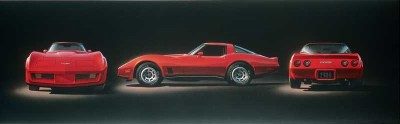
The 1980 model shed 150 pounds from its previous iteration. Where did that weight go? Gone. Replaced by standard spoilers. These weren’t add-ons. They were integrated into a reshaped nose and tail. The aero changes were subtle but functional. The cockpit got updates. Emblems were refreshed. It looked sharper. Felt lighter.
Here are the specs for the 1980 Corvette:
Engine Options
* L82 V8: The standard engine. 350 cubic inches. 190 horsepower. This was the workhorse. Tuned for emissions and efficiency, but still quick.
* L83 V8: Rare. Only available in 1980. 350 cubic inches. 180 horsepower. Less power than the L82. Why did Chevy offer it? Fuel economy mandates. It was a badge-engineered disappointment. Most buyers skipped it for the L82.
Transmission
* 4-speed manual: Standard. Close-ratio gearboxes for better acceleration.
* 3-speed automatic: Optional. Hydra-Matic. Smoother, but slower off the line.
Dimensions & Weight
* Curb Weight: Approximately 3,300 lbs. Down from previous years.
* Wheelbase: 96.2 inches.
* Length: 1

The 1977 Corvette Coupe: Numbers, Options, and Real-World Costs
Let’s look at the hard data for the 1977 Corvette coupe. This isn’t just about horsepower figures. It’s about what buyers actually ordered when they walked into the dealership. The base price started at $13,140.24. Production hit 40,614 units. That’s a solid year for the C3 generation.
The chassis dimensions tell a story of compact efficiency. The wheelbase sits at 98.0 inches. The total length is 185.3 inches. Width is a narrow 69.0 inches. This width matters. It makes the car feel tighter in the cabin. But the stance is wide. Front track is 58.7 inches. Rear track is 59.4 inches. Height is low at 48.0 inches. Curb weight for a 2-door coupe is 3,495 pounds.
Suspension and Drivetrain Specs
The suspension setup is all-independent. Front uses upper and lower A-arms with coil springs. Tubular hydraulic shock absorbers handle the damping. An antiroll bar keeps the body roll in check. Rear suspension is different. It uses lateral leaf springs. Struts and U-joint halfshafts connect to trailing arms. Tubular shocks are standard here too.
Wheels are wrapped in P225/70R-15 tires. Brakes are equal on both axles. 11.75-inch discs front and rear. That’s generous stopping power for 1977.
Transmission choices were binary. A 3-speed Hydra-Matic automatic. Or a 4-speed manual. The standard axle ratio for the automatic is 3.55:1. For the manual, it drops to 3.07:1.
Engine Options and Performance
The heart of the C3 was always the V-8. This year, three OHV V-8 options were available. All used a single 4-barrel carburetor.
- 5.0L (350 cu in): This was the base engine. Bore and stroke are 3.74 x 3.48 inches. It made 180 hp @ 4,200 rpm. Torque was 255 lb-ft @ 2,000 rpm.
- 5.7L (350 cu in) Low Output: Same displacement as the base but different internals. Bore increased to 4.00 inches. Stroke remains 3.48 inches. It made 185 hp @ 4,000 rpm. Torque jumped to 270 lb-ft @ 2,400 rpm. This was the mandatory engine in California due to emissions rules.
- 5.7L (350 cu in) High Output: The performance choice. Same bore and stroke as the low-output version. It made 220 hp @ 5,200 rpm. Torque is 260 lb-ft @ 3,600 rpm.
Why the torque dip on the high-output engine? Higher RPM power delivery. It trades low-end grunt for top-end breath.
Buyer Choices: What Did People Actually Order?
Production numbers for options reveal consumer habits. Power door locks were huge. 32,692 units ordered. Cost: $140.00.
Removable glass roof panels were also popular. 19,695 units. Cost: $391.00.
Rear window defogger. 36,589 units. Cost: $109.00.
The Gymkhana suspension package. 9,907 units. Cost: $55.00.
Heavy-duty shock absorbers. 1,695 units. Cost: $35.00.
Cruise control. 30,821 units. Cost: $123.00.
The 180 hp engine option (required in California). Only 3,221 units. Price: -$50.00. Wait, a discount? Yes. The high-output 230


