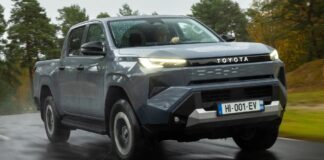
We’ve all been there. You’re trying to haul a mountain of stuff. Sometimes it’s simple. A backpack. Maybe a cat. Other times, it’s a disaster in the making. You try to carry too many grocery bags. The milk spills. The fruit gets crushed. You’re overloading your arms. It’s dangerous. Your body wasn’t built for that much weight.
Cars face the same issue. Trucks. SUVs. We move cargo every day. But overload the engine and transmission. You’re stressing the mechanical parts. Drivers put themselves and others at risk. Knowing your vehicle payload capacity isn’t just math. It’s safety.
Payload is the total weight the vehicle carries. This includes cargo. It includes passengers. Before you pile everything into the trunk, remember: people count. You need to know exactly how much you can fit. And how many trips you’ll need to make.
Calculating this number sounds like a chore. It shouldn’t be. Let’s break down the math.
The Math Behind the Capacity
You don’t need a degree in engineering. You need a sticker. Look for the Gross Vehicle Weight Rating (GVWR). This is found on the driver’s side door jamb. It’s also in the owner’s manual. The GVWR is the maximum total weight the vehicle can handle. This includes the vehicle itself. Plus passengers. Plus fuel. Plus cargo.
To find your payload capacity, you need two numbers. The first is the GVWR. The second is the curb weight. Curb weight is the weight of the vehicle with standard equipment. No passengers. No cargo. Just the car.
Subtract the curb weight from the GVWR. The result is your payload capacity.
“Passengers count as payload, too.”
This number tells you the hard limit. If you exceed it, you’re playing with fire. Brakes won’t work right. Tires can blow. Suspension components can fail. You might void your warranty.
Why the Sticker Matters
Many people ignore the door jamb sticker. They look at the trailer rating instead. That’s a different number. Tow rating is for pulling. Payload is for carrying. Confusing the two leads to accidents.
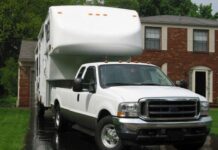
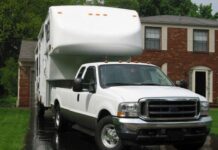
Consider a pickup truck. It might tow 10,000 pounds. But its payload capacity might only be 2,000 pounds. Put a heavy hitch and a loaded trailer tongue in the bed. You could exceed that 2,000-pound limit instantly. The rear suspension will sag. The front end will lift. Steering becomes unpredictable.
SUVs are trickier. Manufacturers list towing capacity prominently. Payload capacity is often buried. But the same rules apply. A half-ton truck doesn’t actually carry a half-ton. Modern trucks are heavier. Empty weight eats up the payload budget.
What Counts Toward the Limit?
People think payload is just what they pack. It’s not. Every item adds up.
- Passengers: An average adult weighs 150 to 200 pounds. A family of four adds 600 to 800 pounds. That’s gone.
- Fuel: A full tank of gas weighs about 6 pounds per gallon. Add 15 gallons. That’s 90
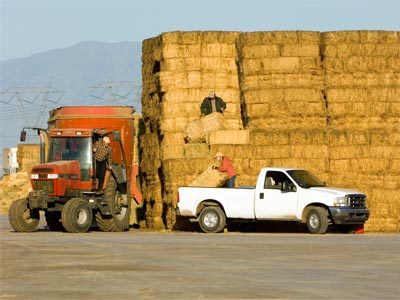
Figure out your payload limit with a simple math trick.
You only need two numbers to know what your vehicle can actually carry.
- The Gross Vehicle Weight Rating (GVWR).
- The Curb Weight.
Subtract one from the other.
The result is your payload capacity.
It is that simple.
What is GVWR?
Gross Vehicle Weight Rating is not the weight of the car.
It is the maximum weight the manufacturer says the vehicle can handle.
This includes everything.
The vehicle itself.
All fluids.
Gasoline.
Diesel.
Engine oil.
Coolant.
Plus all cargo.
Passengers.
Tools.
Anything you load in.
The manufacturer calculates this number.
You do not guess it.
Where do you find it?
Check your owner’s manual.
Look at the door jamb.
There is a sticker near the latch.
It lists the GVWR.
You can also check online databases.
But the sticker is the source of truth.
What is Curb Weight?
Curb weight is the weight of the car on its own.
No passengers.
No cargo.
But it does include fluids.
A full tank of gas.
Other necessary liquids.
This is the base weight.
It is not “dry” weight.
It is ready-to-drive weight.
The Math
Payload capacity is what remains after you subtract the curb weight from the GVWR.
GVWR minus Curb Weight equals Payload.
Here is an example.
Say your car has a GVWR of 3,500 pounds.
That is 1,588 kilograms.
Its curb weight is 3,000 pounds.
That is 1,361 kilograms.
Do the subtraction.
3,500 minus 3,000.
You have 500 pounds left.
That is 227 kilograms.
That is your payload.
Load more than that.
And you risk damage.
Or voiding warranties.
Or failing inspection.
The math does not lie.
Truck Payload
Does the type of vehicle matter?
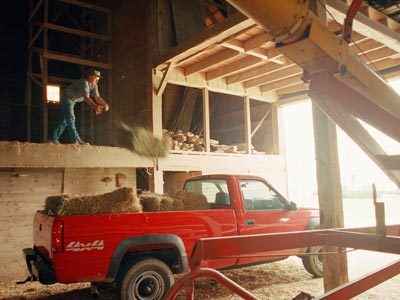
Payload isn’t a universal metric. It shifts dramatically depending on the metal box you’re driving. You wouldn’t cram long 2x4s into a hatchback for a home renovation. Conversely, you don’t need a Class 8 semi to haul a week’s worth of grocery bags. The distinction matters because “payload” means something entirely different in a pickup compared to a sedan.
In the United States, truck payload capabilities are tied directly to how the government classifies the vehicle’s maximum Gross Vehicle Weight Rating (GVWR). This rating is the ceiling. It’s the absolute limit of what the chassis, suspension, and tires can handle when fully loaded.
The Federal Highway Administration divides these ratings into eight distinct classes. Understanding where your truck sits in this hierarchy helps you figure out what you’re actually allowed to put in the bed.
The Eight Classes of Truck Weight
The U.S. government doesn’t just guess at these numbers. They are hard limits based on engineering standards. Here is how the GVWR breaks down:
| Weight Class | Maximum GVWR |
|---|---|
| Class 1 | 6,000 pounds (2,722 kg) |
| Class 2 | 10,000 pounds (4,536 kg) |
| Class 3 | 14,000 pounds (6,350 kg) |
| Class 4 | 16,000 pounds (7,258 kg) |
| Class 5 | 19,500 pounds (8,845 kg) |
| Class 6 | 26,000 pounds (11,793 kg) |
| Class 7 | 33,000 pounds (14,969 kg) |
| Class 8 | Over 33,000 pounds |
It’s worth noting that Class 8 isn’t a fixed number. It’s a bucket for anything heavier than the Class 7 limit. These are your big rigs. The heavy haulers.
Light, Medium, and Heavy Duty
The U.S. Department of Transportation (DOT) simplifies this grid into three broader operational categories. This classification often dictates licensing requirements and maintenance schedules, not just what you can carry.
Light-Duty Trucks
Classes 1 and 2 fall here. These are your standard pickup trucks and work vans. A Ford F-150 or a Chevy Silverado 1500 typically sits in Class 2. If you’re buying a consumer truck, this is where you’ll live. The payload here is manageable but strictly capped by the GVWR minus the curb weight.
Medium-Duty Trucks
Classes 3 through 5. These vehicles bridge the gap between consumer pickups and commercial beasts. They often require a Commercial Driver’s License (CDL) depending on the state, though not always. Box trucks, large delivery vans, and shuttle buses live in this space. The payload capacity jumps significantly here, allowing for heavier, denser cargo that would bottom out a Class 2 suspension.
Heavy-Duty Trucks
Classes
SUV Payload
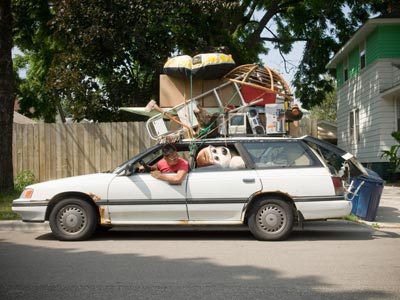
You don’t have to haul gravel to care about payload. Sedans have limits too. They just hide them better than trucks do. We ignore the weight until the suspension bottoms out. Or the handling goes soft. A family road trip feels fine until the third child climbs in with a backpack full of books. Then you see the truth.
Manufacturers use a standard math trick. They assume every person weighs 150 pounds (68 kg). This includes you. And the kid in the booster seat. And the dog if they count him as a passenger in the weight distribution model. It is an average. You might weigh 200. He might weigh 120. The car doesn’t care. The door jamb sticker does.
So an empty back seat in a five-seater is not free space. It is a 450-pound (204 kg) reserve. You can fill that with luggage. Coolers. Camping gear. Just don’t exceed the total Gross Vehicle Weight Rating (GVWR). That number is the hard ceiling. It is the max weight the car can safely handle. Everything in it. Everyone in it. All of it.
SUV Payload
People think SUVs are the payload kings. They are heavy. They sit high. They look like they could swallow a refrigerator. But weight scales with size. A larger frame means a heavier shell. The engine has to be bigger. The brakes have to be stronger. So the base curb weight of a mid-size SUV is often higher than a full-size sedan.
That doesn’t mean the payload capacity drops. Usually, it stays similar or grows slightly. But the margin for error shrinks. You have less wiggle room before the tires squeal. The center of gravity is higher. If you pack an SUV to its limit with roof boxes and cargo, you aren’t just dealing with weight. You are dealing with dynamics.
“Most car manufacturers factor in 150 pounds per person per seating position.”
Consider a typical crossover. Let’s say its GVWR is 5,500 lbs. The curb weight is 4,200 lbs. Your payload capacity is 1,300 lbs. That sounds like a lot. Until you account for the 200 lb driver. The 150 lb passenger. Two kids. 600 lbs gone. You have 700 lbs left for gas, cargo, and accessories. A full tank of gas adds 150 lbs. Now you are at 550 lbs for stuff. That is two suitcases and a tent. Not a grand piano.
Some luxury SUVs offer air suspension. They can adjust the ride height. They can keep the body level under load. But they don’t increase the GVWR. The springs compress. The shocks work harder. The tires wear faster. The payload limit remains the same legal and physical boundary. It is not a suggestion. It is a physics equation.
Which SUV handles heavy loads best? Look at the payload number on the door sticker. Not the towing capacity. Towing is different. Towing involves a hitch. It involves a separate calculation for tongue weight. Payload is what sits on the vehicle. Tongue weight counts toward payload. If you tow 1,000 lbs, 100-1
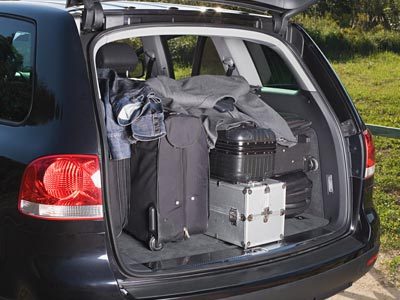
Pickup trucks dominate the hauling conversation, but SUVs occupy a strange middle ground. They offer car-like comfort with truck-like utility. Or so the marketing suggests. In reality, an SUV’s payload sits squarely between a sedan and a heavy-duty truck. It beats a car. It rarely matches a proper work truck.
The ease of loading an SUV is undeniable. Flip the rear seats forward. You get a contiguous cargo tunnel. This design invites heavy-duty gear, camping equipment, or bulkier household items. The roof provides weather protection that open-bed trucks lack. But that roof also imposes a hard ceiling on vertical stacking. You cannot pile cargo higher than the roofline without risking structural integrity.
Safety is the real constraint here. The perception of the SUV as an invincible cargo hauler is dangerous. Literally. The center of gravity is higher than a sedan. Load it too heavily, and stability vanishes. Rollover risk spikes exponentially once you exceed design limits. The physics don’t care about your weekend plans.
Manufacturers responded to consumer anxiety and regulatory pressure. Electronic stability control became standard. It helps mitigate loss of control. But legislation did more. Since September 2004, the National Highway Traffic Safety Administration (NHTSA) has mandated specific labeling. Every vehicle with a Gross Vehicle Weight Rating (GVWR) under 10,000 pounds (4,536 kg) must display a placard.
This label is not optional decoration. It states the maximum combined weight of all occupants and cargo. It is located on the doorjamb. Check yours. If you ignore it, you are gambling with physics.
So what if you need to haul something particularly heavy? Can you increase your payload capacity? On the next page, we’ll find out.
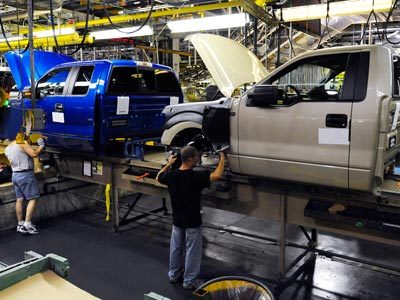
You’ve crunched the numbers. You know exactly how much your vehicle can carry. But that number isn’t enough. You see a trailer. You see a job that needs doing. And your stock payload capacity is staring you in the face like a brick wall.
Is there a way around it?
Yes. But not the way you might think. You don’t just add more steel to your frame and call it a day. You upgrade the package.
The Towing Package Upgrade
Truck manufacturers are not blind to your needs. Almost every maker offers optional towing packages for their heavy-duty and light-duty trucks. These aren’t just badge upgrades. They are functional changes that alter how your vehicle handles weight.
What’s inside varies by brand. Ford might give you a trailer brake controller. GM might include a heavy-duty cooling system. But the core components are usually consistent.
Here is what you typically get in a standard towing package:
- Trailer wiring harness: You need power for the trailer’s lights. The stock wiring often chokes under load. A dedicated harness fixes this.
- Heavy-duty hitch: The factory receiver is often rated for light use. Upgrading to a Class IV or V hitch increases the structural integrity at the rear.
- Safety chains: Standard issue, but often upgraded in heavy-duty packages.
- Transmission cooler: This is the big one. Towing generates heat. Transmissions melt. An auxiliary cooler keeps fluid temperatures down during long climbs.
- Brake upgrade: Stronger calipers or rotors. You need to stop both the truck and the trailer.
- Engine swap: Some packages include a larger displacement engine or a high-output version of the standard mill. This boosts torque and payload capacity indirectly by allowing the vehicle to handle the stress without bottoming out.
The Danger Zone
Here is the hard truth. You cannot cheat physics.
If you ignore the payload rating, you are playing Russian roulette with your suspension and tires. Overloading a vehicle changes its center of gravity. It increases stopping distances. It tears through bushings and shocks.
It is also a legal time bomb.
Pull over for a broken taillight. The officer looks at your tires. They are bulging. They look overloaded. He checks your registration. He sees you are carrying more weight than the Gross Vehicle Weight Rating (GVWR) allows.
You get a ticket for unsafe loading.
No one enjoys this. It costs money. It costs time. And it ruins your day.
Finding Your Specifics
You need to know your limits before you load up. Every make and model has specific numbers. The charts below break down the max payload (lbs) for popular models from 2006 to 2009.
Note the gaps. A dash (–) means data was not available in this specific dataset for that year/model. Do not assume zero. Assume unknown.
Acura Payload
| Year | Model | Max Payload (lbs) |
|---|---|---|
| 2006 | MDX | – |
| 2006 | RL | – |
| 2006 | RSX | – |
| 2006 | TL | – |
| 2006 | TSX | – |
| 2007 | MDX | 1158 |
| 2007 | RL | – |
| 2007 | RDX | 870 |
| 2007 | TL | – |
| 2007 | TSX | 850 |
| 2008 | MDX | 1158 |
| 2008 | RL | – |
| 2008 | RSX | 870 |
| 2008 | TL | – |
| 2008 | TSX | 850 |
| 2009 | MDX | 1158 |
| 2009 | RL | – |
| 2009 | RSX | 870 |
| 2009 | TSX | 850 |
More Acura Specs:
– Acura GVWR
– Acura GAWR
– Acura GCWR
– Acura Cargo Carrying Capacity
– Acura Curb Weight
– Acura Towing Capacity
Audi Payload
| Year | Model | Max Payload (lbs) |
|---|---|---|
| 2006 | A3 | – |
| 2006 | A4 | – |
| 2006 | A6 | – |
| 2006 | A8 | 1213 |
| 2006 | S4 | – |
| 2006 | TT | 728 |
| 2007 | A3 | – |
| 2007 | A4 | – |
| 2007 | A6 | – |
| 2007 | A8 | – |
| 2007 | Q7 | – |
| 2007 | RS4 | – |
| 2007 | S4 | – |
| 2007 | S6 | – |
| 2007 | S8 | 1213 |
| 2008 | A3 | – |
| 2008 | A4 | – |
| 2008 | A5 | – |
| 2008 | A6 | – |
| 2008 | A8 | – |
| 2008 | Q7 | – |
| 2008 | R8 | – |
| 2008 | RS4 | – |
| 2008 | S4 | – |
| 2008 | S5 | – |
| 2008 | S6 | – |
| 2008 | S8 | – |
| 2008 | TT | – |
| 2009 | A3 | – |
| 2009 | A4 | – |
| 2009 | A5 | – |
| 2009 | A8 | – |
| 2009 | Q7 | – |
| 2009 | R8 | – |
| 2009 | S4 | – |
| 2009 | S5 | – |
| 2009 | S8 | – |
| 2009 | TT | – |
More Audi Specs:
Chevrolet Payload
The 2006 lineup tells you exactly what Chevy was pushing. If you were looking at light trucks, the Silverado 3500 HD was the king with 5169 lbs of max payload. That’s nearly three tons. The 2500 HD wasn’t far behind at 3606 lbs. Even the smaller 1500 models carried decent weight, with the standard Silverado hitting 1913 lbs. The hybrid version? Only 1162 lbs. You paid a penalty for that fuel economy.
Vans held their own. The Express 1500 moved 2306 lbs. Compact SUVs like the TrailBlazer were lighter, sitting at 1194 lbs, while the TrailBlazer EXT added a bit more heft at 1429 lbs. The HHR was strict about its limits. You had exactly 900 lbs to play with.
By 2007, things shifted. The Tahoe got stronger, jumping to 1835 lbs. The Suburban 1500 dipped slightly to 1593 lbs, while the heavy-duty 2500 version of the Suburban dropped to 2561 lbs. The Silverado 1500 Classic kept the older spec of 1913 lbs, but the new 2007 model fell to 1658 lbs. Why? Newer platforms, probably. The Silverado 2500 HD lost some ground too, settling at 3458 lbs.
2008 didn’t change the script much. The Tahoe stayed at 1835 lbs. The Tahoe Hybrid came in hot with 1830 lbs, almost matching its gas-only sibling. The Silverado 3500 HD finally got a number other than “Classic” listed, hitting 3621 lbs in some configurations, though the 2009 specs show it climbing higher.
2009 brought the heavy hitters. The Express 3500 maxed out at 4147 lbs. The Silverado 3500 HD jumped to 3873 lbs. The Colorado pickup dropped to 1250 lbs, a noticeable decrease from the previous year’s 1316 lbs. If you needed payload in a mid-size truck that year, you might have been disappointed.
Chrysler Payload
Chrysler’s payload numbers in this era were generally modest. Most sedans and coupes like the 300 and Sebring don’t have a listed max payload in standard tables, likely because they weren’t designed as workhorses. The PT Cruiser was an exception. In 2007, it could haul 1907 lbs. By 2008, that capacity shrank to 889 lbs. A strange drop, but the data is what it is.
Minivans were the bread and butter. The Town & Country started 2007 strong at 1200 lbs and held that line through 2008. The Pacifica was lighter, starting at 889 lbs and dropping to 865 lbs by 2008.
The Aspen SUV was a solid performer. It maintained a steady 1600 lbs from 2007 through 2009. The hybrid variant of the Aspen in 2009 offered 1500 lbs, sacrificing just 100 lbs for efficiency.
Dodge Payload
Dodge trucks carried serious weight. The Ram 3500 in 2006 was a beast at 4660 lbs. By 2008, that number climbed to 4870 lbs. The Sprinter vans were impressive too. The Sprinter Wagon 2500 started at 4824 lbs in 2006, though that dropped significantly to 3074 lbs by 2008. The van versions were consistently higher than the wagon, with the Sprinter Van 3500 hitting 4530 lbs in 2008 and 2009.
Pickups were the main story. The Ram 1500 saw some volatility. It started at 1750 lbs in 2006 and 2007, rose to 1810 lbs in 2008, then plummeted to 1490 lbs in 2009. That’s a massive drop for the same model name. The Ram 2500 grew steadily: 3020 lbs (2006) to 3260 lbs (2009).
The Ram 3500 had a weird year in 2009. It dropped to 3560 lbs, down from 4870 lbs in 2008. You have to check the specific trim and configuration, as these numbers varied wildly by axle ratio and engine. The Dakota was consistent, holding 1630 lbs in 2008 and 2009 after starting at 1750 lbs in 2006.
Ford Payload
Ford’s E-Series vans were the heavy lifters. The E 350 Super Duty in 2006 moved 4165 lbs. It stayed high, hitting 4200 lbs in 2007. By 2009, it was still at 4060 lbs. The E 250 was also a powerhouse, ranging from 3435 lbs in 2006 to 3530 lbs in 2009.
Trucks told a different story. The F 150 started at 1640 lbs in 2006 and climbed to 1650 lbs in 2007 and 2008. Then, in 2009, it jumped to 3030 lbs. That’s not a typo. The 2009 redesign brought a massive increase in payload capacity. If you were buying a used F 150, the year mattered more than the trim.
The F 250 held steady around 3100 lbs for 2006 through 2008, then dropped slightly to 3030 lbs in 2008. The F 350 started at 4000 lbs, dipped to 3900 lbs in 2008 and 2009. The heavy-duty F 450 appeared in 2008 with a staggering 6120 lbs of payload, before settling back to 3900 lbs in 2009 (likely a data variation or specific cab/chassis config).
SUVs like the Expedition stayed consistent at 1822 lbs from 2007 to 2009. The Escape Hybrid was oddly stable too, holding 1040 lbs across three years.
GMC Payload
GMC and Chevy share platforms, but the payload numbers don’t always match perfectly. In 2006, the Sierra 3500 moved 4658 lbs, while the Chevy Silverado 3500 HD was listed at 5169 lbs. A difference of over 500 lbs for essentially the same truck. The Sierra 2500 HD started at 4058 lbs, which is higher than the Silverado 2500 HD’s 3606 lbs.
The Yukon and Tahoe split differed too. The Tahoe listed 1522 lbs in 2006, while the Yukon was slightly higher at 1522 lbs (wait, they match in 2006). In 2007, the Tahoe jumped to 1835 lbs, while the Yukon dropped to 1835 lbs (also matching). The Yukon Hybrid in 2008 and 2009 held steady at 1830 lbs.
The Canyon pickup was strong. It held 1547 lbs from 2006 through 2008, then dropped to 1422 lbs in 2009. The Sierra 1500 followed a similar trend, starting at 1889 lbs, peaking at 1952 lbs in 2007, and falling to 1842 lbs in 2009.
Vans remained consistent. The Savana 1500 stuck to 2306 lbs for all four years. The Savana 3500 held 4147 lbs steady. No changes there.
Comparing Heavy Haulers
When you look at the 2006 Ram 3500 at 4660 lbs versus the 2006 GMC Sierra 3500 at 4658 lbs, the difference is negligible. But look at the Silverado 3500 HD at 5169 lbs. It outperformed both. That’s nearly 1000 lbs more than the Ram.
In 2009, the Ford F 150’s jump to 3030 lbs put it in a different league than the Dodge Ram 1500 at **1490 lbs
Honda Payload Capacity by Model
Honda’s lineup from 2006 to 2009 tells a story of diversification. The Ridgeline was already proving its worth as a utility vehicle, while the Odyssey remained the family hauler’s choice for people-moving, not just cargo.
2006 Honda Payload
The Ridgeline led the charge with a solid 1549 lbs max payload. The Odyssey wasn’t far behind at 1349 lbs. The Insight, surprisingly, could handle 400 lbs, while most other models listed lack specific public payload data for that year.
2007 Honda Payload
The Civic gained a 385 lbs rating. The Element jumped to 675 lbs, and the new Pilot entered with 1322 lbs. The Ridgeline held steady at 1549 lbs, and the Odyssey stayed at 1349 lbs.
2008 Honda Payload
Consistency here. Civic at 385 lbs. Element at 675 lbs. Odyssey at 1349 lbs. Pilot at 1322 lbs. Ridgeline at 1549 lbs. The rest of the fleet showed no new figures.
2009 Honda Payload
The Odyssey and Pilot remained constant at 1349 lbs and 1322 lbs respectively. Other models like the Civic and Fit did not have updated public payload specs listed for this period.
“Payload is more than just cargo. It includes passengers, fuel, and accessories. Overloading any Honda risks suspension failure and voided warranties.”
HUMMER Payload Capacity by Model
HUMMER didn’t build cars. They built obstacles. The H3 was the entry point, while the H2 was a brick on wheels. Their payload numbers reflect that brute engineering.
2006 HUMMER Payload
The H1 Alpha could carry 3087 lbs, a staggering amount for a vehicle that size. The H3 managed 1150 lbs. The H2 had no public figure listed.
2007 HUMMER Payload
The H3 stayed at 1150 lbs. The H2 remained unlisted.
2008 HUMMER Payload
The H2 finally showed a number: 2200 lbs. The H3 held firm at 1150 lbs.
2009 HUMMER Payload
The H2 remained at 2200 lbs. The H3 got a slight bump to 1312 lbs. The H3T pickup variant was rated for 1090 lbs.
“If you need to tow, check the GCWR, not just payload. These trucks are heavy. Their payload is impressive, but their turning radius is not.”
Hyundai Payload Capacity by Model
Hyundai was in a transition phase. 2006 and 2007 were lean years for public payload data. By 2008, the lineup expanded, but specific payload figures remained scarce in most catalogs.
2006-2008 Hyundai Payload
Models like the Accent, Azera, Elantra, Santa Fe, Sonata, Tiburon, and Tucson listed no public max payload data for 2006, 2007, and 2008. The Veracruz also lacked figures in 2007 and 2008.
2009 Hyundai Payload
The lineup shifted. The Genesis, Accent, Azera, and Sonata appeared, but none had specific payload numbers listed in this dataset.
“Hyundai’s focus during this era was on warranty and reliability, not heavy-duty specs. If you need payload capacity, they weren’t the primary choice.”
Infiniti Payload Capacity by Model
Infiniti balanced luxury with surprising utility. The FX series and QX56 offered robust payload numbers, while the sedans like the G and M series were lighter on their feet.
2006 Infiniti Payload
The QX56 led with 1440 lbs. The FX35 carried 1183 lbs, and the FX45 handled 1091 lbs. The G35 managed 886 lbs, and the Q45 held 979 lbs.
2007 Infiniti Payload
The FX35 remained at 1183 lbs, and the FX45 at 1091 lbs. The G35, M35, M45, and QX56 had no public figures listed.
2008 Infiniti Payload
The M35 returned with 996 lbs, and the M45 with 1010 lbs. The QX56 jumped to 1553 lbs. The FX35 stayed at 1183 lbs, FX45 at 1091 lbs, and the new G37 took 1040 lbs.
2009 Infiniti Payload
The FX35 increased slightly to 1213 lbs. The new FX50 managed 1185 lbs. The QX56 held steady at 1553 lbs.
“The QX56 is a tank. It handles over 1500 lbs of payload. The sedans? Stick to passengers and light luggage.”
Isuzu Payload Capacity by Model
Isuzu’s trucks and SUVs from this era were workhorses. The Ascender and i-series pickups showed significant payload capabilities, especially in the smaller i-290.
2006 Isuzu Payload
The i-280 could handle 1532 lbs. The Ascender managed 1133 lbs, and the i-350 held 1190 lbs.
2007 Isuzu Payload
The i-290 maintained 1532 lbs. The Ascender stayed at 1133 lbs. The i-370 jumped to 1516 lbs.
2008 Isuzu Payload
The Ascender remained at 1133 lbs. The i-290 dropped slightly to 1512 lbs, and the i-370 fell to 1260 lbs.
“Isuzu didn’t make many trucks, but the ones they did make were built for labor. The i-series pickups had some of the best payload-to-weight ratios in their class.”
Jaguar Payload Capacity by Model
Jaguar’s payload numbers reflect their focus on style and performance. The XK and XKR models are lighter, while the X-Type and XJ8 carried more substance.
2006 Jaguar Payload
The X-Type managed 1058 lbs. The S-Type, XJ8, XK8, and XJR had no public figures listed.
2007 Jaguar Payload
The X-Type stayed at 1058 lbs. The S-Type, XJ8, XJR, and XK had no figures.
2008 Jaguar Payload
The X-Type remained at 1058 lbs. The XK dropped to 815 lbs, and the XKR fell to 772 lbs. The S-Type, XJ8, and XJR had no public data.
2009 Jaguar Payload
The XKR stayed at 772 lbs. The XK Coupe held 815 lbs. The XF and XJ8 had no figures listed.
“Jaguar payloads are modest. They aren’t designed for hauling. If you need to carry weight, look elsewhere. These cars are for the road, not the trailer.”
Jeep Payload Capacity by Model
Jeep’s lineup from 2006 to 2009 ranged from the rugged Wrangler to the family-friendly Commander. Payload varied significantly based on trim and engine options.
2006 Jeep Payload
The Commander led with 1620 lbs. The Liberty managed 1150 lbs, the Grand Cherokee 1100 lbs, and the Wrangler 800 lbs.
2007 Jeep Payload
The Commander dropped to 1310 lbs. The Compass entered with 925 lbs, the Grand Cherokee with 1050 lbs, the Liberty at 1150 lbs, and the Wrangler at 1000 lbs.
2008 Jeep Payload
The Commander held 1300 lbs. The Compass at 925 lbs, Grand Cherokee at 1180 lbs, Liberty at 1150 lbs, Patriot at 925 lbs, and both Wrangler and Wrangler Unlimited at 1000 lbs.
2009 Jeep Payload
The Commander stayed at 1300 lbs. Compass at 925 lbs, Grand Cherokee at 1180 lbs, Liberty at 1150 lbs, Patriot at 925 lbs, Wrangler at 1000 lbs, and Wrangler Unlimited increased to 1150 lbs.
“The Wrangler Unlimited gets a bump in payload in 2009. If you’re building a trail
Mazda Payload Specifications (2006-2009)
The mid-2000s Mazda lineup was a mix of practical commuters and niche enthusiasts. If you are loading up a B-Series truck, the numbers tell a specific story about utility. The 2006 Mazda B2300 payload sits at 1,260 lbs. That is tight. The B3000, a bit more robust, pushes to 1,680 lbs. The heavy-duty B4000? Back down to 1,260 lbs. It feels like an afterthought.
Cars tell a different tale. The Mazda5 minivan is surprisingly capable for its size. You get 1,239 lbs of payload in 2006 and 2007. Drop to the 2008 model year and it sheds to 1,191 lbs. The Mazda3 doesn’t list a payload capacity in these records. The Mazda6, however, holds its own. 1,319 lbs in 2006. Then it drops. By 2007, the Mazda6 payload is 1,080 lbs. It stays there through 2008 and 2009, settling at 1,082 lbs.
Performance versions hurt the numbers. The MazdaSpeed6 starts at 963 lbs in 2006. It doesn’t improve in 2007. The MX-5 Miata? Barely any room for gear. 637 lbs in 2006 and 2007. 2008 sees a tiny cut to 633 lbs. The RX-8 is similarly constrained. 779 lbs in 2006. 765 lbs in 2007 and 2008. 754 lbs in 2009. The Tribute SUV offers modest utility. 988 lbs in 2006. 1,057 lbs in 2008. The Hybrid version of the Tribute in 2008 actually gains a bit, hitting 1,083 lbs. The MPV minivan in 2006 carries 1,506 lbs. By 2009, the B2300 payload drops to 1,200 lbs.
Mercedes-Benz Payload Data (2006-2009)
Mercedes doesn’t always list payload for their sedans. The C-Class, CL-Class, CLK-Class, CLS-Class, and S-Class show zero or no data in these records. You are mostly guessing. But the SUVs and trucks? Those numbers are clear.
The ML-Class dominates the early years. The 2006 Mercedes ML350 payload is 1,616 lbs. The ML500 is lower, at 1,496 lbs. Jump to 2007 and the ML350 jumps to 1,635 lbs. The ML320 sits at 1,422 lbs. The ML500 recovers to 1,620 lbs. The heavy-hitting ML63 AMG drops to 1,257 lbs. In 2008, the ML350 and ML550 both hold at 1,635 and 1,620 lbs respectively. The ML320 stays at 1,422 lbs. The AMG version is missing in 2008 data. By 2009, the ML350, ML320, ML550, and GL450/GL550 all cluster around the 1,620 lb mark. The ML63 AMG climbs back to 1,300 lbs.
The R-Class is a van on wheels. In 2006, it carries 2,000 lbs. In 2007, that drops to 1,635 lbs. By 2009, it’s down further to 1,365 lbs. The G-Class offers serious utility. The G500 in 2007 is 1,289 lbs. In 2008, it surges to 1,764 lbs. The G55 sits at 1,433 lbs. The SLR McLaren is a supercar, not a hauler. Its 2006 Mercedes SLR McLaren payload is a meager 626 lbs. In 2008, it plummets to just 342 lbs. The E-Class provides a steady 1,157 lbs from 2007 through 2009.
Mercury Payload Breakdown (2006-2009)
Mercury was essentially Ford with a different badge. The numbers reflect that lineage. The Grand Marquis, Milan, Montego, and Sable don’t list payload capacities. They are likely negligible or not tracked in this specific dataset.
The Mountaineer is the workhorse here. It starts at 1,549 lbs in 2006. Drops to 1,443 lbs in 2007. Stays flat through 2008 and 2009. The Monterey minivan holds steady at 1,320 lbs for 2006 and 2007. The Mariner compact SUV is consistent. 1,075 lbs in 2006 and 2007. It drops slightly to 1,059 lbs in 2008 and 2009. The Hybrid variants of the Mariner are lighter. They max out at 920 lbs across all four years. It’s a trade-off. You save on fuel, you lose on hauling power.
MINI Payload Numbers (2006-2009)
MINI didn’t offer much payload space. These cars are about style and agility, not hauling lumber. The 2006 MINI Cooper Hardtop payload is 816 lbs. The Convertible is lighter at 771 lbs. This holds true for 2007.
In 2008, the Clubman joins the party. It matches the Hardtop at 816 lbs. The Convertible remains at 771 lbs. By 2009, the high-performance John Cooper Works variants arrive. The JCW Hardtop and JCW Clubman both carry 816 lbs. Nothing changes. The numbers are static. You aren’t loading these with heavy cargo unless you want to ruin the handling.
Mitsubishi Payload Specs (2006-2009)
Mitsubishi had a few solid options. The Raider pickup truck is the king of payload here. In 2006, it holds 1,590 lbs. It drops slightly to 1,580 lbs in 2007 and 2008. The Outlander SUV sees a weird spike. In 2006, it’s only 904 lbs. In 2007, it jumps to 1,538 lbs. Then it drops back to 1,169 lbs in 2008. The Eclipse coupe is consistent. 794 lbs for 2006, 2007, and 2008. In 2009, it bumps up to 827 lbs.
The Galant sedan sits around 900 lbs. 969 lbs in 2006. 937 lbs in 2007 and 2008. Back to 981 lbs in 2009. The Lancer picks up the slack in later years. It’s missing in 2007 data. In 2008 and 2009, it holds steady at 1,157 lbs. The Endeavor SUV is consistent at 1,055 lbs for 2006, 2007, and 2008.
Nissan Payload Capabilities (2006-2009)
Nissan had some heavy hitters. The Titan pickup is a beast. In 2006, it carries 1,549 lbs. It dips to 1,490 lbs in 2007. Then it skyrockets in 2008 and 2009 to 2,063 lbs. That is a massive jump. The Frontier is steady. 1,464 lbs from 2006 through 2009. The Armada SUV starts high at 1,693 lbs in 200
The numbers don’t lie. If you think your daily driver can haul a full load of gravel without complaining, check the spec sheet first. Payload is the hard limit on how much stuff you can throw into a vehicle before it stops being a car and starts being a liability.
Here is the breakdown for the brands that populated our roads between 2006 and 2009.
Saturn Payload
Saturn was trying to find its footing in the compact and crossover space. The Relay van was a workhorse, but don’t expect it to carry much more than a small garage cleanout.
| Year | Model | Max Payload (lbs) |
|---|---|---|
| 2006 | Ion | – |
| 2006 | Relay | 1350 |
| 2006 | VUE | 1331 |
| 2007 | Aura | 1009 |
| 2007 | Aura Hybrid | – |
| 2007 | Ion | – |
| 2007 | Outlook | 1678 |
| 2007 | Relay | 1354 |
| 2007 | Sky | – |
| 2007 | VUE | 1331 |
| 2007 | VUE Hybrid | 1511 |
| 2008 | Astra | 893 |
| 2008 | Aura | 1009 |
| 2008 | Aura Hybrid | – |
| 2008 | Outlook | 1678 |
| 2008 | Sky | – |
| 2008 | VUE | 1000 |
| 2008 | VUE Hybrid | 1111 |
| 2009 | Astra | – |
| 2009 | Aura | 1009 |
| 2009 | Aura Hybrid | – |
| 2009 | Outlook | 1709 |
| 2009 | Sky | – |
| 2009 | VUE | 1000 |
| 2009 | VUE Hybrid | 1111 |
The 2009 Outlook hits the peak payload for Saturn at 1,709 lbs. It’s the largest crossover they ever made.
More Saturn specs:
– Saturn GVWR
– Saturn GAWR
– Saturn GCWR
– Saturn Cargo Carrying Capacity
– Saturn Curb Weight
– Saturn Towing Capacity
Scion Payload
Scion was all about youth. Cheap cars. Minimalist. You wouldn’t be loading a Scion with bricks. Most entries show zero, likely because the manufacturer didn’t publish specific payload figures or the limit was too low to be a selling point.
| Year | Model | Max Payload (lbs) |
|---|---|---|
| 2006 | tC | – |
| 2006 | xA | – |
| 2006 | xB | – |
| 2007 | tC | – |
| 2008 | tC | – |
| 2008 | xB | – |
| 2008 | xD | – |
| 2009 | tC | – |
| 2009 | xB | – |
| 2009 | xD | – |
More Scion specs:
– Scion GVWR
– Scion GAWR
– Scion GCWR
– Scion Cargo Carrying Capacity
– Scion Curb Weight
– Scion Towing Capacity
smart Payload
Tiny cars have tiny limits. The smart fortwo is a city runner, not a mover.
| Year | Model | Max Payload (lbs) |
|---|---|---|
| 2008 | fortwo | 463 |
More smart specs:
– smart GVWR
– smart GAWR
– smart GCWR
– smart Cargo Carrying Capacity
– smart Curb Weight
– smart Towing Capacity
Subaru Payload
Subaru knows AWD. They also know weight limits. The Tribeca started strong but dropped significantly in payload capacity by 2008. The Forester and Outback remain the reliable haulers.
| Year | Model | Max Payload (lbs) |
|---|---|---|
| 2006 | B9 Tribeca | 1560 |
| 2006 | Baja | 1070 |
| 2006 | Forester | 1060 |
| 2006 | Impreza Sedan | 955 |
| 2006 | Impreza Wagon | 995 |
| 2006 | Impreza Outback Sport | 1132 |
| 2006 | Impreza WRX Sti | 794 |
| 2006 | Legacy Sedan | 1200 |
| 2006 | Legacy Wagon | 1300 |
| 2006 | Outback | 1245 |
| 2007 | B9 Tribeca | 1560 |
| 2007 | Forester | 1010 |
| 2007 | Impreza Sedan | 955 |
| 2007 | Impreza Wagon | 995 |
| 2007 | Impreza Outback Sport | 1132 |
| 2007 | Legacy Sedan | 1055 |
| 2007 | Legacy Wagon | 1290 |
| 2007 | Outback | 995 |
| 2008 | Forester | 1010 |
| 2008 | Impreza Wagon | 976 |
| 2008 | Impreza Sedan | 856 |
| 2008 | Impreza Outback Sport | 1082 |
| 2008 | Impreza WRX Sti | 1080 |
| 2008 | Legacy | 1055 |
| 2008 | Outback | 1085 |
| 2008 | Tribeca | 660 |
| 2009 | Forester | 1230 |
| 2009 | Legacy | 1055 |
| 2009 | Outback | 1078 |
| 2009 | Tribeca | 660 |
More Subaru specs:
– Subaru GVWR
– Subaru GAWR
– Subaru GCWR
– Subaru Cargo Carrying Capacity
– Subaru Curb Weight
– Subaru Towing Capacity
Suzuki Payload
Suzuki was in the twilight years. The XL7 was the only consistent heavy lifter. The Aerio and Forenza were light compacts with modest limits.
| Year | Model | Max Payload (lbs) |
|---|---|---|
| 2006 | Aerio | 955 |
| 2006 | Forenza | 981 |
| 2006 | Grand Vitara | 1175 |
| 2006 | Reno | 941 |
| 2006 | Verona | – |
| 2006 | XL7 | 1168 |
| 2007 | Aerio | – |
| 2007 | Forenza | – |
| 2007 | Grand Vitara | – |
| 2007 | Reno | – |
| 2007 | SX4 | – |
| 2007 | XL7 | 1626 |
| 2008 | Forenza | 926 |
| 2008 | Grand Vitara | 1178 |
| 2008 | Reno | 926 |
| 2008 | SX4 | 893 |
| 2008 | XL7 | 1626 |