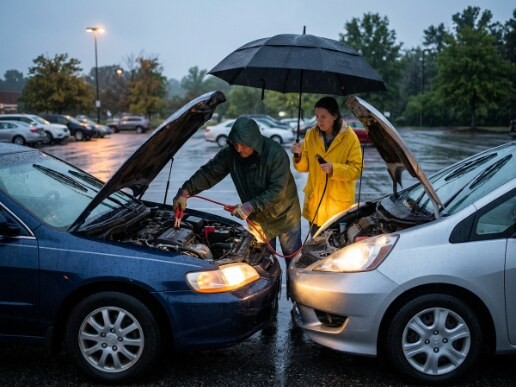
Rain does not automatically prohibit you from jump-starting a car, but it significantly raises the stakes for safety. Water is an excellent conductor of electricity, and when combined with the high voltage of a car battery, it creates a hazardous environment. While the process is entirely manageable with the right precautions, the margin for error shrinks considerably when the ground is wet and visibility is poor.
The core principle remains unchanged: keep electricity and water separated. By taking specific steps to insulate yourself, protect your equipment, and follow a strict connection sequence, you can navigate this common roadside dilemma without risking shock or vehicle damage.
The Core Risks: Why Water Matters
To understand the procedure, you must first understand the danger. A standard car battery operates at 12 volts, which is generally safe. However, during a jump start, the current flowing through the cables can be substantial. If water bridges the gap between positive and negative terminals—or between a cable clamp and the car’s body—it can cause:
- Short Circuits: Water can create an unintended path for electricity, leading to sparks that may ignite hydrogen gas emitted by the battery.
- Electrical Shock: Wet skin has much lower electrical resistance than dry skin, increasing the risk of shock if you accidentally touch a live terminal.
- Component Damage: Moisture can corrode battery terminals or interfere with the sensitive electronic systems in modern vehicles.
Key Insight: The goal is not to avoid the rain entirely, but to manage the moisture on the immediate work site—the battery terminals and cable connections.
Preparation: Gear and Environment
Before you even touch the jumper cables, set the stage for safety. The environment you create around the battery is your first line of defense.
- Dry Your Station: Use a clean, dry cloth to thoroughly wipe down the battery terminals of both vehicles. If corrosion is present, clean it with a baking soda solution and dry it completely before proceeding.
- Create Shelter: If possible, use an umbrella, a tarp, or even a large piece of cardboard to shield the battery area from direct rainfall. This keeps the terminals dry during the connection process.
- Personal Protective Equipment (PPE):
- Wear rubber gloves to insulate your hands.
- Put on rubber-soled shoes to prevent grounding yourself through wet pavement.
- Don a waterproof jacket to prevent rain from dripping onto the cables or battery while you work.
Inspecting Your Equipment
Faulty equipment is dangerous in any weather, but in the rain, it is critical. Inspect your jumper cables before use:
- Check Insulation: Look for cracks, tears, or exposed wires. If the insulation is compromised, do not use the cables. Moisture entering a crack can cause an immediate short circuit.
- Verify Clamps: Ensure the clamps grip tightly and are not corroded. Loose connections generate heat and sparks, both of which are risky in wet conditions.
- Consider a Portable Jump Starter: Modern portable jump starters often feature built-in safety mechanisms like reverse polarity protection and short-circuit prevention. They are generally safer than traditional cable-based methods in adverse weather because they isolate the power source from the vehicle’s battery more effectively.
The Safe Connection Sequence
Order matters. The sequence below is designed to minimize spark risk near the battery, where flammable hydrogen gas may accumulate.
- Position the Vehicles: Park the working car close enough for the cables to reach, but ensure the vehicles do not touch. Turn off both engines and all electrical accessories (lights, radio, AC).
- Connect Positive (+) First:
- Attach one red clamp to the positive (+) terminal of the dead battery.
- Attach the other red clamp to the positive (+) terminal of the working battery.
- Connect Negative (-) with Caution:
- Attach one black clamp to the negative (-) terminal of the working battery.
- Crucial Step: Attach the final black clamp to a solid, unpainted metal surface on the engine block or chassis of the dead car, away from the battery and fuel lines. Do not connect it to the negative terminal of the dead battery. This grounds the circuit while keeping sparks away from the battery’s hydrogen gas.
- Start the Engine:
- Start the working vehicle and let it run for 2–3 minutes to stabilize the voltage.
- Attempt to start the dead vehicle. If it doesn’t start immediately, wait a few minutes and try again. Avoid cranking the engine for more than 10 seconds at a time to prevent overheating the starter motor.
Disconnection and Aftercare
Once the engine is running, remove the cables in the reverse order of connection to minimize spark risk:
- Remove the black clamp from the grounded metal surface on the dead car.
- Remove the black clamp from the negative terminal of the working battery.
- Remove the red clamp from the positive terminal of the working battery.
- Remove the red clamp from the positive terminal of the dead battery.
Afterward, allow the recovered vehicle to run for at least 15–20 minutes to recharge the battery. Wipe down the terminals again if any moisture has accumulated during the process.
When to Call for Help
There are scenarios where attempting a jump start in the rain is not just difficult, but dangerous. Do not proceed if:
- Lightning is present: Even distant thunderstorms pose a risk of lightning strikes, which can travel through metal cables.
- Rain is heavy or accompanied by strong winds: If you cannot keep the battery area dry or maintain your footing, the risk of accident increases.
- You see standing water: Puddles around the battery or under the car can create unpredictable electrical paths.
- You are unsure of the procedure: If you feel hesitant, it is safer to wait for roadside assistance.
Final Thought: Jump-starting in the rain is a test of preparation, not just mechanics. By prioritizing dryness, using proper gear, and adhering to a strict safety protocol, you can overcome a dead battery without compromising your safety. When in doubt, waiting for better weather or professional help is always the wisest choice.