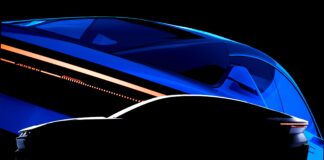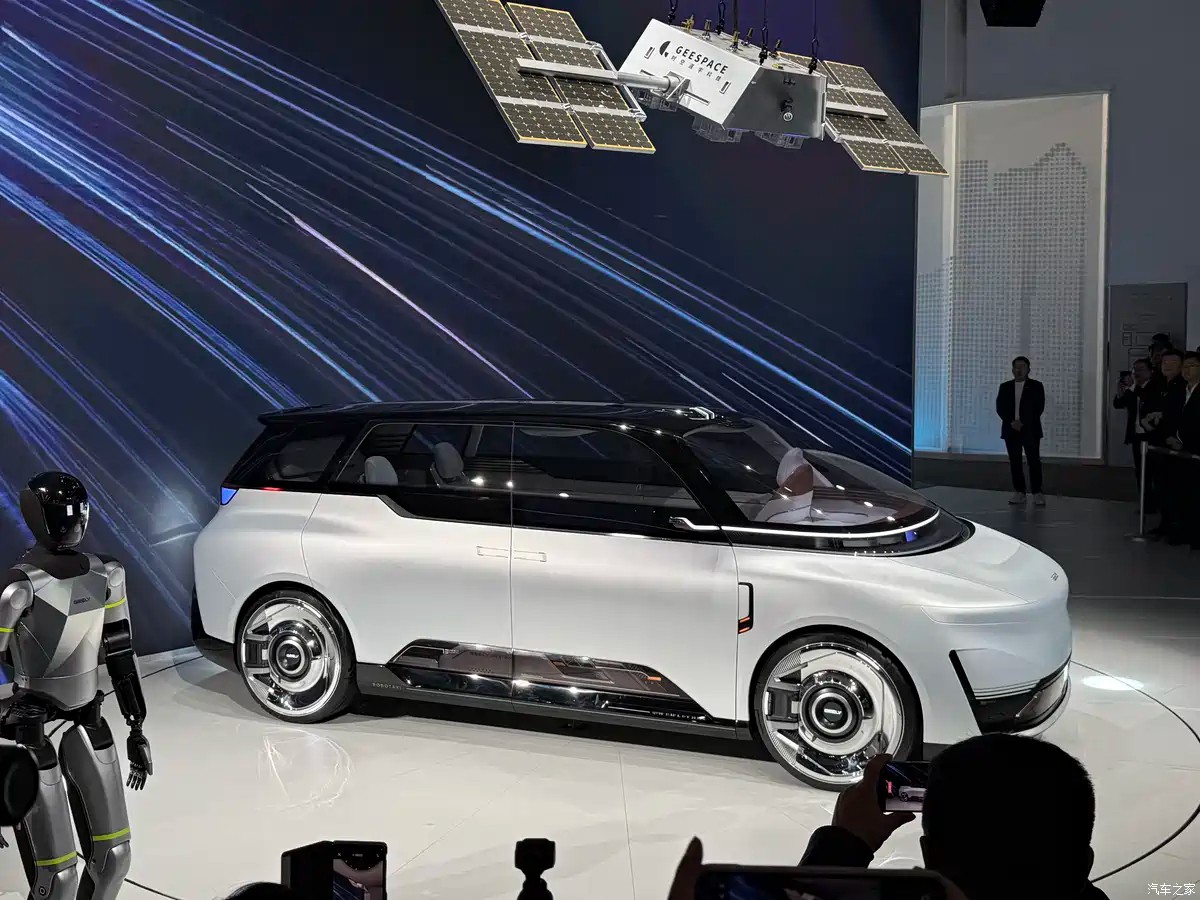
At the 2026 Beijing Auto Show, Geely introduced the Eva Cab, a native robotaxi prototype that signals a significant leap in China’s autonomous driving capabilities. Unlike previous iterations of self-driving cars that rely heavily on rigid programming, the Eva Cab is designed to “think” and “reason” through complex environments, aiming to bridge the gap between machine logic and human-like intuition.
The Intelligence Engine: Beyond Simple Perception
The most striking feature of the Eva Cab is its shift from traditional autonomous driving architectures to a more advanced World Action Model (WAM).
In standard autonomous systems, the process is linear: the car perceives an object, makes a decision, and then acts. The Eva Cab evolves this into a “closed-loop” system. By utilizing a 196-billion-parameter Step 3.5 large model, the vehicle can perform macro-planning (navigating a route) and micro-deduction (reacting to a sudden movement) simultaneously.
Key technical specifications include:
– Computing Power: An H9 high-level solution providing 1,400 TOPS (Trillion Operations Per Second).
– Processing Speed: An inference speed of 350 TPS, allowing the vehicle to make decisions three times faster than a human driver.
– Versatility: The system is designed to handle 99% of daily driving scenarios, including “unstructured” environments such as unmarked rural roads or navigating manual toll booths—tasks that typically baffle standard autonomous systems.
Hardware and Safety: A 360-Degree Shield
To feed this massive intelligence engine, the Eva Cab utilizes a dense network of sensors to ensure it never “loses sight” of its surroundings.
Perception and Maneuverability
The prototype is equipped with 43 perception components, including high-definition cameras and LiDAR. These sensors create a triple 360° network that eliminates blind spots. This hardware-software synergy is evident in the vehicle’s ability to perform complex maneuvers; Geely reports a 95% success rate in multi-turn U-turns, a benchmark often used to measure how “natural” a robot’s driving feels.
The AI Digital Chassis
Safety is further bolstered by Geely’s AI digital chassis. This system boasts a lightning-fast reaction time of just 4 milliseconds. This speed is critical for “active risk avoidance,” allowing the vehicle to make micro-adjustments to its physical stability and direction during extreme conditions, effectively preventing loss of control before a passenger even perceives a threat.
A Vision of the Future Interior
Reflecting its purpose as a dedicated transport service, the Eva Cab abandes the traditional driver-centric cockpit. By eliminating the steering wheel and conventional controls, Geely has reimagined the vehicle interior as a mobile lounge, prioritizing passenger comfort and space over manual operation.
The Road to Commercialization
Geely is not just building a concept; they are preparing for a rollout. Through a partnership with Caocao Mobility, the company is developing a customized version of the Eva Cab for mass production.
- Mass Production Target: 2027
- Goal: Transitioning unmanned driving from controlled testing environments into widespread, real-world commercial operations.
The introduction of the Eva Cab suggests a shift in the industry: the race is no longer just about seeing the road, but about understanding it. By focusing on “World Action Models,” Geely is attempting to solve the “edge case” problem—the unpredictable, messy reality of human driving that has long hindered fully autonomous transport.
Conclusion
The Eva Cab represents a move toward highly sophisticated, reasoning-based autonomous vehicles. If Geely meets its 2027 production goals, the integration of large-scale AI models into vehicle chassis could redefine urban mobility and the safety standards of public transportation.