For many driving enthusiasts, the appeal of a sports car lies in a delicate balance between raw performance and usability. For Chris Smith, a lifelong Lotus devotee, that balance has been a lifelong quest. Having owned various models over nearly three decades, Smith’s journey highlights a fundamental truth about the brand: while the lightweight Elise offers pure thrills, the more sophisticated Evora captures the “magic” without sacrificing too much substance.
From Raw Minimalism to Refined Power
Smith’s relationship with Lotus began in 1996 with an Elise S. At the time, the car was viewed by many as an impractical choice—a minimalist machine that prioritized lightness above all else. However, for Smith, the Elise provided a level of engagement that more conventional cars could not match.
His journey through the automotive landscape included a stint with a BMW 3 Series and a Porsche Cayman. While the Porsche was a high-quality machine, it failed to satisfy his specific craving for driver connection.
“It was a great car, but it was big and too comfortable and lacked the Lotus magic,” Smith notes.
This comparison touches on a common trend in the automotive industry: as cars become more technologically advanced and comfortable, they often lose the tactile, visceral feedback that defines a true driver’s car. Smith’s return to Lotus with a 2010 Elise S3—powered by a 1.6-litre Toyota engine—reaffirmed that driving for the sake of engagement often requires “wringing the neck” of the engine to keep it in the power band.
The Evora: The Ultimate Evolution
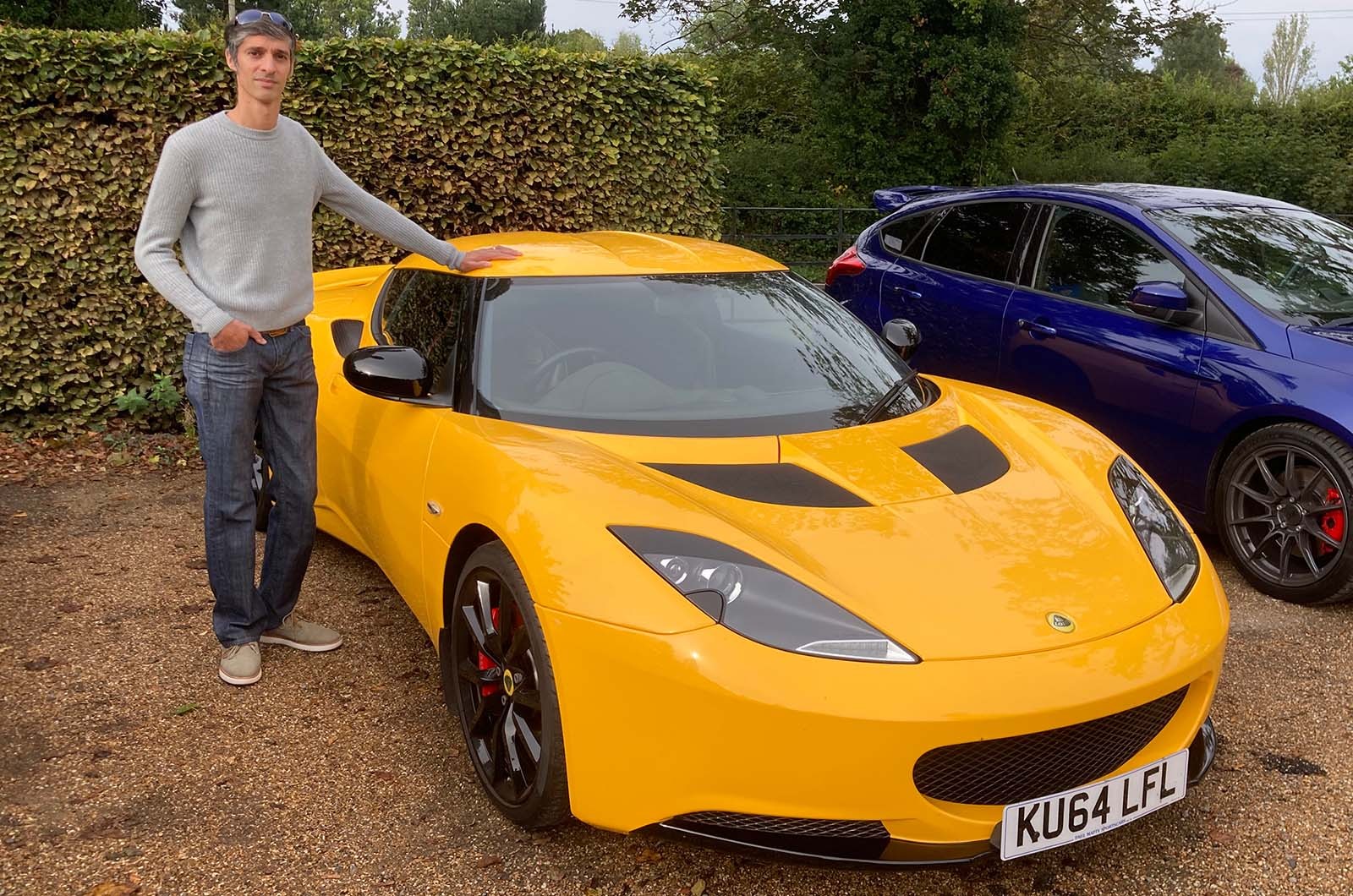
After exploring the Esprit Turbo, Smith eventually settled on his current vehicle: a 2014 Evora S Sports Racer. This model represents a significant step up in both capability and specification.
The “S” designation is critical to the car’s performance, denoting a supercharged 3.5-litre V6 Toyota engine. This powerplant delivers 345bhp, a substantial increase over the 276bhp found in the base model. As a limited-edition trim released in 2013, the Sports Racer was essentially a “best-of” compilation, featuring high-end options like the Sports and Tech Packs.
For a driver like Smith, the Evora offers a more complete package:
* Enhanced Performance: The supercharged V6 provides effortless power.
* Refined Specification: The Sports Racer trim ensures a premium, feature-rich experience.
* Collector Value: Unlike many depreciating assets, the Evora is showing signs of appreciation.
An Investment in Passion
The financial aspect of Smith’s ownership tells an interesting story about the secondary market for enthusiast vehicles. He purchased his Evora six years ago for £35,000 —a significant drop from its original £65,000 sticker price. However, as the market for well-maintained, special-edition Lotus models matures, the value is rebounding. Smith now estimates the car’s worth at approximately £40,000.
This upward trend in pricing suggests that as modern cars become increasingly digital and automated, analog driving experiences like those offered by Lotus are becoming increasingly rare and, consequently, more valuable.
Conclusion
Chris Smith’s progression from the minimalist Elise to the supercharged Evora illustrates a search for the perfect equilibrium between raw driving sensation and sophisticated performance. His experience suggests that while lightness is the soul of Lotus, it is the refined power of the Evora that truly sustains long-term passion.