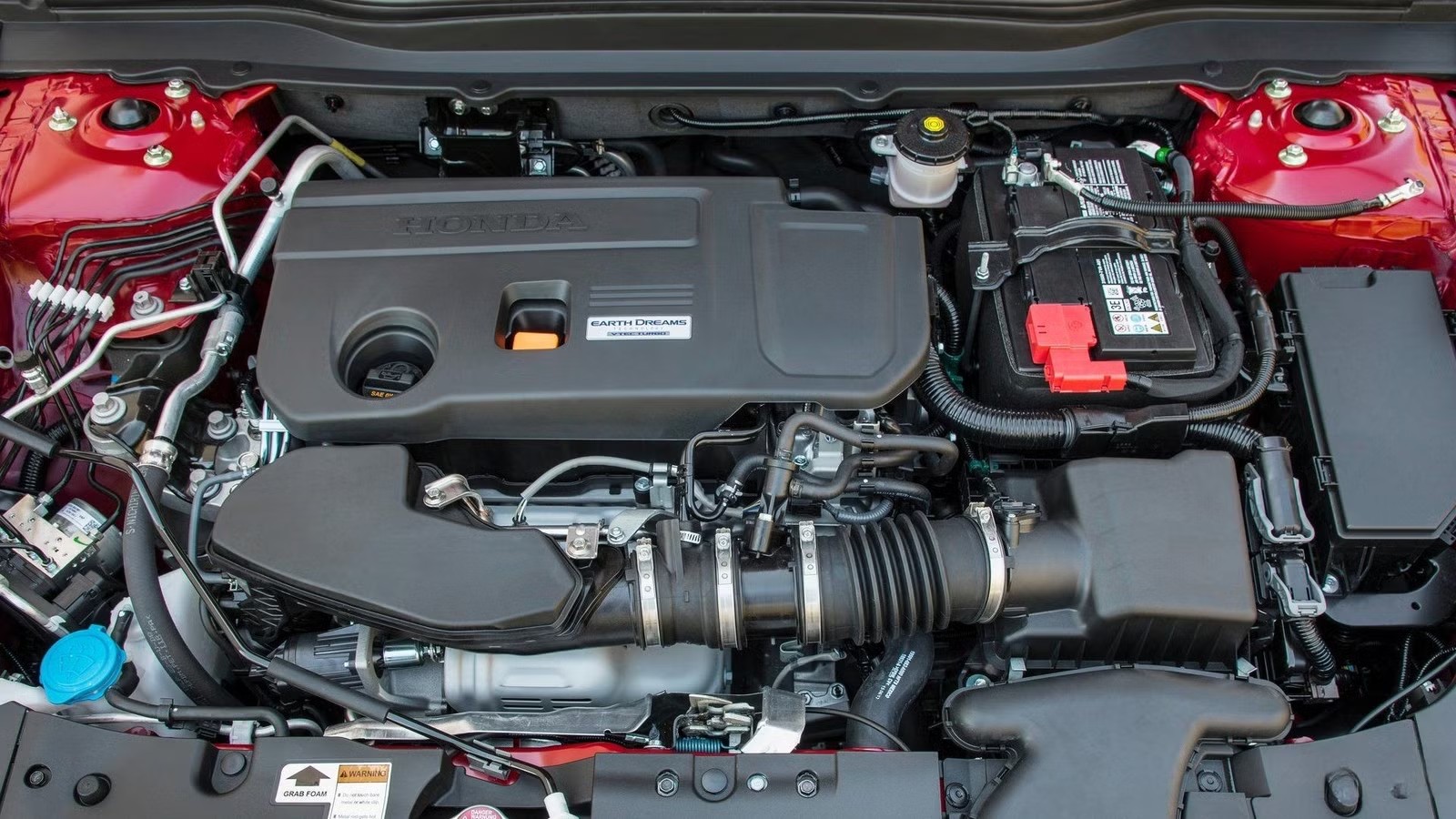
Toyota killed the Camry V6. GM put their small-block to rest. Honda? They’re doubling down on an inline-four that predates half its customer base. The K-series. Launched when flip phones were peak tech, it still powers everything from mild-hybrid sedans to 300-hp Type Rs. And they show no signs of stopping.
The Million-Mile Myth
It isn’t magic. Just a 2001 design refined over two-and-a-half decades. The K-series is the main reason Honda owns the “million-mile car” reputation. Take a 2007 CR-V in Louisville. K24 under the hood. Over a million miles on the odometer. Routine maintenance only.
Skeptic? YouTube user ‘Reviewed by Tim’ filmed a 8th-gen Civic Si with nearly 987k miles. Had it sat for three years? Fired up. First crank. Original powertrain still intact.
“Nothing but routine maintenance along the way.”
Scroll through the Mileage Impossible Facebook group. You’ll see six-figure mileage on Honda dashboards by the dozens. One guy even swapped a K-series into a Porsche 911. Why? To track it without waiting for German parts shipping. That speaks volumes about reliability.
Built To Abuse It
Honda didn’t wait to race it. As soon as street durability proved out, the racing division took notice. They kept the production block architecture for the K20. Changed everything else.
Reinforced internals. Stronger valve springs. Revised cams. Higher-flow intake and exhaust. They threw this setup into the Japanese Super Taikyu, British Touring Cars, and regional series that mandated production-based engines. The Civic race cars were fast. They breathed well. They held peak power during long stints without overheating.
Thermal stability matters. The rigid block design kept coolant and oil flowing efficiently. Temperatures stayed predictable even under heavy load. Drivers liked the sharp throttle response. It helped control rotation mid-corner. Let them fire out of slow bends. The i-VTEC system gave them a wide operating range. Engineers could tweak cam timing per track. Less need to constantly shift gears.
Reliability during endurance events set them apart. Rivals rebuilt engines mid-season. K-series units completed full campaigns with scheduled maintenance only. Honda used that record to market the K as a performance baseline. Feedback from the track looped back into production variants.
Swap It Into Anything
Rich people with delicate Porsches turn to K-series engines for abuse-tolerant power. But it’s not just the 911s. Custom builders worldwide treat the K-series as a versatile plug-and-play option. High tuning potential. Low-cost reliability.
Meet “Frankenstein.” A 645-hp Nissan R34 Skyline. A turbocharged K-series sits under that hood.
Then there’s the Toyota Prius. Hybrid system out. Turbocharged K24 in.
And if that wasn’t weird enough, Mark Burroughs at StanceWorks put a turbo K24 into a Ferrari 308. Ditched the Tipo V8. The resulting Ferrari 244 GTBi boasts around 1,200 hp. 4Piston Racing built it. He’s aiming for 1k wheel horsepower. The aftermarket support for these engines is basically cult-like.
What’s Running It Today
The K20C is the current flag-bearer. Launched recently. Upgraded for real-world efficiency and tighter global emissions rules. It handles modern turbocharging stresses better than its predecessors.
You’ll find it in the new Civic Type R. The Acura RDX. TLX. Integra Type-S. It delivers.
Why It Won’t Break
Key design choices matter here. A reinforced aluminum block. Closed-deck layout. This keeps cylinder walls stable under high pressure. Minimizes distortion during long, hard driving sessions.
The rotating assembly is low-friction. Coated pistons. Balanced rods. Less heat buildup. Less wear.
Direct injection helps. Precise multi-hole injectors atomize fuel better. Cleaner burn. More efficiency. Less soot inside the chamber.
Fluid modeling optimized the cylinder head ports. Air flows fast and consistent, even at lower boost. The turbo is compact. Low inertia. Spools quickly. Doesn’t create excessive thermal strain.
Cooling routes through critical areas. A high-flow intercooler keeps intake temps down. Protects against knock. Helps during long highway climbs.
Exhaust passages are integrated into the head. Short distance from valve to turbine. Faster response. Better emissions control. Less heat loss.
Valve timing focuses on mid-range torque. Smooth drivability. Not chasing peak numbers at the expense of longevity. Stress on internals stays lower.
Endurance testing was brutal. Prolonged full-load. Extreme temp changes. The result? Predictable performance. Low maintenance demands. Consistent efficiency over long ownership cycles.
Where It Came From
Honda replaced the aging B and H series with the K in 2001. Needed better emissions compliance. Wanted more thermal efficiency.
They started with a clean-sheet aluminum block. Deep skirts. Added rigidity. Allowed higher revs without unwanted vibration. Forged crankshaft. Lightweight pistons. Reduced reciprocating mass. Sharper throttle response.
Belt-driven cams went the way of the dinosaur. Chain-driven dual overhead cams arrived. More accurate timing control under load.
i-VTEC became the cornerstone. Blends variable valve timing. Lift control. Cam phasing. Wide torque spread at low mids. Strong breathing at high RPM. No sharp cutoff like old VTEC. Smooth.
Engineers rotated the orientation. Better packaging for intake and exhaust. Improved airflow. Easier service access.
Tall intake plenum. Long runners. Better cylinder filling for daily driving. Free-flowing exhaust manifold supported scavenging.
Coil-on-plug ignition. Modern electronic throttle. Management systems tuned spark and airflow precisely. Better fuel control. Drivability improved.
Debuting in the JDM-exclusive 2then01 Honda Stream was smart. Compact platform. Showcase the new architecture. Then roll it out to the Integra Type R. Civic. Accord. Edmunds reviews consistently praised K-powered models for reliability.
It’s Here To Stay
Honda sticks with the K-family because the architecture fits modern needs. Efficiency targets. Durability expectations. Hybrid integration. It’s a stable foundation for global models.
Rigid aluminum block. Efficient cooling. Low-friction internals. All give engineers room to meet tough emissions without redesigning core structure.
High compression. Turbocharging. Extended thermal loads. The K handles them consistently. Lowers warranty exposure. Maintains brand trust.
Scalability helps. Bore and stroke adjustments. Intake/exhaust routing tweaks. Combustion chamber redesigns. All adapt from compact cars to performance Accuras. No incompatible parts hell.
Current hybrid portfolios don’t use K-series extensively. That might change. Honda wants to electrify future Civics and Integra S models. Unconfirmed but likely.
Atkinson cycle tuning fits the K. Boosts fuel economy in hybrid setups. Doesn’t harm long-term durability.
Deep supply chains reduce cost. Improve manufacturing consistency. Global production stays streamlined.
Continuous improvement is easy. Update injectors. Turbo hardware. Valve timing control. Cooling strategies. No major structural overhaul needed.
Short development cycles. Higher efficiency and performance every generation. Dealers like the layout. Easy maintenance.
Some argue the L-series is the future. Better fit for heavy hybridization. But the K’s resilience? Its performance pedigree? Its market appeal? Honda won’t ignore it anytime soon. Not while it still turns heads on the dyno and odometer.