Walk into a dealership hunting for a three-row luxury SUV. The script is rigid. You look at the BMW X5. The Audi Q7. The Mercedes-Benz GLE. You sign the check north of $60,000 because the badges on the hood feel earned. You tell yourself the roundel, the rings, or the star justify the sticker shock.
Here is the truth they don’t advertise. That money buys you a four-cylinder. The base BMW X5 xDrive40i escapes that fate with its inline-six, but you will pay nearly $70,000 to get it. The GLE 300 and Q7 45 start you with a 2.0-liter engine. It’s smooth. It works. It also lacks the torque and displacement luxury buyers usually expect when they fork over six figures for a two-and-a-half-ton vehicle.
There is another three-row SUV in the showroom you likely skipped. The 2026 Lincoln Aviator does not carry the badge prestige of Munich or Stuttgart. That is exactly why it dominates the value proposition. It offers a standard 3.0L twin-turbo V6.
How the Lincoln Aviator Beats German Rivals on Value
The math stops being a suggestion when you look at the 2026 Lincoln Aviator pricing versus its competitors.
The Mercedes-Benz GLE 300 starts at $62,250 and delivers 255 horsepower.
The Audi Q7 45 begins at $62,00 and provides 261 horsepower.
The BMW X5 xDrive40i costs $68,300 for 375 horsepower.
The base Lincoln Aviator Premiere starts at just $56,910. Add all-wheel drive, and you are still under $60,000. That configuration delivers 400 horsepower.
You are paying less for entry while getting significantly more power. The Aviator pushes this three-row to 60 mph in just under six seconds using its 10-speed automatic. It sends 415 lb-ft of torque to the pavement. No engine tiers. No “performance packages” required to access decent acceleration. The cheapest trim and the top-tier Black Label share the exact same heart.
“The Aviator is not merely cheaper… It gives you a large-displacement V… for the money a German four-c cylinder costs.”
Standard Equipment: Why BlueCruise Matters
Power is the headline, but the equipment list is the real shocker. German brands are masters of the option sheet. The price you see on the window is rarely the price you pay once you add the necessary packages for basic features.
Lincoln loads the Aviator from the start. The Premiere trim includes:
- BlueCruise: Hands-free highway driving assistance.
- Ventilated and Heated Front Seats: Rarely standard in entry-level Germans.
- 360-Degree Camera System.
- 14-Speaker Revel Audio System.
- Adaptive Cruise Control.
- Power-Folding Third Row.
- 4 Years of Lincoln Reserved Service.
Trying to get hands-free highway assistance from BMW or Mercedes usually means opting into higher trims or subscribing to a service. Lincoln simply puts it in the box. Ventilated seats, a feature often tucked behind premium packages in Audi and Mercedes, come standard here.
Is the Lincoln Aviator a Better Buy Than a Used German SUV?
Resale value is the Achilles’ heel for Lincoln. A Mercedes-Benz GLE might hold its value better over time, shedding less depreciation than an Aviator. KBB data shows recent Aviators losing close to a third of their value in the first year. The badge premium does not carry the same social weight or market demand as the three-pointed star.
But is that relevant for you? If you buy a German three-row for the prestige and plan to flip it in two years, the Germans win. They are liquid assets in a luxury market that demands recognition.
The Aviator flips the script. It offers high depreciation as a trade-off for massive upfront savings and superior standard features. For buyers who plan to keep their vehicle for five or more years, the Aviator makes more financial sense. You get more horsepower, more space, and more tech for thousands less at the point of sale. The “value” is front-loaded.
Driving Dynamics and Cabin Comfort
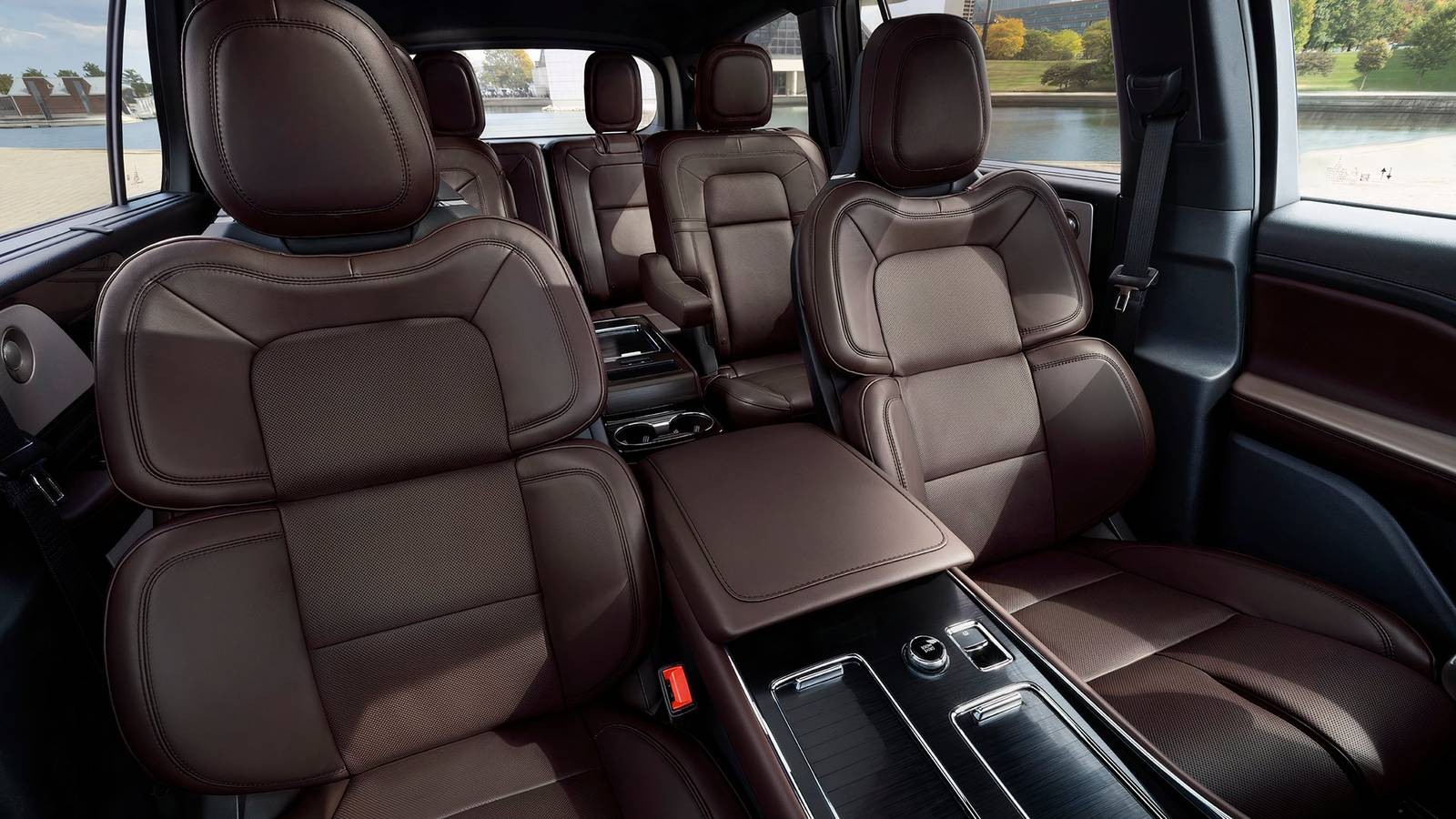
The Aviator is tuned for relaxation. Lincoln calls the design philosophy “Quiet Flight.” The cabin is hushed. Road noise stays away. The ride is soft and long-legged, absorbing bumps rather than fighting them. It is a restful cruiser.
However, this comes with caveats. The X5 offers tighter body control and sharper handling. The GLE provides switchgear that feels more precise and damped. The Aviator leans on simulated leather rather than the top-tier hides found in fully specced German rivals. It trades the final 10 percent of German polish for comfort and value.
If you are a keen driver who wants cornering bite, the Aviator will feel too relaxed. It is not built for the track or aggressive canyon runs. It is built for highway stretches, school runs, and carrying seven passengers in comfort.
Fuel Economy and Running Costs
The V6 wants fuel. The EPA rates the Aviator at 21 mpg combined. In the real world, expect the high teens. This is a few mpg less efficient than the four-cylinder options in the base GLE and Q7. The Aviator also prefers premium fuel, adding to the running costs.
Final Verdict: Who Should Buy the 2026 Lincoln Avitiar?
The Germans earn their checks if prestige and resale are your top priorities. They are the safe, recognized choices for a reason.
But for buyers who actually want to use the features?
The 2026 Lincoln Avitar offers 400 horsepower standard for the money a base German four-cylinder costs. It includes hands-free highway driving, ventilated seats, and premium audio without asking you to upgrade your trim level. It provides genuine space, comfort, and power in a three-row package that undercuts the competition on price and specs.
It hides in showrooms people ignore. It is the smart value play in the luxury three-row segment. If you are ready to look past the badge, you will find the best equipment and power-per-dollar ratio available anywhere in this class.