Most people think of tires as simple rubber donuts. You inflate them, you drive on them, and you replace them when they bald out. It’s a cycle. But those black rings are actually one of the most complex safety components on your vehicle. They bridge the gap between steel and asphalt. They dictate your stability. They determine whether you slide into a guardrail or stop safely in the rain.
The right tire can mean the difference between a close call and a total loss. The wrong one? It increases crash risk. It compromises handling. Yet, for the driver, the interface is deceptively simple. You pick a size that matches your vehicle’s weight and specs. You account for your typical weather conditions or just buy all-season rubber to cover all bases. Then you keep them inflated. Check pressure weekly. Run the penny test—Lincoln upside down, head first. If you see the top of his head, it’s time to buy new rubber.
But beneath that tread pattern lies an engineering marvel. Early tires were essentially air sacs wrapped in rubber. Today’s construction is far more sophisticated. Modern compounds last longer. They resist blowouts better. They maintain road contact with greater precision. Some even enhance fuel economy through reduced rolling resistance.
It is no longer just rubber and air. It is a layered system of materials, each with a specific function. To understand how these critical components are built, we have to look at the raw ingredients.
Tire Materials
The foundation of any tire is a composite of natural and synthetic materials.
Tires aren’t just rubber donuts. They are complex hybrids. You get high-tech fabrics. Natural rubber. Synthetic polymers. Even steel wire.
The Beads and Plies
Start at the inside edge. Here sit the beads. These are high-strength steel cords wrapped in rubber. They do two jobs. They give the tire structural integrity. They lock the tire onto the wheel rim. Without them, the tire would just slip off.
The main body isn’t rubber. It’s fabric. Specifically, layered composite material. Each layer is a ply. Think of it like plywood, but for a tire.
The body of the tire is actually made up of fabric, not rubber.
These plies are coated in rubber. Why? To seal air inside. And to bond the layers together.
Steel Belts and Traction
For steel-belted radial tires, things get tougher. Above the body plies are steel belts.
These belts serve a critical function. They make puncture resistance nearly universal. Most nails and road debris can’t punch through steel.
But there’s more. The belts keep the tread flat. A flat tread means consistent road contact. More contact equals better traction. You get more control. Period.
Sidewalls and Structure
We’ve moved up from the rim. Now look at the sides. These are the sidewalls.
They hold everything in place. They provide stability during lateral movements. Cornering puts stress here. The sidewall absorbs it.
You’ll see specs printed here. Some tires have white or red sidewalls. That’s aesthetic. But the structural role is serious.
The Tread Pattern
The outer edge is the tread. It’s a mix of natural and synthetic rubber.
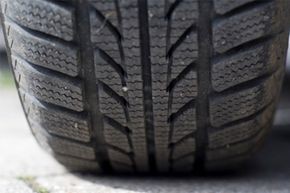
Unlike the smooth sidewall, the tread has grooves. Deep or shallow. Off-road or track-focused.
Each groove serves a purpose. Maximize performance. Ensure safety. Water displacement. Grip. Heat dissipation.
Tire Production
Building a tire isn’t just stacking rubber. It’s chemistry and precision engineering. You start with a slurry. A banbury mixer chews up natural latex and synthetic compounds. Add oils. Add carbon black. Mix it until it feels like thick gum paste. Then the material splits into different streams. Each stream becomes a specific component of the final product.
“Green tires go into a mold, where they’re inflated. Inflating the tire causes it to press against the mold.”
The Assembly Line
That gum-like rubber goes to extruders and calenders. They form sheets, cords, and strips. Then the real assembly begins. This is where you see the tire building machine in action. It’s not subtle. The machine wraps layers onto a rotating drum.
First comes the inner liner. This layer keeps air inside. Next, the ply. These are fabric or steel cords embedded in rubber. They give the tire its shape and strength. Then the belts. Usually steel. They sit under the tread to keep it stable at high speeds. After that, the bead. That’s the steel wire loop that locks the tire to the rim. Finally, the sidewall and tread rubber are wrapped on.
The machine presses everything together. It’s a tight fit. No air pockets. But it’s not ready yet.
Green Tires and Vulcanization
What comes off that drum is a green tire. It looks like a tire. It feels like rubber. But it’s soft. Un cured. The components haven’t bonded chemically. And critically, it has no tread pattern. The surface is smooth.
So, the green tire goes into a mold. A heavy, iron mold. The mold has the exact tread pattern you see on the road carved into it. It also has the raised lettering. The sidewall details. The brand name. All of it.
The tire is inflated inside the mold. High pressure pushes the rubber against the steel walls. Now the rubber takes the shape of the mold. Then the heat turns up. We’re talking over 300 degrees Fahrenheit (149 degrees Celsius).
This is vulcanization.
For a passenger car, the tire stays in that mold for about 15 minutes. That’s enough time for the heat to cure the rubber. It bonds the layers together. It creates cross-links in the polymer chains. The result is a durable, flexible, strong tire. Truck tires? They take longer. Sometimes up to 24 hours. Bigger tires need more time to cure evenly.
Final Inspection
Once the mold opens, the tire is hot. It’s cooled down. Then it goes through inspection. Automated systems check for defects. Humans check for consistency. If it passes, it’s tagged. It’s ready for distribution.
Tire Distribution
From the factory floor, these tires don’t just appear in your garage. They’re palletized. Shipped. Tracked. The journey to your local shop involves logistics that match the precision of the build process. But that’s a different story. For now, you’ve got a tire. One built layer by layer, cured by heat, and stamped with intent.
Tires are one of those maintenance items you ignore until they are bald. The average set lasts about 50,000 miles (80,467 kilometers). Most owners trade their vehicle long before that tread wears down to the cord.
If you walk into a dealership and buy a new car, the rubber on the wheels likely came from just eight manufacturers. These eight companies dominate the original equipment (OE) market in the United States. Michelin leads the pack. They supply tires for 29 percent of all new cars sold in this country. That is a massive slice of the pie.
Replacement vs. Original Equipment
Keeping your car past the warranty period changes the game. You are no longer tied to the OEM choices. In 2009, Americans bought 182 million replacement tires. The market for replacements is vast.
You can buy from the big eight. Or you can go off-brand. Each major brand develops specialty compounds for specific uses. You have options for track days. You have mud-terrain tires for rock crawling. Heavy-duty trucks get reinforced sidewalls. Small city cars get low-rolling-resistance rubber for efficiency. The variety is intentional.
The Economics of Rubber
Making tires is a high-margin business. Bridgestone America alone reported $8 billion in sales for tires in 2009. It is a lucrative industry with tight manufacturing tolerances.
Prices fluctuate wildly based on performance. If you are looking for basic transportation, expect to pay around $75 for a low-cost radial tire. That gets you from point A to point B. Performance tires tell a different story. Those can cost hundreds of dollars per unit. You are paying for advanced silica compounds, stronger belts, and precise tread patterns designed for grip.
When you look at the sticker price today, you are seeing the sum of parts, technology, and assembly. It is not just rubber. It is engineering.
Finding the Right Fit
Where do you buy them? A dedicated tire shop or the dealer service center. Both work. The choice depends on whether you want a quick swap or a full alignment check.
Why do prices vary so much between brands? It comes down to R&D. The company with the largest market share invests heavily in testing. Smaller brands might cut corners on materials. Or they might focus on a niche market where they can compete on price.
Which brand is best for your driving style? There is no single answer. Michelin might win on longevity. Bridgestone might offer better winter traction. Goodyear often targets the family SUV segment. The “best” tire is the one that matches your specific vehicle specifications and driving habits.
“Performance tires can cost hundreds of dollars.”
The market is saturated. You will never run out of choices. The question is whether you want to pay for the brand name or the actual rubber compound. Most people never think about the eight giants behind the scenes. They just want to know if the tire will hold air.
If you need more data points, there are links on the next page. They go deeper into specs and comparisons. But for now, check your tread depth. You might be closer to a replacement than you think.