
You know the drill. You pull into the station, fill the tank, and watch the clock tick. Every time you do that, you are draining a finite resource. Fossil fuels are just compressed prehistoric life. The supply is shrinking. The price is dictated by a handful of nations. And for a country like the US, depending on foreign oil is a national security headache that never seems to get solved. We have relied on this dirty fuel for centuries. It is coming to an end.
The solution might be floating right over our heads. Literally.
The Hydrogen Paradox
The universe is mostly hydrogen. About 75 percent of everything out there is H. But here on Earth? Not so much pure stuff. Hydrogen gas exists as H2 molecules. They are so light that if you don’t trap them, they escape Earth’s gravity and float off into space. That is why you rarely see pure hydrogen around. It is usually bound to other elements. Water is the big one. H2O. Hydrogen plus oxygen.
Getting pure hydrogen out of that mix requires work. Several methods exist. The most common way right now is extracting it from natural gas. You can also split water molecules using electrolysis. Researchers are even looking at producing it biologically from algae or specific bacteria. Some of this is standard procedure. Some of it is still in the lab.
The Hydrogen Economy
Back in 1970, chemist John Bockris coined the term hydrogen economy. The idea was simple. A future where every vehicle runs on hydrogen. Not a pie-in-the-sky dream anymore. We have the tech.
The key component is the fuel cell. It generates electricity using hydrogen. No combustion. Just chemistry.
Car makers have been building concept cars for years. Think of the Volkswagen Tiguan HyMotion. Or the Chevrolet Equinox Fuel Cell SUV. These aren’t just blueprints. You can actually buy a production model in California. The Honda FCX Clarity is already on the road.
No more pollution?
The promise is clean. The only emission from a fuel cell vehicle is water vapor. That is it. No carbon monoxide. No nitrogen oxides. Just wet air.
But there are hurdles. Where does the hydrogen come from? If you make it from natural gas, you are still using fossil fuels. You just moved the pollution from the tailpipe to the power plant. Is that really better? The answer depends on the grid. If the electricity for electrolysis comes from coal, you are just shifting the problem. If it comes from wind or solar, the equation changes completely.
Then there is storage. Hydrogen has low energy density by volume. You need high pressure tanks. Or cryogenic cooling. That adds weight. Complexity. Cost.
Infrastructure is another brick wall. There are almost no public hydrogen stations compared to gas pumps. Until there is a network, the Honda FCX Clarity is a nice novelty for early adopters in sunny states. It is not a mass-market solution yet.
Can hydrogen replace gasoline? Yes. Should it? Maybe. The technology works. The physics are sound. The politics are messy. The economics are tough. We are waiting for the price to drop and the tanks to get bigger. Until then, you can keep pumping gas. Or you can drive in California and watch the water drip from your bumper.

Fuel cells don’t just reduce pollution. They eliminate it. Specifically, carbon emissions. When you generate electricity in a hydrogen fuel cell, the only outputs are heat and water. Pure water. If every vehicle on the road switched to this technology, the thick smog that chokes many U.S. cities would largely vanish. Most of that visible haze comes from vehicle exhaust. The Environmental Protection Agency notes that half of all Americans live in areas where pollution levels negatively impact human health. Reducing smog isn’t just about nice views. It’s about health.
Internal combustion engines are dirty. They burn carbon-based fuels. The byproducts include carbon dioxide, water, and soot. Those tiny particles of matter don’t just disappear. When humans breathe them in, the results can be severe. Asthma. Lung cancer. Other respiratory diseases. Then there is carbon dioxide. Most scientists agree that increased atmospheric CO2 contributes to global warming. The potential for damaging climatic changes across the planet is real.
Transitioning to Clean Energy Sources
Converting from internal combustion engines to nonpolluting sources like hydrogen is critical for the 21st century. We need to reduce these problems. But the reality of the current fleet is stark. There are more than 130 million gasoline-powered vehicles on the road today. Fuel cell cars won’t make enough of a difference in the near future to shift the needle on environmental improvements. The barrier isn’t just ideology. It’s economics.
Early fuel cell cars will likely cost at least $100,000. That price tag puts them out of reach for the ordinary driver. You can’t buy your way out of climate change if the car costs as much as a house. Infrastructure is another missing piece. We need hydrogen production plants. We need refueling stations. Neither exists at scale yet. Some observers argue that short-term environmental gains will come from a mix of technologies. Hydrogen cars. Battery-powered electric vehicles. Other alternative fuels. A hybrid approach to the grid.
Why Atmospheric Pollution Persists
Existing atmospheric pollution isn’t going away soon. The timeline matters. Soot settles out of the atmosphere in weeks or months. Carbon dioxide stays for a considerably longer time. Decades. Even if we eliminated all sources of carbon emissions today, it would still take years for atmospheric carbon levels to return to normal. The inertia of the climate system is heavy.
Automobiles are only one source of carbon emissions. They are a significant one, but not the only one. Coal-burning power plants also pump carbon into the atmosphere. To prevent global warming, we have to curtail those emissions too. It’s a multi-front war.
Hydrogen Efficiency vs. Gasoline
Efficiency is another major advantage of the hydrogen fuel cell. An internal combustion engine is a wasteful beast. It uses less than 20 percent of the chemical energy in gasoline. The rest? Lost as heat. A fuel cell is considerably more efficient. It utilizes roughly 60 percent of the energy available in hydrogen. That is a massive gap. You get more miles per unit of energy. Less waste.
No more foreign oil dependency?
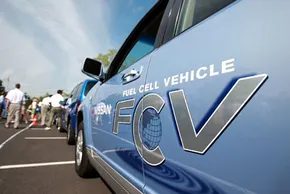
We import more than half of the oil the U.S. consumes. That’s a staggering number. Two-thirds of that imported crude goes straight into tanks. Transportation gobbles it up. Because so much of this supply chain is overseas, we don’t control the price tags. We don’t control the supply lines. A lot of this fuel comes from the Middle East. Those are regions prone to political instability.
The U.S. has tried to break this habit since the 1970s. The strategy failed. Imports actually grew. The attacks on September 11, 2001, made the dependency feel even more dangerous. It wasn’t just about money anymore. It was about security.
Then there’s the economic hit. When oil prices spike, everything gets expensive. Any product that uses oil to make or move it costs more. Gasoline and diesel hovered between $4 and $5 per gallon in 2008. That’s steep. It drags down the entire economy.
Is Hydrogen Cheaper Than Gasoline?
The math is tricky. The U.S. Department of Energy puts the cost of current-generation fuel cells at roughly $225 per kilowatt. That’s not competitive. Prices need to drop to around $30 per kilowatt for hydrogen to really challenge gasoline as a primary fuel source.
“The cost of the hydrogen itself, measured on a per mile basis, could soon be as much as 50 percent lower than the current cost of gasoline.”
The National Research Council says the fuel cost could be half that of gas. This advantage grows as gas prices climb. Plus, hydrogen converts to electricity with high efficiency. That’s a big deal.
Can Hydrogen Vehicles Break the Oil Addiction?
They can help. But don’t expect a quick fix. It will likely take decades before enough hydrogen vehicles hit the road to make a dent in imports. The shift is slow. The infrastructure is sparse. But in the long run, the impact could be massive.
These aren’t just concepts. Several fuel cell vehicles (FCVs) are already driving on public roads.
Honda FCX Clarity
This is the only FCV available for lease to private individuals. And even then, you’re stuck in parts of California where hydrogen stations exist. The lease runs $600 a month. The first one went to a California family on July 25, 2008. It’s niche. It’s expensive. But it’s real.
Chevrolet Equinox Fuel Cell SUV
Chevy built fleets of these. They toured California, New York, and Washington, D.C. to show off the tech. You can’t buy one. You can’t lease one. It’s a demonstration vehicle. It proves the SUV body style works with a fuel cell stack. That’s it.
Volkswagen Tiguan HyMotion
VW didn’t sell this either. The HyMotion joined the National Hydrogen Road Tour. It drove from Portland, Maine, down to Los Angeles. It was a proof-of-concept run. No dealership offers it.
BMW Hydrogen 7
BMW gave this car to celebrities. Will Ferrell got one first. Others followed. It’s not for the general public. It’s a PR move. Extended use periods for stars. It shows the tech works. It doesn’t mean you can order one from Bavaria tomorrow.
Is the Hydrogen Economy Sustainable?
The infrastructure question looms large. Without stations, the FCVs stay in showrooms or test fleets. The economics are shifting, but the hardware costs remain high. We’re waiting for the kilowatt price to crash. We’re waiting for stations to pop up in suburbs. It’s a long game. The oil addiction won’t be cured in a single model year.
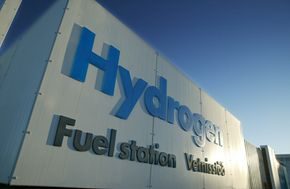
The Sustainability Gap in Hydrogen Power
If the hydrogen economy is going to provide the United States with a future free of pollution and dependence on foreign oil, it must be sustainable. That is, it must be able to keep up with increased population growth, increased use of energy-hungry technology, changes in politics and changes in people’s attitudes toward the environment and toward the welfare of future generations. It has been estimated that worldwide energy needs will double by the year 2050. It’s unlikely that the rapidly diminishing supplies of fossil fuels could keep up with this demand, so new energy resources will be crucial.
One of the chief obstacles to a sustainable hydrogen economy is that the methods currently used to extract hydrogen from larger molecules rely on electricity — and that electricity is generated largely by methods that create pollution. If hydrogen extraction is performed using electricity from a coal-driven power plant, it doesn’t matter that the fuel cell doesn’t pollute because the pollution occurred when the hydrogen was extracted. If hydrogen is to be a true nonpolluting power source, the electricity used to extract the hydrogen will need to be produced by a nonpolluting method such as solar power. At present this usually isn’t the case, so a truly sustainable hydrogen economy will require substantial changes in power generation.
Storage is also a problem. Hydrogen fuel is stored in compressed liquid form and over time some of it escapes through evaporation. If a hydrogen car isn’t driven on a regular basis, the evaporation losses will considerably increase the overall expense of the fuel. And compressing liquid hydrogen to a volume that can be carried in a car also requires a great deal of energy, and that energy may have been generated using methods that cause pollution.
Some experts believe that improvements in hydrogen production and storage will lead to a sustainable hydrogen economy in 15 to 30 years. However, the idea of a hydrogen economy has its opponents, many of whom believe that such an economy can never be sustainable and that our resources would be better used exploring other forms of power generation. It may be years before it becomes clear whether hydrogen is truly the fuel of the future.
Lots More Information
Related HowStuffWorks Articles
-
How Fuel Cells Work
-
How the Hydrogen Economy Works
-
What’s the difference between a fuel cell vehicle and a hydrogen-on-demand vehicle?
-
How Gas Prices Work
-
What are the dangers of hydrogen-powered vehicles?
-
How Hybrid Cars Work
-
How Global Warming Works
-
How Car Engines Work
More Great Links
-
Fueleconomy.gov
-
Fuel Cells 2000
-
Nova
-
Honda FCX Clarity
-
U.S. Department of Energy
Sources
-
Bossel, Ulf and Eliasson, Baldur. “Energy and the Hydrogen Economy.” January 8, 2003. http://www.methanol.org/pdf/HydrogenEconomyReport2003.pdf
-
Carseek. “Hydrogen Fuel Cell Car Technology.” http://www.carseek.com/articles/hydrogen-fuel-cell-car.html
-
Clayton, Mark. “Rising Call: Cut U.S. Oil Imports.” The Christian Science Monitor. May 5, 2005. http://www.csmonitor.com/2005/0505/p01s04-usfp.html
-
Friedemann, Alice. “The Hydrogen Economy – Energy and Economic Black Hole.” Culture Change. Sept. 2004. (Aug. 22, 2008) http://www.culturechange.org/alt_energy.htm
-
Gizmag. “Honda set to release hydrogen fuel cell car – and home fuelling station.” (Aug. 22, 2008) http://www.gizmag.com/honda-fuel-cell-fcx/8394/
-
Hall, Kevin G. “Oil independence is possible, but does U.S. really want it?” Milwaukee Journal Sentinel. March 4, 2006. http://www.jsonline.com/story/index.aspx?id=40957
-
Huffman, Mark. “Hydrogen Fuel Cell Cars Bring Hope, If Not Relief.” ConsumerAffairs. June 25, 2008. http://www.consumeraffairs.com/news04/2008/06/fuel_cell.html
-
Llanos, Miguel. “Hydrogen cars ready to roll – for a price.” MSNBC. June 23, 2004. http://www.msnbc.msn.com/id/453676/
-
Sinha, Vandana. “Volkswagen hits road with hydrogen fuel cell car.” Washington Business Journal. August 11, 2008. http://www.bizjournals.com/washington/stories/2008/08/11/daily14.html? ana=from_rss
-
Vergano, Dan. “So far, hydrogen-powered cars are fuel for future thoughts.” USA TODAY. July 21, 2008. http://www.usatoday.com/tech/science/columnist/vergano/2008-07-20- hydrogen-cars_N.htm