The moment you sign the paperwork and drive a new car off the lot, it loses value. We know this. The instant it’s yours, it’s worth wholesale—roughly 15 to 20 percent less than the price on the sticker. This applies to every brand, every body style, and every engine type. It doesn’t matter if you’re buying a Ford or a Ferrari. But here is the question that keeps prospective buyers up at night: does going hybrid change the math? Do hybrids actually hold their resale value better than their gas-only counterparts?
The answer isn’t a simple yes or no. It’s about demand. And demand is fickle.
In 2009, the Kelley Blue Book (KBB) named the ten vehicles with the best resale value on the market. Two of them were hybrids: the Honda Civic Hybrid and the Toyota Prius. But look closer at the list. All ten were four-cylinder, compact, or mid-compact cars. The Prius held its spot in the 2010 rankings as well. Then, in 2011, the landscape shifted. None of the top ten best resale vehicles were hybrids.
What changed? Gas prices.
Remember the summer of 2008? Drivers formed massive lines at pumps across the U.S. as the average price per gallon soared past $4. Suddenly, efficiency was king. But in 2010, gas prices never even broke the $3 mark. When fuel is cheap, the premium for a hybrid evaporates. The demand drops. And when demand drops, resale value tanks.
The Civic Hybrid vs. Civic EX: A Case Study
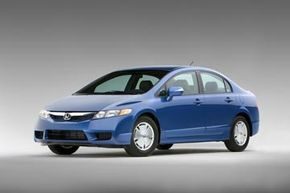
Let’s look at hard numbers. If you want to know if a hybrid holds value better, you have to compare similar models. Let’s take the 2009 Honda Civic EX (gas) and the 2009 Honda Civic Hybrid. We’ll use KBB data as our baseline.
In 2009, the MSRP for the Civic Hybrid was $23,550. The Civic EX four-door started at $20,005. That’s a $3,545 premium for the hybrid technology.
Fast forward twenty-three months and 26,500 miles (42,648 kilometers).
The hybrid has a suggested retail value of $18,730. That’s a depreciation of $4,820. Its resale value sits at 79.5 percent of its original price.
The gas-only Civic EX? It’s valued at $17,380. It depreciated by only $2,625. Its resale value is 87 percent.
The gas car held its value better. Despite the higher initial cost, the hybrid lost more money in percentage terms. The premium you paid upfront didn’t pay off at trade-in.
The Hidden Costs of Hybrid Ownership
Research suggests that the total cost of owning a hybrid often outweighs the money saved on fuel. You’re paying for two things: the initial purchase premium and accelerated depreciation.
Depreciation is driven by demand. When gas prices aren’t skyrocketing, people don’t care as much about MPG. They care about price. And hybrids are more expensive. The savings at the pump rarely offset that higher sticker price, especially if you don’t drive enough miles to make up the difference over time. Some studies even indicate that hybrids cost more to operate overall when you factor in maintenance and battery replacement risks down the line.
So, is buying a hybrid worth it? It depends on your driving habits, local fuel prices, and how long you plan to keep the car. If you’re planning to hold onto the vehicle for ten years, maybe the fuel savings add up. If you trade in every three years, you’re likely throwing money away.
The data is clear. Hybrids don’t automatically hold better resale value. In fact, they often