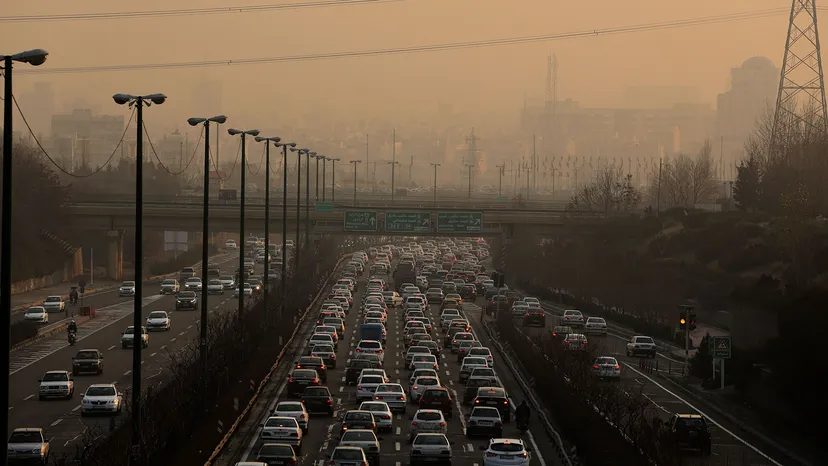
There is no avoiding it. Every time you turn the key, you are pumping toxins directly into your throat. The smoke billowing from your tailpipe is a visible reminder of the invisible damage happening inside. If you live near a busy intersection, the risk doubles. We rely on these machines to move goods and people, but that convenience comes with a steep biological price.
Air pollution isn’t just a vague concept. It is the presence of foreign substances or excessive impurities that the atmosphere didn’t ask for and our bodies don’t know how to filter. When gasoline burns, it doesn’t just disappear. Fumes escape into the air even before you leave the gas station. The combustion process releases a cocktail of harmful agents.
The Three Main Culprits in Your Exhaust Pipe
Cars don’t just emit “smoke.” They release specific chemical compounds that target different systems in your body. Understanding what comes out of your tailpipe helps explain why city air feels heavier.
Particulate matter is one of the primary offenders. This isn’t a single substance but a mixture of solid particles and liquid droplets. You see it as atmospheric haze. It doesn’t just sit in your lungs. These tiny particles can penetrate deep into tissue, entering your bloodstream and causing systemic damage.
Carbon monoxide (CO) is the silent killer. When fuel burns inefficiently, it produces this odorless gas. The Environmental Protection Agency notes that up to 95 percent of all CO emissions in urban areas come from motor vehicle exhaust. Once inhaled, CO binds to hemoglobin in your blood, starving your heart and brain of oxygen. Critical organs suffer first.
Nitrogen dioxide (NO2) forms when nitrogen and oxygen react under the high heat of combustion. This falls under the broader category of Nitrogen Oxides (NOx). Cars, trucks, buses, and off-road equipment all contribute. Breathing high concentrations of NO2 irritates the respiratory system, triggering coughing and shortness of breath.
The Sunlight Reaction
The problem gets worse when these chemicals interact with the environment. Hydrocarbons and NOx don’t stay isolated. When they combine in the presence of sunlight, they produce ground-level ozone.
This is a complex issue. High in the atmosphere, the ozone layer protects us from ultraviolet rays. It is a shield. But at ground level, that same ozone becomes smog. It causes respiratory problems and aggravates existing conditions.
Long-Term Health Consequences
The health risks aren’t limited to immediate irritation. Air pollutants emitted from cars are linked to serious long-term outcomes. Cancer is a known risk. Asthma rates climb in high-traffic zones. Heart disease becomes more prevalent among those exposed daily. There are also concerns about birth defects and chronic eye irritation.
We know the mechanics of why this happens. The question is whether we can stop it. The engine keeps running. The exhaust keeps flowing.
The Real Scope of Mobile Source Emissions
Cars don’t just sit there. They pump carbon dioxide and other greenhouse gases into the atmosphere every time you press the gas pedal. These gases are natural. They trap the sun’s heat and keep Earth from freezing solid. The problem isn’t the gases themselves. It’s the spike. Burning fossil fuels like gasoline pushes these levels so high that we get global warming.
Pinpointing the exact percentage of air pollution caused by cars is a nightmare for scientists. Why? Because cars aren’t acting alone. You can’t isolate them in a vacuum. Coal-fired power plants churn out more pollution than most personal vehicles. Heating systems in homes and public buildings burn fuels that dirty the air just as much as a tailpipe. Even your online shopping adds up. Those goods have to be made and delivered. That involves fuel. That involves pollution.
Breaking Down the Numbers
We do know the breakdown for specific pollutants. In the U.S., the transportation sector is the king of nitrogen oxides (NOx). It accounts for over 55 percent of the total emissions inventory. But it’s less dominant with other contaminants. VOCs (volatile organic compounds) from vehicles make up less than 10 percent of the total U.S. emissions inventory. Particulate matter is also under 10 percent. The American Lung Association defines VOCs as gases emitted from products or processes, including diesel exhaust and burning gasoline.
The EPA classifies cars as “mobile sources” of pollution. This is accurate. But it’s misleading if you think cars are the only ones on the road. Big trucks. Bulldozers. Ships. Boats. Trains. Snowblowers. They all pollute.
The Inventory of U.S. Greenhouse Gas Emissions and Sinks put mobile sources at 32 percent of total anthropogenic greenhouse gas emissions in 2019. That includes non-transportation mobile sources like construction equipment. A 2015 study from the University of Toronto delivered a starker truth. Twenty-five percent of cars and trucks are responsible for about 90 percent of the pollution from the entire vehicle fleet. The old cars. The heavy haulers. The polluters.
The Global Shift and Local Impact
The U.S. used to hold the title for the world’s biggest polluter of carbon dioxide and other greenhouse gases. China took that crown according to the Global Carbon Project 2020. The landscape has shifted.
Locally, car pollution spikes in urban areas. It gets worse near major highways. There is good news, though. Better fuels exist. New technologies are being installed. The U.S. government imposed tougher emissions standards. Consumers demand better efficiency. The EPA says today’s cars are 98 to 99 percent cleaner for most tailpipe pollutants compared to the 1960s. Hybrid cars. Electric cars. Alternative fuels. They help.
But there’s a counter-weight. The sheer number of people on the roads. The sheer number of cars. It offsets the improvements. You can’t engineer your way out of volume alone.
The Scale of Consumption
The U.S. Department of Energy provides a chilling metric. Highway vehicles release about 1.7 billion tons (1.5 billion metric tons) of greenhouse gases into the atmosphere each year. Mostly carbon dioxide. This contributes directly to global climate change.
Look at the fuel gauge. Each gallon of gasoline you burn creates 20 pounds (9 kilograms) of GHG. That adds up to roughly 6 to 9 tons (5 to 8 metric tons) of GHG each year for a typical vehicle. One car. One year. That’s a massive load.
Car Pollution FAQ
How does car pollution affect human health?
The pollutants emitted by cars cause serious health complications. We are talking about cancer. Asthma. Eye irritation. Poisoning. Heart disease. Birth defects. The air you breathe in the city is not clean.
What percentage of air pollution is caused by vehicles?
The Environmental Protection Agency estimates that vehicles cause nearly 75 percent of the carbon monoxide pollution in the United States. The Environmental Defense Fund estimates that transportation causes nearly 27 percent of greenhouse emissions. The numbers vary by pollutant.
How does car pollution affect the environment?
Vehicle pollution drives global warming. Greenhouse gases heat the planet. They also deplete the ozone layer. This leads to rising average global temperatures. Rising sea levels follow. Natural disasters increase. It’s a domino effect.