If you want your trailer to stay road-ready, you’re going to need to do some serious maintenance. Tires. Brakes. Lights. Wiring. Suspension hardware. All of it demands attention. You might find yourself standing in front of a local trailer supply counter more often than you’d like.
Hang around that parts counter long enough and you’ll eventually hear a customer ask for spindles. If you’ve never heard of one, you might furrow your brow. Maybe you’ll mumble the word again. Or maybe you’ll just make a face.
Spindles don’t get much love from most owners. Until they break. Then everyone cares.
But what exactly are they? Where do they go? Do they even matter?
What Is a Trailer Spindle?
They live at the very ends of the axles. They matter a lot.
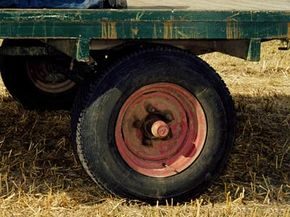
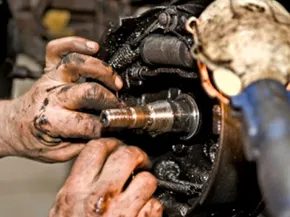
When you’re towing down the highway, the spindle is the part of the axle assembly that the wheel hubs rotate around. It’s the anchor point. The spindle provides a smooth surface for the inner and outer wheel bearings to roll on. Actually, roll around.
The bearings keep the hub from touching the spindle. Friction is the enemy here. The spindle sits right at the center of it all. No spindle. No rotation. No trailer movement. Just a very heavy, stationary box on wheels.
Is It a DIY Job or a Pro Job?
You probably know what a spindle is now. You know what it does. So the next question is whether you should replace them yourself.
Should you buy a new set while you’re picking up grease and bearings? Can you tackle this alone or do you need a mechanic?
The answer isn’t simple. It depends on your tools. It depends on your experience. It depends on how much you hate wresting with rusted axle nuts at 2 AM in a parking lot.
“Spindles are literally at the center of it all.”
Before you swing a wrench, you need to understand the geometry. One spindle isn’t just a metal rod. It’s a precision component. It has to be perfectly aligned with the other side. If it’s off by a fraction of a degree, your tires will chew through themselves in a week. You’ll be pulling a single-wheeled disaster down the interstate.
The Tools You’ll Actually Need
Forget the generic “tool kit” advice. You need specific gear.
- A heavy-duty jack stand. Not just a scissor jack. You can’t trust a scissor jack with a multi-ton load while you’re hammering things.
- A large breaker bar. Rust loves to hold on. You need leverage.
- A bearing puller. Or a slide hammer. You can’t just pull a pressed-on hub off with your bare hands. It’s not magic. It’s physics.
- A torque wrench. Guessing torque values is how you lose wheels. Don’t guess.
Signs Your Spindle Is Failing
You won’t hear a spindle squeak. They’re internal. Hidden. But you might feel them.
If your steering wheel vibrates at highway speeds, it’s usually tires or alignment. But if the vibration feels like it’s coming from the trailer itself, not your tow

When Trailer Spindles Fail: Signs, Causes, and Repair Realities
Grease does the heavy lifting here. It keeps your bearings from seizing and stops the hub metal from grinding against the spindle surface. Under normal conditions, standard grease caps hold the lubricant in place just fine. But conditions change. If you are towing through deep sand or running a boat trailer that gets submerged regularly, the environment becomes hostile. Water and grit can wash away grease or contaminate it, even if the caps are installed correctly. The result? Wear. You have to inspect your spindles frequently. Don’t wait for the wheel to wobble before you look.
So when does a spindle need replacing? It usually happens after a catastrophic failure of the wheel bearings. Impact damage is another culprit. If your trailer was in an accident that bent or cracked the spindle, you’re done. Custom builds also force your hand. If you are fabricating a trailer axle or building a complete trailer from scratch, you obviously need spindles. You can’t roll a trailer down the highway without them. Not far.
Here is the hard truth for DIYers. There are almost no bolt-on trailer axle spindles. Most are welded directly to the axle tube. Replacement means breaking those existing welds and welding the new part in place. That is not a task for the average weekend mechanic with a socket set. It requires serious welding skills. While it is physically possible to do this in a driveway, it is not likely for most people. The alignment has to be perfect. If the spindle is off by even a fraction, your tires will eat themselves and your handling will suffer.
Unless you are a skilled welder, leave this to the pros. A licensed trailer repair facility can swap out one or two spindles without breaking a sweat. Is it more expensive? Sure. But consider the cost of a botched weld, a bent axle, or a wheel falling off at 60 mph. Sometimes paying for professional installation saves you hours of frustration and potential disaster.
Exploring More About Towing Safety and Mechanics
If you want to dig deeper into how trailers function and stay safe on the road, there is plenty to read. Understanding the physics behind your setup helps prevent the very failures that destroy spindles.
Related HowStuffWorks Articles
- How Gross Trailer Weight (GTW) Works
- How Tongue Weight Works
- What is base curb weight?
- How do truck weigh stations work?
- Green Towing: Is there a green way to tow?
- 10 Tips for Easy Towing
- How to Tow a Two-wheel-drive Vehicle
- How to Tow a Four-wheel-drive Vehicle
- Top 10 Towing Risks to Keep in Mind
- How Transmission Coolers Work
- How Trailer Towing Safety Works
- How Tie-down Hangers Work
- Using Mirrors While Towing
- Passing While Towing
- Shifting While Towing
- Braking While Towing
- How to Turn While Towing
- HowStuffWorks – Trucks Channel
More Great Links
- Champion Trailer Parts Supply
- etrailer.com
Sources:
- Champion Trailer Parts Supply. “Spindles and Parts.” (Oct. 26, 2008) http://www.championtrailers.com/spindles_n_parts.html
- etrailer.com. “Spindles.” (Oct. 27, 2008) http://www.etrailer.com/c-s.htm
- Motor Era: Automobile History. “Dictionary of Automotive Terms: Sp.” (Oct. 27, 2008) http://www.motorera.com/dictionary/SP.HTM