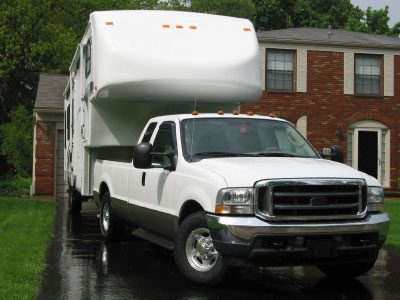
Let’s be honest. Most car buyers don’t give a second thought to the numbers on the window sticker until they’re at the dealership with a pen in hand. Fuel economy? You know that. Horsepower? Everyone knows that. Even zero-to-sixty times are common knowledge for anyone who cares about driving dynamics. We talk about interior cubic feet and legroom inches like it’s everyday language.
These metrics help you decide if a vehicle fits your lifestyle. They tell you what you’re getting for your money. But there’s a gap in that knowledge. A dangerous one.
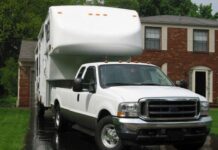
Most new buyers have no idea what gross combination weight rating means. They see “towing capacity” on a brochure, assume they’re good to go, and head to the trailer lot. That assumption can lead to blown transmissions, fried brakes, or worse. Ignorance isn’t bliss when you’re hauling 8,000 pounds down I-95.
What is GCWR?
If you plan to tow anything—a boat, a camper, a utility trailer—you need to understand this specific weight limit. It’s not just a suggestion. It’s a hard ceiling set by the manufacturer.
Gross combination weight rating is the maximum allowable weight of your tow vehicle plus the attached trailer, both fully loaded.
It’s easy to confuse this with GVWR (Gross Vehicle Weight Rating). GVWR is the max weight of just the tow vehicle itself, including passengers, fuel, and cargo inside it. GCWR is the big picture. It looks at the entire system.
Here is the critical distinction: GCWR is not an actual measurement of what your vehicles weigh. It’s a limit. A ceiling. You should never exceed it.
Ford Motor Company breaks down how they calculate this number. It’s not magic. It’s arithmetic.
The GCWR is calculated by adding: the vehicle’s curb weight, allowable payload, driver and passenger weight, and the trailer weight.
If that sum exceeds the manufacturer’s listed GCWR, you are in the danger zone.
Why Does This Number Exist?
Safety. Always safety.
Overloading a tow vehicle is risky. Overloading the combination is catastrophic. When you push past the GCWR, you aren’t just wearing out parts faster. You are compromising the physics of the vehicle.
Consider the braking system. Most tow vehicles are not designed to stop a massive combined mass. If you overload, the brakes overheat. They fade. They fail. You’re left with a multi-ton projectile you can’t slow down.
Tires have load ratings too. Exceed the limit, and you risk a blowout. At highway speeds, a tire failure with a loaded trailer can spin you out of control instantly.
The engine and transmission take a beating under heavy loads. Overheating leads to mechanical failure. You might be stranded on the shoulder of a busy highway because you didn’t check a weight limit.
Suspension components are next. Leaf springs, control arms, bushings. They can bend or break under excessive strain. When that happens, handling vanishes. You lose control.
The list of potential failures is long. The solution is simple. Never surpass your vehicle’s GCWR.
Where to Find Your Rating
So, where do you look?
First, check the label inside the vehicle’s door frame. Look near the driver’s side door latch. That’s where manufacturers often pin critical weight data.
If that label is faded or missing, go digital. Most manufacturers publish vehicle specifications online. A quick search for your specific make, model, and year usually yields the GCWR.
Don’t guess. Don’t estimate. Get the exact number from the source.
Acura GCWR Data (2006-2009)
For Acura owners, here is the breakdown. Note the variance between models and years. The MDX jumps significantly in capacity in 2007. The RSX, which replaced the SLX, has tighter limits.
2006 Acura GCWR
| Model | GCWR (lbs) |
|---|---|
| MDX | 8,121 |
| RL | 5,162 |
| RSX | 4,384 |
| TL | 4,730 |
| TSX | – |
2007 Acura GCWR
| Model | GCWR (lbs) |
|---|---|
| MDX | 10,053 |
| RL | 5,164 |
| RDX | 6,394 |
| TL | 4,773 |
| TSX | 4,407 |
2008 Acura GCWR
| Model | GCWR (lbs) |
|---|---|
| MDX | 10,053 |
| RL | 5,164 |
| RSX | 6,394 |
| TL | 4,773 |
| TSX | 4,407 |
2009 Acura GCWR
| Model | GCWR (lbs) |
|---|---|
| MDX | 10,053 |
| RL | 5,233 |
| RSX | 5,574 |
| TL | – |
| TSX | 4,550 |
Note: Dash indicates data not provided in source.
Audi GCWR Data (2006-2009)
Audi’s lineup is different. The luxury sedans often have lower towing capacities compared to SUVs. The Q7 stands out as the primary towing candidate in these years. The R8, being a supercar, has no towing rating listed.
2006 Audi GCWR
| Model | GCWR (lbs) |
|---|---|
| A3 | – |
| A4 | – |
| A6 | – |
| A8 | – |
| S4 | – |
| TT | – |
2007 Audi GCWR
| Model | GCWR (lbs) |
|---|---|
| A3 | – |
| A4 | – |
| A6 | – |
| A8 | – |
| Q7 | 10,665 |
| RS4 | – |
| S4 | – |
| S6 | – |
| S8 | – |
2008 Audi GCWR
| Model | GCWR (lbs) |
|---|---|
| A3 | – |
| A4 | – |
| A5 | – |
| A6 | – |
| A8 | – |
| Q7 | 10,665 |
| R8 | – |
| RS4 | – |
| S4 | – |
| S5 | – |
| S6 | – |
| S8 | – |
| TT | – |
2009 Audi GCWR
| Model | GCWR (lbs) |
|---|---|
| A3 | – |
| A4 | – |
| A5 | – |
| A8 | – |
| Q7 | 10,665 |
| R8 | – |
| S4 | – |
| S5 | – |
| S8 | – |
| TT | – |
Note: Dash indicates data not provided in source.
The Rest of the Market
The chart continues across almost every major manufacturer. Acura, Audi, BMW, Buick, Cadillac, Chevrolet, Chrysler, Dodge, Ford, GMC, Honda, HUMMER, Hyundai, Infiniti, Isuzu, Jaguar, Jeep, Kia, Land Rover, Lexus, Lincoln, Mazda, Mercedes-Benz, Mercury, MINI, Mitsubishi, Nissan, Pontiac, Porsche, Saab, Saturn, Scion, smart, Subaru, Suzuki, Toyota, Volkswagen, Volvo.
If you own one of these vehicles, the principle remains the same. Find your GCWR. Respect it.
Towing isn’t just about hooking up a hitch and hitting the road. It’s about understanding the limits of your machine. When you ignore the numbers, you’re betting against physics. And physics always wins.
Stay safe. Check your weight.
BMW GCWR
You want to know how much stuff a BMW can actually haul? Gross Combined Weight Rating (GCWR) is the ceiling. It’s the max weight of the car plus what’s hanging off the hitch. If you go over, you’re playing with fire. The numbers here are specific to the 2006-2009 era. Don’t mix them up with newer platforms.
2006
The X5 was the workhorse. 10,802 lbs. That’s serious muscle. The X3 sat at 7,673 lbs. Good for a light trailer or a jet ski.
The sedans? Mostly passenger duty.
325, 330, 525, 530, 550, 650, 750, 760. No GCWR listed for these. Why? Because people don’t tow 3-series sedans. They’re for commuting.
The M cars?
M3. No data.
M5. No data.
M6. No data.
The Z4?
Z4. No data.
Z4M. No data.
2007
Alpina B7 joins the party. Still no GCWR. It’s a fast sedan, not a tow truck.
The M5 and M6 still don’t tow.
The X5 climbs to 11,132 lbs. A bump.
The X3 holds steady at 7,662 lbs.
Z4 and Z4M remain untowed.
2008
The 1-Series enters.
128. No GCWR.
135. No GCWR.
328. No GCWR.
335. No GCWR.
528, 535, 550, 650, 750, 760. All empty.
Alpina B7. Empty.
M3. Empty.
M5. Empty.
The SUVs keep it real.
X3: 7,662 lbs.
X5: 11,132 lbs.
X6: 11,044 lbs. New entrant. Slightly less than the X5.
Z4. Empty.
Z4M. Empty.
2009
The 128 and 135 still don’t tow.
328, 335. No data.
528, 535. No data.
550, 750. No data.
M3, M5, M6. Still no data.
The X3 sits at 7,662 lbs.
The X5 drops slightly to 11,066 lbs.
The X6 holds at 11,044 lbs.
“If your BMW doesn’t have a number listed, you aren’t towing it. Period.”
More BMW Specs:
– BMW GVWR
– BMW GAWR
– BMW Cargo Carrying Capacity
– BMW Curb Weight
– BMW Payload
– BMW Towing Capacity
Buick GCWR
Buick isn’t known for speed. It’s known for hauling family and cargo. The GCWR numbers reflect that pragmatism.
2006
LaCrosse and Lucerne are light.
LaCrosse: 4,645 lbs.
Lucerne: 4,914 lbs.
You could pull a small utility trailer. Maybe a boat if you’re careful.
The trucks did the heavy lifting.
Rainier: 10,500 lbs.
Rendezvous: 7,746 lbs.
Terraza: 8,500 lbs.
2007
LaCrosse and Lucerne stay put. 4,645 and 4,914.
Rainier holds 10,500.
Rendezvous holds 7,746.
Terraza is gone. Replaced by… nothing new in this specific list.
2008
Enclave arrives.
Enclave: 9,500 lbs.
LaCrosse: 4,645.
Lucerne: 4,914.
2009
Enclave: 9,500.
LaCrosse: 4,645.
Lucerne: 4,914.
The pattern is clear. Sedans do minimal towing. SUVs do the real work. If you need to pull more than 5,000 lbs, look at the Rainier or Enclave.
More Buick Specs:
– Buick GVWR
– Buick GAWR
– Buick Cargo Carrying Capacity
– Buick Curb Weight
– Buick Payload
– Buick Towing Capacity
Cadillac GCWR
Cadillac splits the difference. Luxury sedans that can occasionally haul, and massive SUVs that can haul almost anything.
2006
The CTS line.
CTS: 4,659 lbs.
CTS-V: 5,000 lbs. The V-series can pull a bit more.
The DTS: 5,159 lbs.
The STS: 5,008 lbs.
STS-V: 5,383 lbs.
The Escalade family dominates.
Escalade: 12,902 lbs.
Escalade ESV: 14,000 lbs. The long wheelbase adds stability.
Escalade EXT: 13,464 lbs.
The SRX: 5,314 lbs.
XLR and XLR-V have no data. Keep them on the road.
2007
CTS: 4,659.
CTS-V: 5,000.
DTS: 5,159.
Escalade, ESV, EXT all hit 14,000 lbs. Uniformity.
SRX jumps to 6,314 lbs.
STS: 5,079.
STS-V: 5,544.
XLR/XLR-V: Still no data.
2008
CTS bumps to 5,011 lbs.
DTS: 5,159.
Escalade trio stays at 14,000.
SRX: 6,314.
STS: 5,123.
STS-V: 5,544.
XLR/XLR-V: Still no data.
2009
CTS: 5,011.
DTS: 5,159.
Escalade trio: 14,000.
Escalade Hybrid appears. 6,314 lbs. Less than the gas versions.
SRX: 5,123.
STS: 5,123.
STS-V: 5,544.
XLR/XLR-V: Still no data.
If you’re towing with a CTS, stay under 5,000 lbs. If you’re towing with an Escalade, you’ve got room to breathe up to 14,000.
More Cadillac Specs:
– Cadillac GVWR
– Cadillac GAWR
– Cadillac Cargo Carrying Capacity
– Cadillac Curb Weight
– Cadillac Payload
– Cadillac Towing Capacity
Chevrolet GCWR
Chevrolet owns the towing segment. The numbers here are where it gets interesting. From tiny Cobalts to massive Silverados.
2006
The small cars.
Aveo: No data.
Cobalt: 4,141 lbs.
Malibu: No data.
Corvette: No data.
The compacts.
Equinox: 7,252 lbs.
HHR: 4,305 lbs.
Impala: 4,703 lbs.
Malibu Maxx: 4,609 lbs.
Monte Carlo: 4,504 lbs.
Uplander: 7,734 lbs.
The trucks and big SUVs.
Avalanche 1500: 12,863 lbs.
Avalanche 2500: 16,878 lbs.
Colorado: 5,218 lbs.
Express: 9,500 lbs.
Silverado 1500: 10,839 lbs.
Silverado 1500 Hybrid: 12,000 lbs.
Silverado 1500 SS: 12,597 lbs.
Silverado 1500 HD: 13,793 lbs.
Silverado 2500 HD: 16,000 lbs.
Silverado 3500 HD: 16,000 lbs.
Suburban 2500: 13
Ford GCWR
The numbers shift slightly from year to year, so you have to look at the specific model. A 2006 Crown Victoria had a Gross Combined Weight Rating of 5,592 lbs. That’s barely enough to tow a small trailer if you’re already carrying passengers. The heavy hitters started appearing in the vans. A 2006 E-150 sat at 11,318 lbs. The E-350 Super Duty was better, hitting 13,000 lbs.
The trucks told a different story.
The F-150 in 2006 was rated at 11,665 lbs.
By 2007, that jumped to 11,700 lbs.
The F-250 and F-350 both climbed to 17,000 lbs in ’07.
Then came 2008. The F-450 entered the chat with a massive 27,000 lbs.
The F-250 dipped slightly to 15,000 lbs that year.
The F-350 stayed at 17,000 lbs.
Smaller cars didn’t fare well.
The Mustang in 2007 and 2008 had a GCWR of 4,611 lbs.
That’s not a towing rating. That’s a “don’t try this” rating.
The Focus in 2006 was 3,771 lbs.
The Fusion didn’t have a listed rating in the 2006 data.
The Taurus in 2008 was 4,793 lbs.
SUVs held the middle ground.
The 2007 Expedition reached 14,928 lbs.
The Expedition EL went up to 15,078 lbs.
The Explorer varied between 8,110 and 8,500 lbs depending on the year.
The Ranger started at 9,360 lbs in 2006 but dropped to 5,820 lbs in 2007 before settling at 6,000 lbs in 2008.
GMC GCWR
GMC kept it simpler in some years but heavy in others.
The Sierra 3500 in 2006 was 15,792 lbs.
In 2008, it climbed to 16,000 lbs.
The Sierra 2500 hovered around 15,858 lbs for ’07 and ’08.
The Yukon line was consistent.
Yukon: 10,000 lbs across 2007, 2008, and 2009.
Yukon XL: 13,000 lbs in ’07 and ’08, then dropped to 11,000 lbs in 2009.
That drop in 2009 is worth noting. If you’re towing a heavy fifth wheel in a 2009 XL, check the manual again.
The Canyon pickup started at 5,179 lbs in 2006.
It crept up to 5,887 lbs by 2008 and 2009.
The Sierra 1500 improved from 8,361 lbs in 2006 to 9,500 lbs in ’08 and ’09.
The Envoy stayed at 10,000 lbs from 2007 onward.
The Acadia held steady at 9,500 lbs in 2008 and 2009.
Hybrids?
The Yukon Hybrid was rated at 12,000 lbs in 2008 and 2009.
The Sierra Hybrid had no listing in 2009.
Honda GCWR
Honda doesn’t tow much.
The Civic in 2007 had a GCWR of 6,060 lbs.
In 2009, it dropped to 3,738 lbs.
The Accord was even lower. 4,206 lbs in 2006. 4,274 lbs in 2007.
Then it disappeared from the 2008 and 2009 lists.
The Ridgeline was the workhorse here.
It started at 9,653 lbs in 2006.
Climbed to 10,085 lbs in 2007 and 2008.
The Pilot was strong too. 7,914 lbs in 2006.
Jumped to 9,700 lbs in 2007 and 2008.
Dropped to 8,466 lbs in 2009.
The Odyssey hovered around 8,000 lbs.
2006: 8,210 lbs.
2007: 8,034 lbs.
2008: 8,210 lbs.
2009: 8,210 lbs.
The Element and Fit were small.
Element sat at 5,021 lbs in 2006 and 5,083 lbs in ’07 and ’08.
The Fit had no listed rating in 2007, 2008, or 2009.
The Insight was tiny. 2,250 lbs in 2006.
The S2000 never listed a GCWR. Don’t tow with a S2000.
HUMMER GCWR
If you need to move a small house, look here.
The H2 in 2006 was 13,050 lbs.
By 2008, it hit 14,000 lbs.
Stayed there through 2009.
The H3 was consistent but lighter.
8,000 lbs from 2006 through 2009.
The H3T in 2009 added 1,461 lbs, bringing the total to 9,461 lbs.
Hyundai GCWR
Hyundai’s lineup was sparse in the late ’00s.
The Accent started at 4,779 lbs in 2008.
The Azera held steady at 4,779 lbs from 2006 through 2009.
The Elantra varied. 3,623 lbs in 2007 and 2008. 5,550 lbs in 2008.
Wait, 2008 Elantra is 5,550? That’s a big jump from 2007’s 3,623 lbs.
Check your build date.
The Santa Fe sat at 5,527 lbs in 2007 and 2008.
The Tucson was around 4,390 lbs in 2007 and 2008.
The Veracruz had no listing.
The Genesis had no listing.
The Tiburon had no listing.
Infiniti GCWR
Luxury SUVs with muscle.
The QX56 was the king here.
2006: 14,510 lbs.
2007: 15,558 lbs.
2009: 15,100 lbs.
The FX45 in 2007 and 2008 was 14,520 lbs.
The FX50 in 2009 dropped to 9,109 lbs.
The G35 started at 4,655 lbs in 2006.
Jumped to 9,647 lbs in 2008.
The G37 in 2008 hit 13,266 lbs.
The M35 in 2007 was 12,982 lbs.
The M45 didn’t list a rating in 2007 or 2008.
The EX35 in 2008 was 12,902 lbs.
Isuzu GCWR
Isuzu was niche but capable.
The Ascender held steady at 10,000 lbs from 2006 to 2008.
The i-370 climbed from 9,000 lbs in 2007 to 9,500 lbs in 2008.
The i-290 started at 5,500 lbs in 2006 and 2007.
Climbed to 6,000 lbs in 2008.
Jaguar GCWR
Jaguar didn’t list GCWRs for these years.
S-Type, X-Type, XJ8, XJR,
Why Knowing Gross Combination Weight Rating Matters for Older SUVs
Most people look at towing capacity and stop there. They see a number, they buy a trailer, and hope for the best. That’s a mistake. The Kia GCWR is just one example where looking at the combined weight tells a much harsher truth than the standalone towing figure ever could. Gross Combination Weight Rating (GCWR) is the max weight of the vehicle plus everything in it. Passengers. Cargo. Fuel. And the trailer.
If you ignore GCWR, you’re guessing. And guessing with a heavy load gets expensive fast. Suspension failures. Brake fade. Transmission overheating. It’s not worth it.
Kia’s Entry-Level Limits
Kia didn’t push hard on heavy towing in this era. The 2006–2008 Sportage sits at a modest 4880 lbs. That’s not a lot of wiggle room. If your Kia is loaded with people and gear, your trailer has to be light.
The 2007 Sorento jumps to 9299 lbs. That’s a significant step up. It opens the door for small campers. The Sedona minivan hits 8015 lbs in 2007, then drops out of the spec sheet for 2008 and 2009. You have to check your specific build date if you’re towing with a Sedona from those years.
Land Rover’s Heavy Haulers
Land Rover plays in a different weight class. The Range Rover and LR3 are built for serious loads.
In 2006, the Range Rover GCWR sits at 13324 lbs. The Range Rover Sport is close behind at 13318 lbs. The LR3 starts at 13165 lbs. By 2009, the LR3 climbs to 13662 lbs. That’s a massive payload for towing.
The LR2 appears in 2009 with a much lower limit of 7905 lbs. It’s a compact SUV for a reason. Don’t try to treat it like the full-size Land Rovers.
Lexus Luxury and Towing
Lexus separates its luxury sedans from its truck-based SUVs. The sedans don’t tow. The ES, IS, GS, and SC models show dashes in the GCWR column. They aren’t rated.
The SUVs are where the numbers live. The LX 570 is a beast. It hits 14645 lbs in 2008 and stays there in 2009. That’s enough for a large travel trailer. The LX 470 holds steady at 12240 lbs through 2007.
The GX 470 is similar, sitting at 11521 lbs. It’s a Toyota Prado in disguise, so expect solid, predictable limits. The RX models are smaller. The RX 400h starts around 8015 lbs, but drops to 6340 lbs by 2008. The RX 350 is even lighter, dropping from 7520 lbs to 6020 lbs. The hybrid RX is heavier due to battery pack weight, but the non-hybrid RX 350 in 2008 is surprisingly light on the GCWR scale.
Lincoln’s American Muscle
Lincoln uses these numbers to define the Navigator’s capability. The Navigator hits 15000 lbs in 2007. It stays there through 2009. That’s serious towing power.
The Mark LT, essentially a Ford F-150 with a Lincoln badge, holds steady at 14500 lbs from 2006 to 2008. It disappears after that.
The smaller cars are limited. The MKZ shows no rating. The Town Car hovers around 6500 lbs. The Navigator is the only game in town if you want to tow with a Lincoln from this era.
Mazda’s Mixed Bag
Mazda’s lineup shifts rapidly. The B-series trucks (B2300, B3000, B4000) are essentially Ford Rangers in disguise. Their GCWRs range from 4800 lbs for the B2300 up to 7000 lbs for the B4000.
The CX-9 is the midsize SUV king here. It starts at 6826 lbs in 2007, climbs to 6826 again in 2008, then drops to 6484 lbs in 2009. That drop is odd. Check your owner’s manual. The CX-7 stays flat at 5860 lbs across 2007, 2008, and 2009.
The Tribute and Mazda5 don’t have ratings. The MPV hits 5904 lbs in 2006. If you’re towing with a Mazda from this period, keep the trailer light.
Mercedes-Benz Precision Engineering
Mercedes lists high numbers for their truck-based SUVs. The G-Class (G500, G55) sits between 12661 and 12783 lbs. The GL-Class models range from 12399 to 13084 lbs.
The ML-Class is consistent. It hovers around 12000 to 12400 lbs. The ML63 AMG holds at 12443 lbs through 2009.
The R-Class enters the fray in 2009 with an 8590 lbs limit. It’s a crossover, not an SUV, so the towing numbers reflect that. The smaller cars (C-Class, S-Class, SL-Class) have no rating. They aren’t built for towing.
Mercury’s Final Years
Mercury was winding down. The data reflects a brand fading into obscurity. The Mountaineer holds steady at 8217 lbs from 2007 through 2009. It’s a Ford Explorer clone, so the limits match.
The Monterey minivan is rated at 7990 lbs. The Grand Marquis climbs from 5688 lbs in 2006 to 6600 lbs in 2009. That’s an increase. Maybe they strengthened the suspension on the later models.
The Mariner and Mariner Hybrid stay around 4900 lbs. The Sable is light at 4793 lbs. If you’re towing with a Mercury now, you’re likely looking at a used Mountaineer or Monterey.
MINI’s Street Focus
MINI doesn’t do heavy towing. The Cooper models, convertibles, hardtops, and Clubmans all show dashes. The John Cooper Works variants are no different. These are city cars. They’re quick. They’re fun. They are not built to pull a trailer. Don’t try it.
Mitsubishi’s Practical Picks
Mitsubishi’s numbers are modest. The Raider, a Dodge Ram clone, sits around 8600 lbs. The Montero hits 9937 lbs in 2006, then drops out of the list.
The Outlander is a small crossover. It ranges from 4891 lbs to 5682 lbs. The Endeavor is similar, sitting between 6108 and 7552 lbs. The Lancer is tiny at 3895 lbs in 2006, then disappears.
The Bottom Line
GCWR is the hard limit. It doesn’t care about your intentions. It only cares about physics. If your loaded vehicle plus your loaded trailer exceeds that number, you’re driving illegally and dangerously.
Check the sticker on your door. Check the manual. If those don’t match the specs above, trust the sticker. Factory specs change mid-year. Weight packages vary. The numbers here are baselines. Your specific truck or SUV might be lighter or heavier.
Towing is about balance. Not just in the trailer, but in your understanding of what the vehicle can actually handle. Ignore the GCWR, and you’ll find out why it’s there.
If you are hauling anything behind your ride, the Gross Combined Weight Rating matters more than the towing capacity alone. It is the total limit for your vehicle plus the trailer and everything in it. Most brochures don’t show it. You have to dig for the specs.
Nissan GCWR
Nissan gave us some solid numbers for the mid-2000s. The Armada and Titan are workhorses here.
2006 Nissan Models
* Altima: 4,151 lbs
* Armada: 11,818 lbs
* Frontier: 10,676 lbs
* Maxima: 4,623 lbs
* Murano: 8,100 lbs
* Pathfinder: 10,523 lbs
* Quest: 7,662 lbs
* Sentra: 3,663 lbs
* Titan: 11,465 lbs
* Xterra: 9,658 lbs
* 350Z: Not listed
2007 Nissan Models
* Altima: 4,205 lbs
* Altima Hybrid: 4,632 lbs
* Armada: 12,800 lbs
* Frontier: 11,133 lbs
* Maxima: 4,741 lbs
* Murano: 8,100 lbs
* Pathfinder: 10,523 lbs
* Quest: 7,941 lbs
* Sentra: 4,003 lbs
* Titan: 11,600 lbs
* Xterra: 9,658 lbs
* Versa: Not listed
2008 Nissan Models
* Altima: 4,205 lbs
* Altima Hybrid: 4,632 lbs
* Armada: 15,100 lbs (Big jump from previous years)
* Frontier: 10,676 lbs
* Maxima: 4,741 lbs
* Pathfinder: 10,596 lbs
* Quest: 7,943 lbs
* Rogue: 4,430 lbs
* Sentra: 4,047 lbs
* Titan: 11,688 lbs
* Xterra: 9,300 lbs
* 350Z/Versa: Not listed
2009 Nissan Models
* Altima: 4,217 lbs
* Altima Hybrid: 4,620 lbs
* Armada: 15,100 lbs
* Frontier: 11,133 lbs
* Maxima: 4,706 lbs
* Murano: 7,505 lbs
* Pathfinder: 10,596 lbs
* Quest: 7,943 lbs
* Rogue: 4,430 lbs
* Titan: 11,688 lbs
* Xterra: 9,300 lbs
* GT-R/Versa: Not listed
Pontiac GCWR
Pontiac was wrapping up its run. The numbers are modest, except for the G8.
2006 Pontiac Models
* G6: 4,530 lbs
* GTO: 4,578 lbs
* Grand Prix: 4,634 lbs
* Montana SV6: 8,500 lbs
* Torrent: 7,310 lbs
* Vibe: 4,351 lbs
* Solstice: Not listed
2007 Pontiac Models
* G5: 4,141 lbs
* G6: 4,530 lbs
* Grand Prix: 4,627 lbs
* Torrent: 7,407 lbs
* Vibe: 4,351 lbs
* Solstice: Not listed
2008 Pontiac Models
* G5: 4,141 lbs
* G6: 4,455 lbs
* G8: 6,035 lbs
* Grand Prix: 4,627 lbs
* Torrent: 7,310 lbs
* Vibe: 4,350 lbs
* Solstice: Not listed
2009 Pontiac Models
* G5: 3,902 lbs
* G6: 4,455 lbs
* G8: 6,035 lbs
* Torrent: 7,310 lbs
* Vibe: 4,506 lbs
* Solstice: Not listed
Porsche GCWR
Porsche keeps it simple. The Cayenne is the only volume seller with a trailer hitch rating.
2006 Porsche Models
* Cayenne: 12,628 lbs
* Boxster/Cayman/911: Not listed
2008 Porsche Models
* 911: Not listed
* Boxster: Not listed
* Cayenne: 12,628 lbs
* Cayman: Not listed
2009 Porsche Models
* 911 Carrera: Not listed
* Boxster: Not listed
* Cayenne: 12,650 lbs
* Cayman: Not listed
Saab GCWR
Saab’s lineup was small. The 9-7X shares DNA with the Yukon, hence the higher towing rating.
2006 Saab Models
* 9-2X: 5,220 lbs
* 9-3: 5,430 lbs
* 9-5: 7,120 lbs
* 9-7X: 10,500 lbs
2007 Saab Models
* 9-3: 5,380 lbs
* 9-5: 7,120 lbs
* 9-7X: 10,500 lbs
2008 Saab Models
* 9-3: 5,380 lbs
* 9-5: 7,120 lbs
* 9-7X: 10,500 lbs
2009 Saab Models
* 9-3: 5,680 lbs
* 9-5: 7,120 lbs
* 9-7X: 10,500 lbs
Saturn GCWR
Saturn tried a few things. The Relay was a van. The Outlook was a badged Buick Enclave.
2006 Saturn Models
* Ion: 3,946 lbs
* Relay: 8,500 lbs
* VUE: 4,857 lbs
2007 Saturn Models
* Aura: 4,678 lbs
* Aura Hybrid: Not listed
* Ion: 3,902 lbs
* Outlook: 9,500 lbs
* Relay: 7,918 lbs
* Sky: Not listed
* VUE: 4,857 lbs
* VUE Hybrid: 4,857 lbs
2008 Saturn Models
* Astra: Not listed
* Aura: 4,678 lbs
* Aura Hybrid: Not listed
* Outlook: 6,872 lbs
* Sky: Not listed
* VUE: 5,475 lbs
* VUE Hybrid: 5,439 lbs
2009 Saturn Models
* Astra: Not listed
* Aura: 4,678 lbs
* Aura Hybrid: Not listed
* Outlook: 6,852 lbs
* Sky: Not listed
* VUE: 5,475 lbs
* VUE Hybrid: 5,439 lbs
Scion GCWR
Scion didn’t list GCWR. Probably because they
Volkswagen GCWR by Model and Year
Volkswagen’s towing numbers from the mid-2000s are a study in selectivity. You won’t find GCWR data for just about everything in their lineup. Most sedans and compacts like the Beetle, Jetta, Passat, and Eos don’t have published Gross Combined Weight Ratings listed in standard consumer databases. It’s a gap that leaves owners guessing until they check their door jamb stickers.
The only consistent heavy hitters in the VW fleet during this era were the Touareg SUVs. That makes sense. These are body-on-frame or unibody crossovers built with serious towing intent.
2006 Volkswagen GCWR Data
* Touareg: 12,952 lbs
That’s it for the rest of the 2006 roster. The Golf, GTI, Rabbit, and Phaeton? No data available.
2007 Volkswagen GCWR Data
* Touareg: 13,034 lbs
A slight increase here. The Eos, Jetta, and Passat variants still lack published figures. If you’re towing a 2007 Jetta, you’re likely limited by the vehicle’s structural towing capacity rather than a combined weight limit, but the official GCWR isn’t on the public record.
2008 Volkswagen GCWR Data
* Touareg 2: No specific GCWR listed in this dataset (implies similar capability to peers, but no number provided).
The GLI, GTI, R32, and Rabbit entries are blank. Volkswagen seems to have stopped publishing these specific combined weight ratings for non-SUV models around this time.
2009 Volkswagen GCWR Data
* Routan: 6,771 lbs
* Tiguan: 5,748 lbs
* Touareg 2: 12,952 lbs
The Routan minivan shows a modest combined weight rating. The Tiguan, being a smaller crossover, sits significantly lower at 5,748 lbs. The Touareg remains the king of the hill with a massive 12,952 lbs rating.
Volvo GCWR by Model and Year
Volvo’s approach to GCWR in the 2006–2009 window is more granular. They published numbers for almost every sedan and wagon. If you own a C30, C70, or S-series from this era, you can actually check your limits.
The XC90 stands out as the heavy-duty workhorse. The smaller crossovers and wagons are strictly light-duty.
2006 Volvo GCWR Data
* XC90: 8,694 lbs
* S80: 7,184 lbs
* XC70: 7,125 lbs
* C70: 7,222 lbs
* S60: 6,843 lbs
* V70: 6,746 lbs
* V50: 5,476 lbs
* S40: 5,375 lbs
The XC90 is in a league of its own. Nearly 9,000 lbs of combined weight potential. The sedans and wagons hover between 5,300 and 7,200 lbs.
2007 Volvo GCWR Data
* XC90: 8,570 lbs
* S80: 6,943 lbs
* XC70: 7,125 lbs
* C70: 5,942 lbs
* S60: 6,951 lbs
* V70: 6,746 lbs
* **V