The nursery rhyme failed us. The ceiling is still leaking, the rug is ruined, and the asphalt outside looks like an ice rink with extra steps. We have to go out.
This is not hard, right? Just get in the car and turn the wheel.
Wrong.
Some habits that work on dry pavement kill you in wet conditions. You have ingrained muscle memory that assumes traction exists. It doesn’t. Rain makes everything slick. If you have to drive in a downpour, you need to reset your reflexes immediately.
Here is how to keep your spinal cord intact.
3: Stay in the center lane to avoid standing water
Roads are not flat. They are crowned.
The center of the road is slightly higher than the edges. This design forces water to run off the middle and drain toward the gutters. It is subtle. You won’t feel it. But that slight slope means the edges hold water. Puddles gather in the ruts and along the curbs.
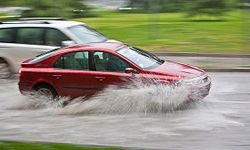
When you are driving in rain, standing water is your enemy. Hydroplaning happens when tires lose contact with the pavement and ride on a layer of water. To avoid it, you want to be where the water isn’t.
That means the center of the road.
It won’t be dry. The rain is still falling. But it will be the driest spot available. If you are on a multi-lane highway, stay in the middle lanes. If you are on a two-lane road, stay closer to the centerline. Avoid the shoulders. Avoid the edges. The water flows there. You follow the crown.
2: Use headlights, but check your beam angle
Visibility is everything. But so is blinding the other driver.
Turn on your headlights. All of them. Daytime Running Lights (DRLs) are not enough. You need your low beams on so other drivers can see you. This is non-negotiable. Rain scatters light. It reduces contrast. Make yourself visible.
Do not use high beams.
High beams reflect off the water droplets in the air. This creates a glare wall. You see nothing but white fog. You drive blind. Low beams cut under the precipitation. They illuminate the road surface without reflecting back into your eyes.
If your headlights are too bright or misaligned, they cause problems. Check your alignment. If you can’t see the road clearly, your lights are wrong. Or you are using the wrong setting. Switch to low beams.

Headlights aren’t just for seeing the road. They are a beacon. In the gray soup of a rainstorm, visibility drops to near zero. You are driving through what looks like overcooked oatmeal. Other drivers need to see your lights to know you exist. Without them, you are just another raisin in the mix. But do not blind them. High beams reflect off the water and create a wall of white glare. Keep your low beams on. It helps others see you without destroying their night vision.
The Windshield Test
If you cannot see the road, you should not be moving. This sounds obvious. It isn’t. People drive with wipers maxed out and water sheeting across the glass anyway. You might know the route. You might be confident. It does not matter.
When visibility is compromised, you are flying blind. You cannot see stopped cars. You cannot see pedestrians. You might not even be steering straight. You could be heading toward a bridge abutment or a guardrail. The solution is simple. Pull over. Stop. Turn on your hazards. Wait.
Listen to music. Call a friend. Do not drive until the rain slows down and the glass clears. Your patience is better than your insurance claim.
The River Trap
Never drive through flowing water. This is not a suggestion. It is a survival rule. Drivers often see a shallow stream crossing the road and think their SUV or sedan can handle it. They are wrong.
Rainwater moves fast. It is deceptively deep. An inch of water can stall an engine. A foot of moving water can sweep a car off the road. People have drowned trying to grab tree limbs or escape sinking vehicles. Do not let pride kill you. If you see water flowing across the pavement, turn around.
Even standing water is a trap. You cannot see the bottom. There could be a pothole deep enough to swallow your front axle. There could be debris or broken glass. If you cannot see the road surface, do not drive into it. Find an alternate route or wait for the water to recede.
Speed and Traction
This is the final and most critical rule. You must adjust your speed to the conditions. Dry pavement offers high friction. Wet pavement reduces it significantly. Your tires have less grip. Stopping distances double or triple.
Hydroplaning happens when water builds up between your tires and the road. The tires lose contact with the asphalt. You are now floating on a layer of water. Steering and braking become ineffective.
Drive slower than you think you need to. Leave more space between you and the car in front. If you feel your car sliding, do not panic. Take your foot off the accelerator. Do not slam on the brakes. Steer gently in the direction you want to go. Regain traction before making any sudden moves. Speed is the enemy when the road is wet. Keep it low. Keep it safe.
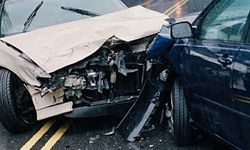
Speed limits are theoretical numbers based on dry pavement and clear visibility. They are not legal speed limits for a downpour. When the road is wet, those posted numbers are irrelevant. You need to drive significantly slower. The worse the weather, the lower your speed should be.
The primary enemy in these conditions is hydroplaning. This isn’t a recreational activity involving seaplanes. It is a mechanical failure of traction.
Tires rely on tread patterns to displace water. They slice through the film of water on the road surface. This keeps the rubber in contact with the asphalt. But speed changes the physics. If you go too fast, the tires cannot push water out of the way quickly enough. The vehicle begins to float. The tread loses contact with the road.
This is catastrophic.
When traction is lost, steering input does nothing. Braking does nothing. The car simply slides. Most drivers do not realize they are hydroplaning until they instinctively slam on the brakes. That action transfers weight forward. It worsens the skid. The car spins or slides off the road.
The solution is prevention. Stay below the speed at which hydroplaning occurs.
What to Do If You Lose Control
If you feel the steering wheel go light or the car slide, panic is the worst response. You will be terrified. Trust us. But panic leads to over-correction.
Do not hit the brakes. Braking while floating removes any residual grip the tires might have. It locks the wheels if the car has ABS, or worse, if it doesn’t.
Lift your foot off the accelerator. Let engine braking and aerodynamic drag slow the vehicle. Keep the steering wheel straight. Do not fight the slide. If the rear of the car swings out, do not jerk the wheel against it. Just hold the line.
As the speed drops, the tires will once again cut through the water. Traction returns. You regain control. It happens almost instantly.
Then, get off the road. Pull over. Sit in the car. Let your heart rate return to normal. Driving while shaken is dangerous.