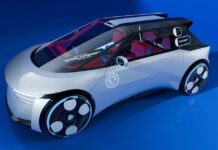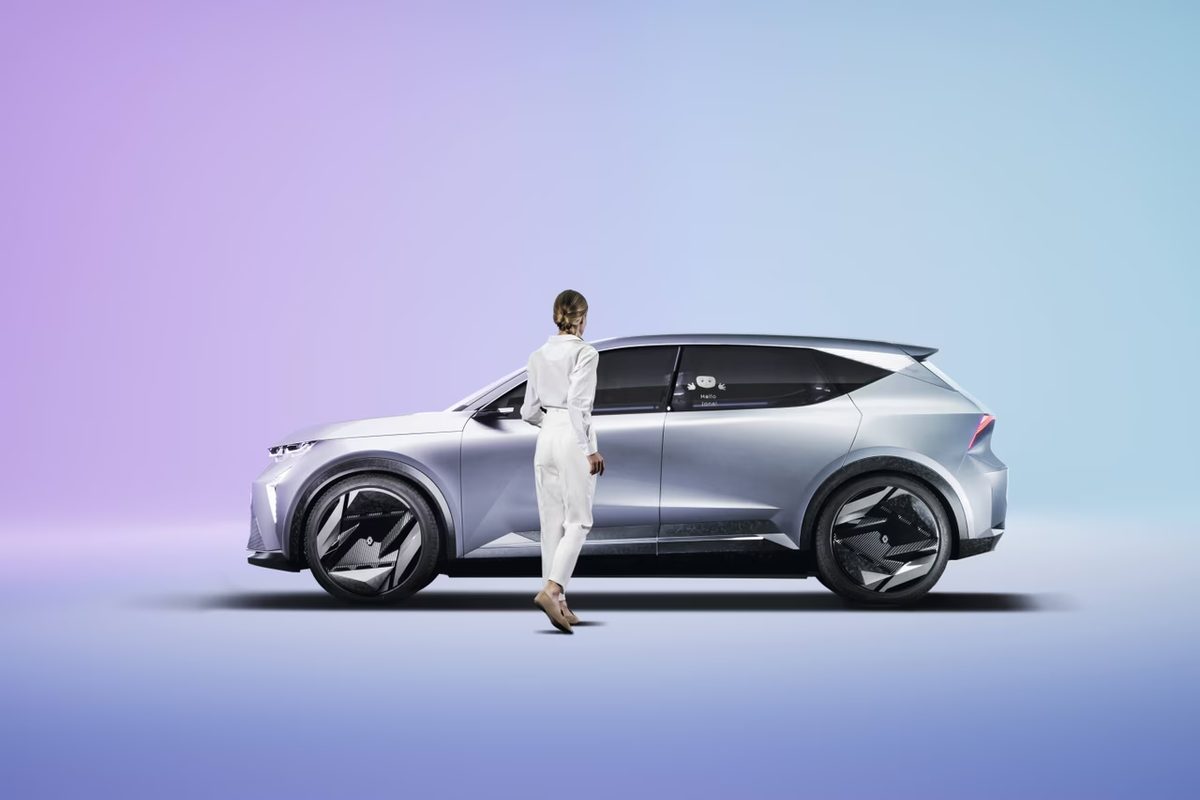
Forget the cartoonish dream of a personal jetcar from 1960s comic strips. The reality of automotive evolution doesn’t look like The Jetsons. It looks like Software République. The French tech startup has been quietly developing a prototype that redefines how humans interact with machines, moving beyond simple driving commands into something far more intuitive.
They didn’t choose a quiet lab for the reveal. They picked Viva Technology 2023. Why? Because the Paris-based tech summit is where the world watches to see which startups actually ship products versus which ones just pitch slides. For Software République, the salon was the perfect stage to demonstrate their result.
The core proposition isn’t about defying gravity. It is about new interactions between man and machine. The team has built a system that anticipates intent. It listens. It observes. The goal is to strip away the friction of traditional interfaces. You don’t just tell the car where to go. The car understands where you need to be before you fully articulate the destination.
This approach shifts the focus from transportation to experience. The prototype shown at VivaTech wasn’t just a rolling computer. It was a dialogue. A continuous feedback loop between driver and device.
“She profits from the Viva Technology 2023 salon to unveil the result of her work.”
The presentation highlighted a significant departure from standard infotainment screens. Instead of tapping or swiping, users engage through natural language and behavioral cues. The system learns. It adapts. It reduces cognitive load.
For enthusiasts tired of seeing the same touchscreen layouts in every new EV, this offers a glimpse of what happens when software takes the wheel of the user experience. The “flying car” remains a fantasy. But the car that truly understands you? That’s already being built in Paris.

Beyond the Key Fob: How the H1st Concept Car Reads Your Biometrics
Forget your fob. Forget the smartphone in your pocket. The H1st concept car doesn’t need you to carry anything.
It just knows who you are.
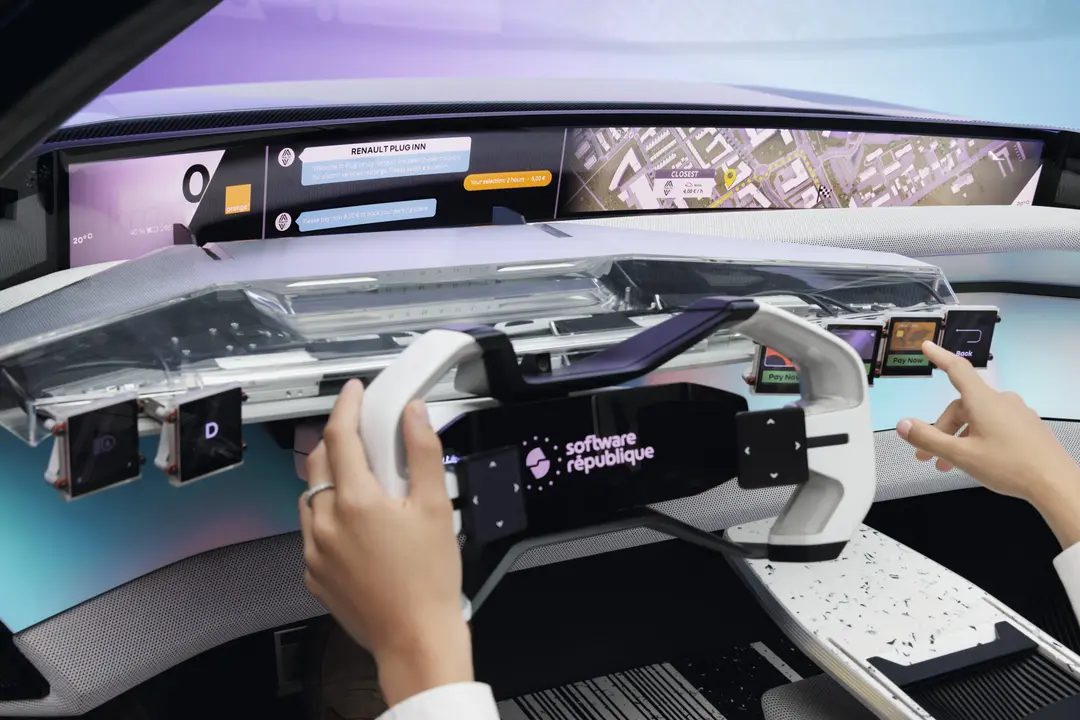
Using a combination of facial and postural recognition, the vehicle identifies its owner from up to six meters away. No tapping. No unlocking. You walk up, the car checks your gait and face against biometric data learned during your first session, and grants access. The engine starts.
This isn’t magic. It’s a twenty-feature suite designed to strip away the friction between human and machine. The H1st is less a car and more a rolling data center that happens to have wheels.
The Sound of Efficiency
Inside, the experience is curated through audio. Sixteen speakers fill the cabin, but they aren’t just for hi-fi music. They are part of a holistic environment management system.
But the real engineering focus is elsewhere. Battery health. Autonomy. Charge cycles.
The system monitors the battery’s state of health in real-time. It optimizes range based on driving patterns. And it hints at V2G (Vehicle-to-Grid) capabilities, allowing the car to potentially push power back to the grid when stationary.
This isn’t just about going further on a charge. It’s about treating energy as a dynamic resource, not a static tank.
Human First Vision: Predictive Safety
Security on the road has always been reactive. You brake because you see the red light. You steer because you see the obstacle.
The H1st flips that script.
Human First Vision is the name for its sensor suite. It’s not just cameras. It’s a network of sensors and cameras feeding data into an onboard AI.
The AI doesn’t just see. It predicts.
The AI analyzes data in real-time to issue predictive alerts before a hazard even fully materializes.
If the car detects a pedestrian about to step out, or a vehicle changing lanes erratically, it doesn’t wait for the collision course to be mathematically certain. It warns. It may even react.
This system runs constantly. It watches the road. It watches the driver’s health. It watches the car’s own vitals.
Privacy in a Connected World
Here’s the catch.
To recognize you from six meters away, the car collects data. Face scans. Gait analysis. Health metrics.
Who owns that data?
The H1st treats data security as a core feature, not an afterthought. The biometric information required for identification is protected. The goal is reliable authentication, not surveillance capitalism.
This concept car is a lab on wheels.
French automaker Renault (implied by context of “constructeur français”) is using the H1st to stress-test technologies that will likely trickle down to mass-market models. The biometric entry? The predictive safety alerts? The V2G integration?
They’re coming.
You might not like giving up your key. Or you might love never having to dig for it in a coat pocket while it’s raining.
One thing is clear. The era of the passive driver is ending. The car is starting to pay attention.

Software Republic: Renault’s Agile Tech Startup
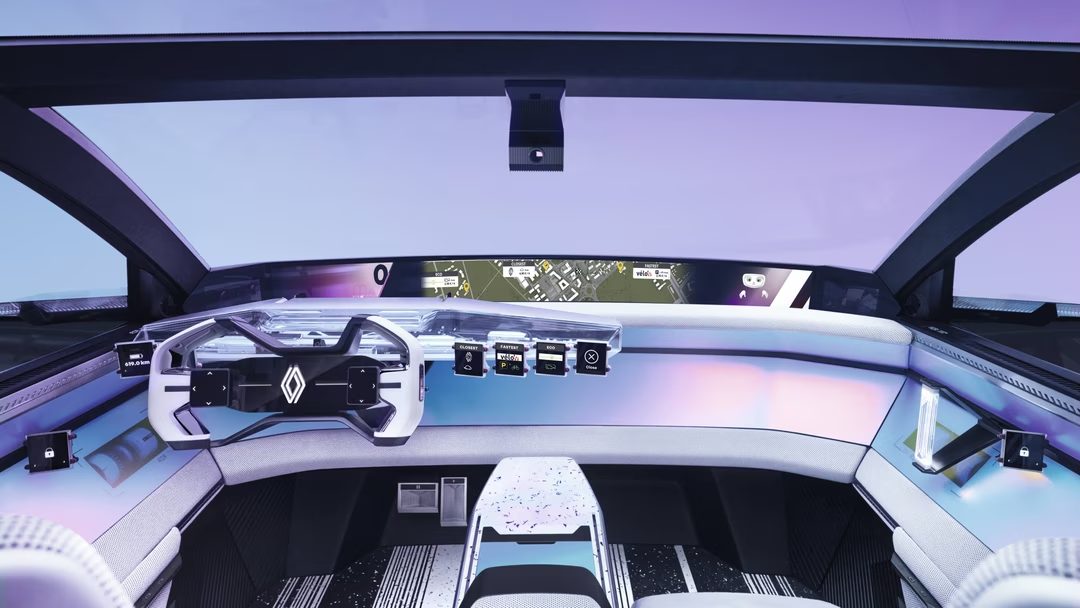
Digital acceleration and the EV transition have changed the rules. Renault is betting on speed. They launched Software Republic, a high-tech startup designed to fast-track new automotive features. This isn’t an internal IT department. It’s a joint venture with heavyweights like Thalès, Atos, and Dassault Systèmes.
The results show up in the concept car Human First Vision. That car was built in just six months. It only took two years to build the team itself. Around a hundred people. That is a lean crew for a full-scale automotive concept.
The Digital Twin Strategy
How do you cut development time in half? You cheat physics. The team didn’t start with sheet metal. They started with a digital twin.
“The team created a digital double to develop technologies virtually, free from the constraints of the real world like time or physics.”
This approach allowed them to iterate rapidly. No waiting for suppliers. No waiting for prototypes to cure. They could test software interactions in a vacuum. Once the code worked, they translated it to a physical vehicle for the public reveal.
Human-Centric Design
The focus wasn’t on horsepower. It was on the driver. The goal was to make the car an extension of the human. Not a machine you drive. A partner you interface with.
Partner resources from Thalès and Dassault Systèmes provided the computational muscle. The result is a glimpse into how future Renaults might think. Fast. Flexible. Human-first.