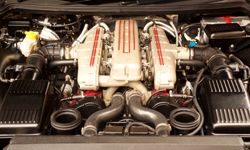
It’s easy to look at an old Ford Model T and a 2011 Ford Fusion and see two completely different vehicles. Alexander Graham Bell would likely be baffled by an iPhone, yet the core mechanism driving both cars remains stubbornly similar. We burn a mixture of air and fuel to create rotational force. That is it. That is the whole trick.
But calling them identical feels lazy. Think of it this way: older engines were wolves. Modern engines are dogs. Same species. Same general instincts. But you can’t put a wolf in a suburban backyard and expect it to play nicely with the neighbors. Modern engines had to adapt to live with us, which means they had to get smarter, quieter, and significantly more efficient while still pulling hard when you stomp on the pedal.
How a Car Engine Actually Works
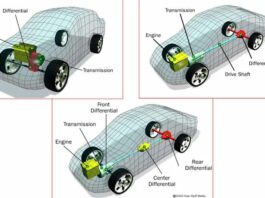
Before diving into the upgrades, you need the baseline. Inside the cylinder, gasoline and air meet a spark. The resulting explosion shoves a piston down. That piston is attached to a rod, which spins the crankshaft. The crankshaft turns, sending power to the transmission, which sends power to the wheels.
Simple? On paper, yes. In practice, it is a violent, high-heat, high-speed mess that requires precise timing. Modern engines still rely on this basic piston-crankshaft dance, but the supporting cast has changed drastically.
Why Modern Engines Are More Efficient
Old engines were wasteful. They sipped fuel like a gas guzzler in a 1970s muscle car. Modern car engines are optimized to squeeze more power out of every drop of gasoline. This isn’t just about fuel economy badges on the window; it is about thermal efficiency, emissions control, and maintaining performance without straining the engine.
The shift from the “wolf” era to the “dog” era isn’t just about smaller engines. It is about smarter engineering. Modern systems manage airflow, combustion timing, and exhaust flow with a precision that mechanical linkages simply couldn’t achieve. The result is an engine that can idle smoothly in stop-and-go traffic, accelerate hard when you need it, and burn less fuel doing it all.
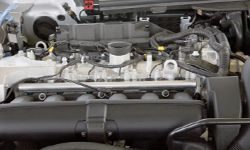
Small Block, Big Numbers: Why Modern Engines Pack a Punch
Let’s kill the myth right now. You do not have to settle for a limp, underpowered drive because your car is efficient. The opposite is actually true.
Modern powerplants are significantly more powerful than the bulky, thirsty units they replaced. How? Through a mix of better breathing and smarter mechanics.
Take the 2.0-liter turbocharged four-cylinder. It sits in compact cars and crossovers, producing 200 to 250 horsepower. A 1980s V8 of similar displacement? Barely cracked 150. The small engine wins because it compresses the intake air. That compressed air means more oxygen in the cylinder. More oxygen allows for more fuel combustion without running rich. The result is denser energy release.
Direct injection plays a huge role here too. Instead of misting fuel into the intake manifold and waiting for it to mix, high-pressure injectors spray it directly into the combustion chamber. This tightens the spray pattern. The fuel burns faster and cleaner. You get more usable force from the same amount of gasoline.
Variable valve timing changes the breathing rhythm. The engine opens and closes intake valves at different points in the cycle depending on RPM and load. At low speeds, it keeps ports closed to prevent pump losses. At high RPM, it opens them wide to maximize airflow. This flexibility means the engine runs efficiently at idle but still pulls hard when you stomp the pedal.
Cylinder deactivation adds another layer. In an eight-cylinder setup, if you are cruising at 60 mph on a flat highway, the engine shuts off four cylinders. It runs on four. Fuel drops. Power output remains sufficient because the four active cylinders are handling a load they can manage easily. The moment you accelerate, all eight fire back up instantly.
This is why a modern compact SUV feels quicker than a full-size pickup from 1995. The older truck had more displacement, sure. But it also had worse airflow, less precise fueling, and higher friction. The newer car squeezes more mechanical work out of fewer cubic inches of metal.
Efficiency isn’t a trade-off for torque. It is a multiplier. You get the muscle and the economy. Both.
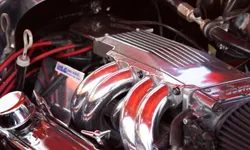
Modern Engines are Smaller
That horsepower jump comes with a catch: the engines getting it done are shrinking. We used to think bigger displacement meant more muscle. Not anymore.
Look at that 1983 Chevrolet Malibu. It hauled around a 3.8-liter V-6. By 2005, that spot in the engine bay was occupied by a 2.2-liter inline four. The 2011 model? Base engine is a 2.4-liter four-banger. If you want the V-6, it’s a 3.6-liter unit.
Do the math. The 3.6-liter V-6 in the 2011 Malibu is physically smaller than the 3.8-liter V-6 from 1983. Yet it produces 252 horsepower. That’s 146 more horses than the old truck.
Even the modest 2.4-liter four-cylinder, putting out 169 hp, beats the 110 hp from the ’83 V-6 by 59 units. How? Efficiency. Modern engines squeeze more power out of less air and fuel. They have to, because the cars are heavier.
Think about the load. A 1983 car was basically a chassis with some sheet metal. Today? Crumple zones, airbag modules, reinforced steel, electronic stability control, infotainment screens. The curb weight has gone up significantly. The engine is lugging a much heavier body around. And it’s doing it at freeway speeds, not just country roads.
So you’re getting more power from a smaller package, hauling more weight, going faster. That’s not just progress. That’s engineering necessity.
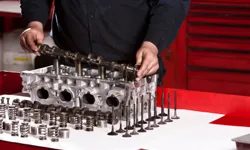
How smaller displacement engines match older power output
Modern engines produce more torque and horsepower than their predecessors, which usually implies a larger physical footprint. The Chevrolet Malibu highlights the opposite reality. Engine power went up, yet the hardware shrank.
Efficiency drives this trend. Manufacturers realized that brute volume no longer guarantees performance. You just need the engine to work smarter. The same systems boosting fuel economy also allow compact blocks to generate serious power without expanding the engine bay.
Which Ford F-150 engine proves smaller is stronger
The Ford F-150 serves as the primary case study here. As America’s best-selling truck and often the top-selling vehicle overall, it sets the standard for capability. The 2011 model year showcases this shift perfectly.
- 3.5-liter V-6 : 365 horsepower
- 5.0-liter V-8 : 360 horsepower
- 6.2-liter V-8 : 411 horsepower
Typically, displacement correlates with output. The 6.2-liter V-8 dominates both smaller options, pushing 411 horsepower to crush the competition. Yet the gap between the 3.5-liter V-6 and the 5.0-liter V-8 tells a different story. A V-6 matches a smaller V-8. That is impressive. It suggests the V-6 is extracting maximum value from every cylinder.
Consumers demanding better fuel economy will likely see more of this configuration. Smaller engines are poised to handle loads previously reserved for large V-8s. The trend is clear. Smaller is getting stronger.
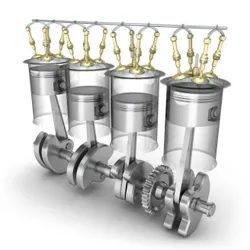
Modern engines have partners.
Why Older V8s Wasted Fuel at Idle
Think about a classic muscle car. That big V8 didn’t care if you were sitting in traffic or merging onto the highway. All eight cylinders fired. All eight got fuel. Same effort, same burn, zero context.
That’s gone.
Today’s powertrains adjust in real time. They don’t brute force their way through low-load situations. They optimize.
How Cylinder Deactivation Saves Gas
Cylinder deactivation is the headline feature. It shuts down half the engine when you don’t need it. Cruise at 60 mph? Four cylinders might sleep. Idle? Even fewer might work.
When you floor it, those dormant cylinders wake up instantly. No lag. Just torque.
This directly cuts friction losses. Fewer moving parts working against each other means less energy wasted as heat. It also means less fuel injected into cylinders that aren’t pulling their weight.
Variable Valve Timing and Lift: The Fine Tuner
Cylinder deactivation handles the big switches. Variable valve timing and lift handles the micro adjustments.
Older camshafts were rigid. Valves opened the same duration and lift at every RPM. That’s inefficient. At low RPM, you want short, shallow openings. At high RPM, you want long, deep ones. Modern systems change both.
- Timing: When the valves open and close shifts with engine speed.
- Lift: How far they open changes with load.
This keeps the engine breathing efficiently across the entire rev range. It reduces pumping losses and improves volumetric efficiency.
The result is less fuel burned per unit of work, not just less fuel burned overall.
Which Systems Work Together?
They aren’t standalone. Modern ECUs map cylinder deactivation against valve timing profiles. If you’re deactivating cylinders, the remaining ones might need slightly different valve events to keep combustion stable.
It’s a coordinated dance. The engine computer decides which cylinders to drop, how much lift to give the survivors, and when to bring the sleeping ones back online.
Does this make a huge difference on the highway? In a heavy car, maybe not enough to notice in a single tank. But over 100,000 miles? The fuel savings stack up. And the refinement improvements are obvious the moment you shift from cruise to pass.
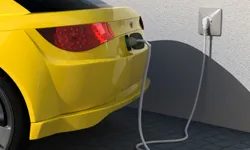
How Modern Transmissions and Hybrid Systems Boost Efficiency
Modern engines don’t work alone. They rely on partners. Specifically, high-tech components that squeeze more efficiency and power out of the combustion process.
Gone are the days when a four-speed manual or a basic five-speed automatic felt cutting-edge. Today, the standard transmission has evolved. You see 8-speed automatics as the norm in premium sedans and trucks. Why? More gears allow the engine to stay in its optimal RPM range longer. This keeps the whole drivetrain running efficiently.
Sometimes, eight ratios aren’t enough. That’s where Continuously Variable Transmissions (CVTs) come in. Unlike a traditional gearbox, a CVT doesn’t have fixed steps. It offers an infinite number of gear ratios. The system constantly adjusts the ratio to match engine torque with wheel speed. This means power transmission stays efficient, even in stop-and-go traffic where a fixed-gear transmission would hunt for the right gear.
Hybrid powertrains add another layer of complexity. Here, the internal combustion engine partners with an electric motor and a battery pack. The electric motor handles low-speed driving. It also runs accessories when the car is stopped, allowing the gas engine to shut down. When you need a burst of acceleration, the motor kicks in to assist. This “power assist” lets engineers build a smaller, less powerful gas engine. Smaller engine, less fuel burned.
It’s not all about economy, though. Performance hybrids pair those electric motors with large, high-output engines. The result is a punchy, efficient performance package that older, pure-gas setups couldn’t match.
The combination of advanced transmission tech and hybrid assistance is what allows modern engines to deliver both power and fuel savings. It’s not just about the pistons anymore. It’s about the ecosystem of parts working together.