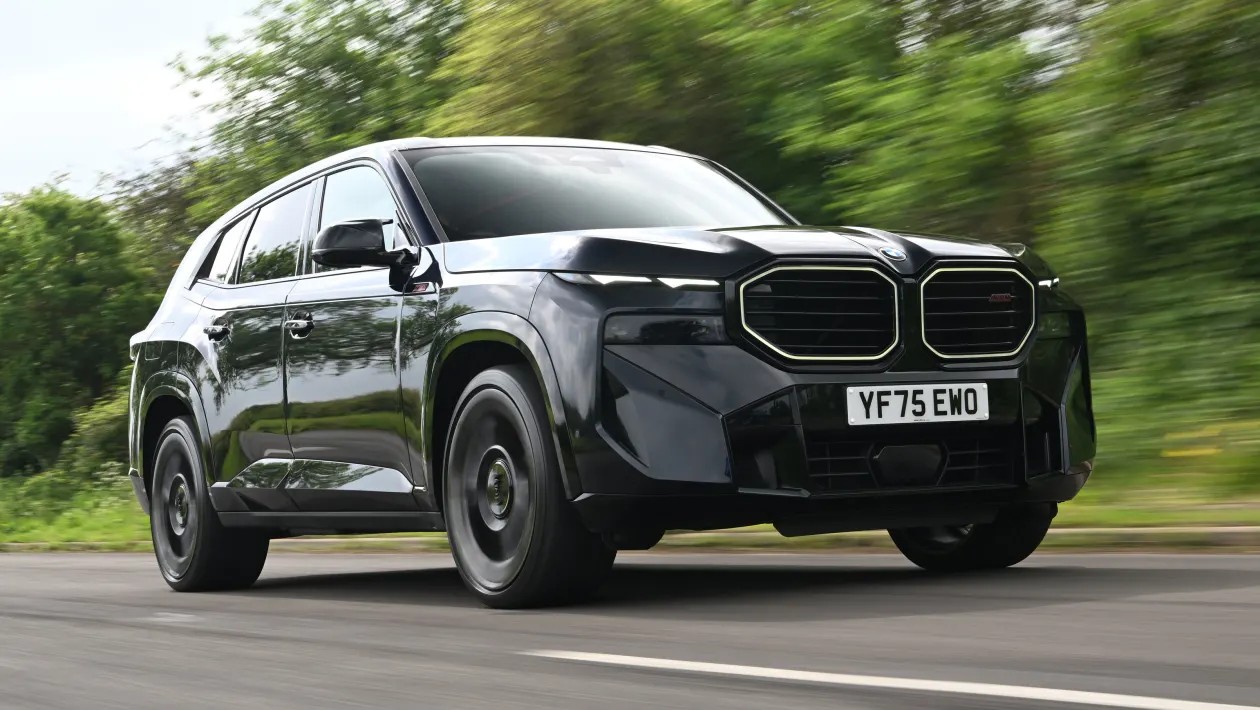
The BMW XM remains one of the most polarizing vehicles in the automotive world. Since its controversial debut in 2023, it has divided opinion between those who see it as a bold statement of individuality and those who view it as an excess of noise and price. For 2026, BMW has refined the model, expanding it into a two-tier range. However, while the engineering is impressive, the XM continues to struggle with a fundamental identity crisis: it is too heavy and noisy to be a true luxury cruiser, yet too compromised in comfort to be a practical daily driver.
A Tale of Two Powertrains
The 2026 lineup distinguishes itself through two distinct variants, both built on a plug-in hybrid (PHEV) architecture but targeting different segments of the ultra-luxury market.
The Entry-Level 50e
The 50e serves as the accessible entry point, sharing its powertrain with the standard BMW X5. It combines a turbocharged 3.0-liter straight-six engine with a 192bhp electric motor and a 25.7kWh battery.
* Performance: 469bhp combined, 0-62mph in 5.1 seconds.
* Efficiency: Officially rated at 64.2mpg with a 52-mile electric range.
* Reality Check: While the paper figures are impressive, real-world usage often sees the petrol engine engaging more frequently than anticipated, particularly when the battery is depleted.
The Top-Tier Label
The flagship “Label” (formerly Label Red) is the heart of the XM’s appeal. It swaps the inline-six for a twin-turbocharged 4.4-liter V8, paired with the same electric system but tuned for significantly higher output.
* Performance: 727bhp and 1,000Nm of torque. This is actually more power than the current BMW M5.
* Speed: 0-62mph in just 3.8 seconds, with a top speed of 180mph.
* Efficiency: Officially 55mpg with approximately 50 miles of electric range, though CO2 emissions rise to 115g/km.
The Hybrid Experience: Powerful but Imprecise
The XM’s hybrid system is powerful but lacks the sophistication found in competitors. The management of electrical energy can feel binary rather than seamless.
- eMode: The car will drain the battery regardless of driving conditions, which can leave you with zero charge for urban driving if you start with a full tank but low battery.
- eControl: Designed to preserve charge, this mode relies heavily on the petrol engine, negating the efficiency benefits of the hybrid system.
- Hybrid Mode: This middle ground is often crude, using battery power with little strategic foresight.
While newer PHEVs from rivals use battery capacity more intelligently—keeping the engine off in low-load scenarios where possible—the XM tends to default to brute force. For buyers of a £155,000 V8 SUV, efficiency is rarely the primary concern; however, the lack of intelligent energy management makes the system feel less refined than its price tag suggests.
Driving Dynamics: Heavy but Agile
Despite weighing 2.6 tonnes, the XM drives with a surprising agility, thanks to advanced chassis technology. Rear-wheel steering and 48V active anti-roll bars allow the SUV to corner with a stability that belies its size. The steering is quick and accurate, and the brakes have been improved since launch, offering better pedal feel and consistency.
However, refinement remains a significant issue.
* Noise Levels: Regardless of wheel size, the XM suffers from high levels of road and suspension noise. It lacks the serene, Rolls-Royce-like calm found in BMW’s electric iX, making long journeys less relaxing.
* Wheel Choice Matters: The optional 23-inch wheels are detrimental to ride quality. Their thin 30-series sidewalls transmit every bump into the cabin, causing rattles and creaks. The standard 22-inch wheels offer a more compliant ride, absorbing imperfections with greater confidence.
Interior: Spacious but Dated
The cabin is a mix of high-quality materials and outdated technology. While the build quality is excellent and the styling distinct (featuring a tessellated roof pattern that may not suit all tastes), the infotainment system lags behind newer BMW models like the iX3 and 7 Series in terms of usability and speed.
Practicality Highlights:
* Space: The XM shares its long wheelbase with the X7, resulting in exceptional rear-seat space. The second-row seats integrate into the bodyside, offering a level of comfort reminiscent of ultra-luxury sedans.
* Boot: With 527 liters of space (expanding to 1,820 liters with seats folded), cargo capacity is generous. However, the high load lip makes lifting heavy items difficult, and there is no underfloor storage, forcing the charging cable into a dedicated holdall that occupies valuable space.
The Verdict: A Statement Over Substance
The BMW XM Label 2026 is a car defined by its contradictions. It offers extraordinary performance and ample space, but these strengths are undermined by poor refinement, an unintuitive hybrid system, and an interior that feels technologically behind the curve.
The cheaper 50e variant struggles to justify its existence without the headline-grabbing performance of the V8, feeling like a brittle alternative to the more refined X5. Meanwhile, the Label delivers the power buyers expect, but at the cost of comfort and quietness.
Conclusion: The XM succeeds as a bold visual statement for the ultra-wealthy, but it fails to deliver the cohesive luxury experience expected from its rivals. It is a car that prioritizes impact over integration, leaving owners with a vehicle that is impressive on paper but flawed in daily execution.