Mercedes is facing stiff competition in the electric SUV market. While its rival BMW has already launched its iX3, built on a new dedicated EV platform (the ‘Neue Klasse’), Mercedes seems to be playing catch-up. However, an early test drive of the upcoming electric GLC with EQ Technology prototype suggests this newcomer could deliver the punch needed to pull Mercedes back into the lead.
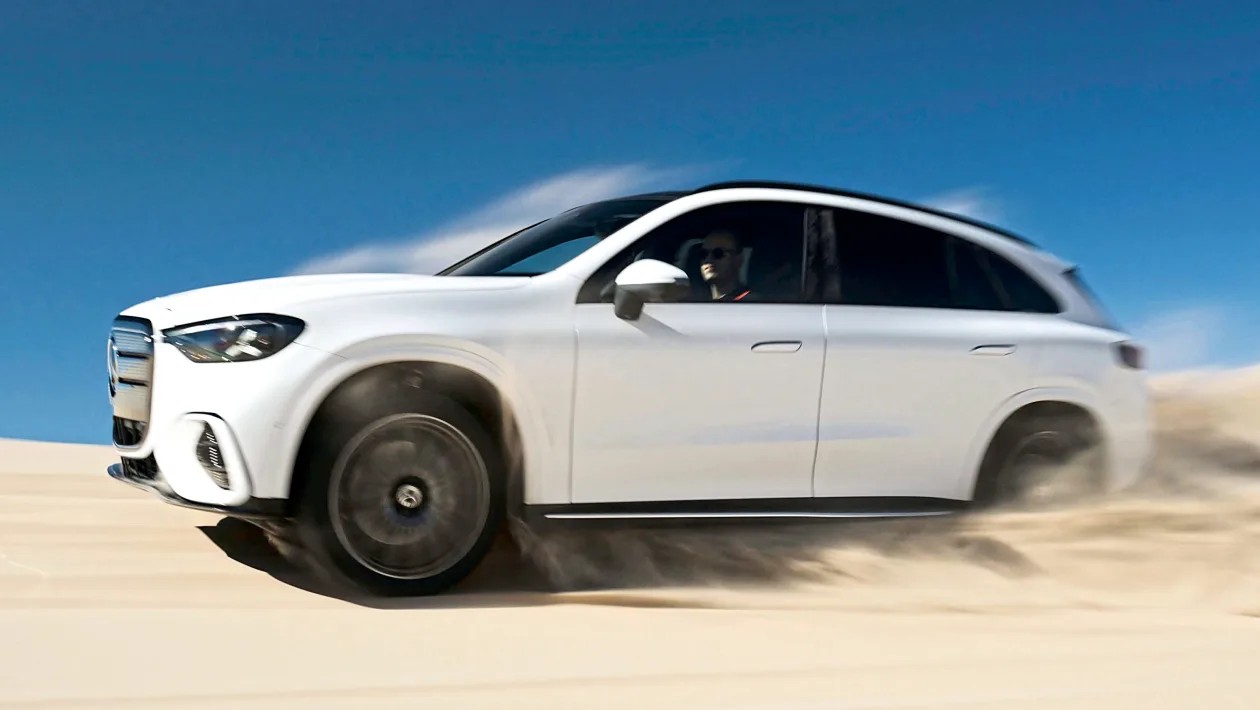
The testing grounds chosen for this debut were anything but ordinary: the Dumont Dunes in Nevada, a towering landscape of sand usually dominated by roaring buggies and off-road behemoths. Here, amidst the shifting dunes, Mercedes test chief Peter Kolb was determined to demonstrate that despite its electric powertrain, the GLC could handle terrain as demanding as any traditional SUV.
Kolb acknowledged that customers are unlikely to find themselves tackling these conditions regularly. He explained the strategy, however: “If the GLC proves itself under these adverse conditions, customers will have no problems on snow or gravel.” These extreme trials were not just about mud and sand; they represented a crucial opportunity for Mercedes engineers to thoroughly test the vehicle’s capabilities before it reaches the public.
Driving experience in this challenging environment revealed key advantages of the electric setup. The GLC 400 prototype, boasting two electric motors generating 482 horsepower (360kW) and 800 Nm of torque, effortlessly pulled itself up and across the dunes. This raw power was impressive, but the real standout was the immediate response from the electric motors. Unlike a gasoline-powered 4×4 where constant throttle pressure is needed for optimal performance, the GLC allowed for precise control, delivering bursts of power only when necessary.
Switching into ‘Terrain Mode’ on the dash-spanning Hyperscreen activated optional air suspension and rear-axle steering, raising the vehicle by 50mm overall. For even more daring maneuvers, an additional “ESP off” mode unlocked the full potential of the dunes as a giant playground. While a thorough road test remains pending, the thrill factor was undeniable.
Beyond this impressive performance in challenging conditions, Mercedes has focused on practicality for everyday use. The new GLC boasts increased dimensions: 4.85 meters long with a wheelbase stretched by 80mm compared to its predecessor – good news for rear passengers. Storage capacity is equally generous: 128 liters in the front “frunk” (ideal for tow ropes or sandy boots), and 570 liters in the rear cargo space.
Range anxieties are addressed with a 94kWh battery promising up to 406 miles on a single charge, further bolstered by rapid charging capabilities: 10 to 80% capacity replenished in just over 20 minutes via a 330kW charger. Priced at £60,350, the GLC 400 sits roughly 10% higher than its gasoline-powered counterpart, which will continue to be sold alongside the new electric model. This strategy offers customers a choice between traditional combustion engines and the latest in EV technology.
Mercedes’ gambit with the GLC EQ Technology prototype demonstrates a commitment to tackling the electric SUV market head-on. While BMW currently holds a lead with its Neue Klasse iX3, the GLC 400’s impressive off-road capabilities, practicality features, and competitive range suggest it has what it takes to become a serious contender in the race for EV dominance.