Cars don’t turn by simply steering the front wheels. That’s only half the equation. The real magic happens inside the axle, where a mechanical component ensures you can navigate a curve without tearing the drivetrain apart. It is called a differential.
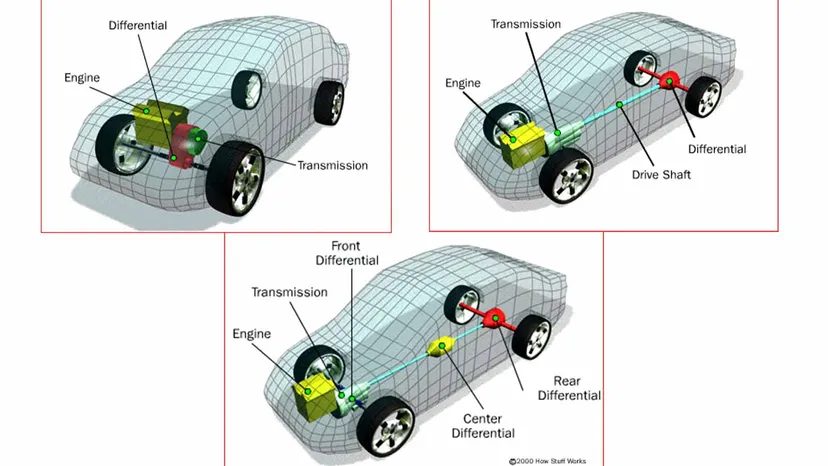
At its core, a differential is a device that splits engine torque into two output paths. Each output can spin at a different speed. This is non-negotiable for gasoline and diesel vehicles. When you go around a corner, the outer wheel must travel further than the inner wheel. If both wheels were locked to the same rotational speed, the tires would scrub against the pavement. The result? Heat, wear, and a vehicle that fights your steering input.
Most fuel-burning cars and trucks rely on this setup. But all-wheel-drive vehicles complicate the geometry. These machines need a differential between each set of drive wheels. They also require one between the front and rear axles. The reason is simple physics. The front wheels and rear wheels trace different radii during a turn. They cover different distances. Without a center differential, the drivetrain binds up.
In many all-wheel-drive configurations, this center unit is known as a transfer case. It manages the split of power between the front and rear axles, allowing them to rotate at different average speeds. Some modern electric vehicles skip this entirely. They use independent motors for each wheel. No gears needed. Each wheel spins exactly as much or as little as the traction control system demands.
Contrast this with part-time four-wheel-drive systems. These trucks and SUVs lack a center differential. The front and rear driveshafts are locked together. They must turn at the same average speed. Engaging 4WD on dry pavement creates a severe problem. Concrete offers high traction. The wheels cannot slip to accommodate the turning radius difference. The vehicle becomes difficult to turn. The drivetrain stores energy like a compressed spring until it finds relief or fails.
When you unlock that 4WD system, the vehicle reverts to a rear-wheel-drive layout. You have one differential doing all the work. The front wheels follow. The rear wheels push. It is basic. It is effective. It is why you should never leave part-time 4WD engaged on the highway.