


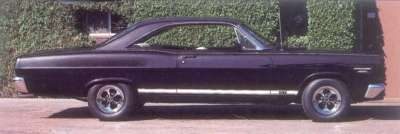
Mercury tried to enter the intermediate car segment earlier in the decade. they failed. The market is changing. Buyers want something larger than a compact sedan but smaller than a full-size sedan. Early attempts failed. Thus, in the mid-1960s, Mercury doubled down. They don’t just modify old models. They created a new beast.
The result was Mercury Comet in 1966-1967. This is not a rebadge. This is not a minor update. This is the answer to a gap in the market. Ford needed the car to compete with the Ford Falcon’s big brother, the Fairlane. But Mercury needs its own identity. The solution is simple. Make the Comet heavier. Make it harder. Make it undeniable.
Why Mercury needs a more powerful comet
The beginning of the 60s was a chaotic time. Compact cars are king. Then the tide turned. Intermediates were rising. Ford’s Fairlane dominates this segment. Mercury has no direct competitors. Current models are either too small or too expensive. They need a bridge.
So they turned to the Falcon platform. It turns out. You can count on it. However, it was too small for the Mercury brand. The fix is easy. Wheelbase extension. Widen the track. Reinforced frame. The 1966 Comet was more than just a big Falcon. It’s Mercury. This distinction is important.
1966 model: The first steps
The Mercury Comet debuted in 1966 with a new body style. It was longer. It’s wider. The wheelbase is 112 inches. This is 4 inches longer than the Falcon. The extra length isn’t just for looks. Offers more interior space. Improves driving comfort. This makes the car feel even stiffer.
There are various options behind the scenes. The base engine is a 170 cubic inch inline 6 cylinder. Reliable. Effective. But it’s very boring. Buyers looking for performance turned to the 289 cubic inch V8. This is the same engine as the Mustang. It immediately gave Comet credibility. It wasn’t just a family hauler. I can dance.
Trim levels and body types
Mercury offers a variety of body styles for the Comet. A sedan is a practical option. The coupe is a sportier option. Station wagons attract families. But the real interest is the GT package. This is more than just a badge. Includes upgraded suspension. better brakes. Debadge tips that stand out. The GT turns a commuter car into a driver’s car.
Update 1967: Improved formula
Model year 1967 brought subtle changes. The front end has a new grille. The taillights have been replaced. These are not major reforms. They are being improved. They keep the comet fresh. They informed buyers that Mercury was still listening.
Mechanically, the changes are minimal. The V8 engine options are still strong. The handling has been slightly improved. The interior has been slightly updated. Continue to focus on quality. As for reliability. About the driving experience. Mercury isn’t trying to reinvent the wheel. They work hard to make it perfect.
Market Reception
How has the market reacted? The 1966 Comet sold well. it found an audience
Longevity was not a focus of Comet marketing in 1966-1967. We are talking about straight-line speed.
Mercury knows exactly what they are selling. They don’t sell cars that survive the ice age. They sell cars that leave the competition in the dust.
This transition marked the end of the era of “durability” and the beginning of the era of performance.
Endurance test of the Whiz Kid
Ben D. Mills is more than just a salesman. He is a “Whiz Kid”.
Mills, one of the ten prodigies who helped Henry Ford II stabilize his company after World War II, had a background in engineering and law. He served in the Army Air Forces and was awarded the Bronze Star Medal before moving into executive seats.
General Manager of Lincoln-Mercury since 1958, he had to make the Comet stand out.
The Ford Falcon is America’s best-selling compact car. The early Comet was an upmarket Falcon with a Mercury badge. Buyers know it. they don’t care.
But Mills and sales manager Paul F. Lorenz wanted more than just a badge-engineering loyalty. They want reputation.
What is their strategy? Endurance.
They promoted the original Comet with PR stunts designed to improve reliability.
100,000 mile run
The publicity machine never stopped.
In 1964, four comets hit Daytona International Speedway. They ran 100,000 miles.
Average speed? Over 105 mph.
They set 732 FIA endurance records.
The campaign doesn’t stop at the track. The 1965 Comet factory fleet traveled 16,247 miles from South America to Fairbanks, Alaska. It took 40 days.
Race car builder Don Bailey handled the press at the finish line. His quote is simple but powerful.
“Mechanically, I didn’t even adjust the carburetor for altitude. didn’t suffer a single breakdown. I didn’t change the spark plugs either.”
It worked.
Cars are sold based on durability. From 1961 to 1964, the Comet outsold the full-size Mercury. This became the division’s best-selling product line.
Sales fell slightly in 1965.
Mercury needs a new hook.
1966 Comet Mercury Lineup
The 1966 model changed everything.
Comets are no longer compact. It grew into a true mid-level player.
Mercury gave it a longer wheelbase coupes and sedans. Style becomes “more important”.
Quad headlights replace single units. The car has become wider. More spacious.
Previous attempts, such as the 1962-1963 Meteor, failed to conquer the middle market. In 1964-1965, Comet tried to fill the void, but remained the “senior compact”.
The comet of 1966 finally crossed the line.
But with the size increase came a shift in identity.
Mercury rejects the “durability” narrative. There was no need to prove that the car survived the trip to Alaska. Everyone knew it was tough.
Now they have to prove it’s fast.
Drag racing took center stage.
The marketing machine turned toward quarter-mile times. The badge was no longer just about surviving the drive. It’s all about dominating the track.
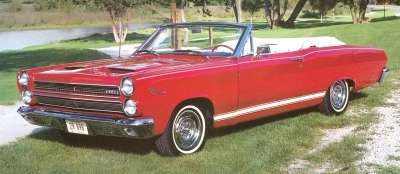

The 1966 Mercury Comet was more than just a facelift. It changed classes.
Until this year, the comet was compact. It lived in the shadow of the Ford Falcon and shares a platform designed for smaller budgets and smaller spaces. This all ended in 1966.
Mercury moved the comet to an crucial new intermediate segment.
This is no small adjustment. This is a complete platform shift. The Comet currently rides on the same unitized chassis as the 1966 Ford Fairlane. The relationship has reversed. The Falcon became a derivative model built on a shortened version of the Fairlane and Comet architectures.
Both vehicles were new from the ground up.
Upsizing made sense. The market is changing. Consumers want more space. They want more presence.
It stood toe-to-toe with GM’s A-Body intermediates.
It faced the heavy hitters directly. That means Chevelle. Pontiac Tempest and Le Mans. Oldsmobile F-85 and Cutlass. Buick Special and Skylark.
This is a challenge for Chrysler and AMC as well.
Plymouth Belvedere. The Dodge Coronet. The Rambler Classic.
This move gave the Comet better ammunition in the horsepower wars of the mid-60s.
Engine options have expanded considerably.
The 1966 Comet can now be ordered with a 390 cubic-inch V-8. Prior to this, the largest engine available was the small-block 289. The dramatic increase in power is noticeable.
The Cyclone GT’s maximum horsepower rises from the top-of-the-line 289 to 335 in the top-of-the-line 390.
The weight was wasn’t ignored. The 1966 GT hardtop weight was up only 321 pounds from the 1965 Cyclone. This is efficient design for a large vehicle.
1966 Comet Lineup Breakdown
The 1966 Comet series was divided into four main series.
*202
* Capri
* Caliente
· Cyclone
There are also Wagons.
Two models: Voyager and Villager.
The Base 202 series is different.
Available only as a 2-door and 4-door sedan. There is no hardtop. There are no convertibles.
The 202 series is short. The rear deck was cut 7.1 inches.
Overall length? 195.9 inches.
The trunk is small. 15 cubic feet.
Compare Capri, Caliente and Cyclone. The capacity is 17 cubic feet.
You may be wondering why a short, small base model is important. It sold.
In 1966, the humble 202 became the best-selling Comet series.
Durability wins over style. Practicality beat power.
The market rewards entry-level commuters.
But what if you want a GT badge? The platform is strong. The 390 engine lives up to its name. The chassis handled the extra torque.
The intermediate class is no longer a niche. This is mainstream.
And Mercury had a car that could

Capri: practical luxury
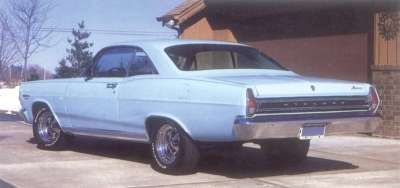
Capri is at the top of the food chain. It wasn’t just a badge; This is a unique personality. It can be bought as a four-door sedan or as a two-door hardtop coupe. It replaced the 1964-1965 404 series, which shed its identity for a more upmarket offering. The standard equipment is not flashy, but it is well thought out. Bright wheel-lip moldings. Rocker panel trim. The steering wheel has a luxurious feel that doesn’t feel cheap.
There are two upholstery options: all vinyl or upholstered vinyl. In addition, a glove compartment with a lock. Minutiae. This is a kind of product that you can not only see in the showroom, but also try and experience for yourself.
Caliente: Top
The 1966 Caliente was the Comet’s luxury model. This was the badge to wear. The dashboard has a simulated woodgrain as standard. There is a loop surface carpet under the feet. Luxurious armrests with courtesy lights and paddle handles defined the interior design of the time. Heater and defrost controls. Instrumentation is complete. Remotely adjustable driver’s side mirror.
It’s not just about body style. Mercury produced convertibles, sedans and hardtops under the Caliente banner. In 1966, Mercury reached a milestone with the birth of its millionth comet. It’s a 4-door Caliente. This is, of course, a testament to volume, but it is also evidence of a multi-level strategy.
“Mercury built its millionth Comet in 1966, the four-door Caliente.”
Powertrain Hierarchy
Behind the scenes, the options are extensive. All Comets, including station wagons, start with two base engines.
- 200-cubic-inch inline-six. Pushrod design. 120 horsepower. economic choice.
- **289 cubic inch V-8. ** 200 horsepower. Basic level of performance.
However, if you pay extra, the list becomes even more interesting. Also added an optional 390-cubic-inch V-8s. Both had a two-barrel carburetor.
- Manual transmission version: 265 hp.
- Automatic transmission version: 275 hp.
The automatic output is larger. Weird, right? Manuals tend to produce more power because they have less parasitic losses. Here, Mercury tunes the automatic version a little differently. Or maybe a torque converter allows for more versatile adjustments that a manual drivers can’t handle. Gives the Comet a “va-va-voom” sound without a shifter.
The difference between the base six-cylinder engine and the top-of-the-range V8 is huge. Output is 55 horsepower between the base V-8 and the optional 390. This is enough to change the way the car feels on the road. The Capri and Caliente trims are enough to give a unique feel not only to the trim but also to the powertrain.
Next, the driving dynamics will be discussed in detail.
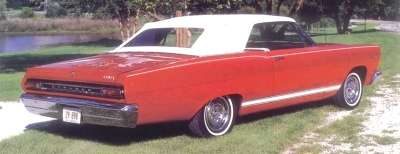

1966 Comet Cyclone GT: Built for the 500
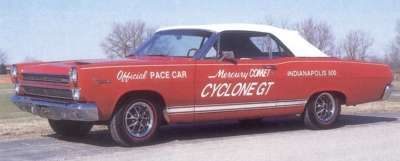
This replica of the Cyclone GT that led the 1966 Indy 500 captures the raw, unrefined spirit of mid-’60s American muscle. Ford didn’t just bolt engines into sheet metal. They designed a performance hierarchy starting with the base powertrain and ending with the racing package.
Transmission options and Standard Power
If you bought a 6-cylinder Comet, your transmission was limited to a 3-speed manual. Yes, first gear was unsynchronized. You have to double-clutch or wait until the revs match before engaging. It’s a pain, but it saves money. V-8 models come standard with a three-speed fully synchromesh transmission. Better? Yes. Still manual? Absolutely.
The options expand from here. If you don’t like the clutch, you can opt for the MultiDrive Merc-O-Matic three-speed automatic transmission. However, if you have a V-8 engine and aren’t towing a wagon (because wagons can’t be equipped with a 4-speed), you can use the floor-mounted 4-speed shifter. This is the core of the enthusiast market.
The Cyclone line stood apart. This is not an trim level. Performance series. Available only as a hardtop or bucket-seat convertible, the Cyclone deserves attention. The convertible body model is a new to the series and a refreshing option for those looking for wind in their hair with their horsepower. All Comet convertibles of this era had glass rear windows and five-ply fabric tops for durability. A two-barrel 289 V-8 engine was standard under the hood. It is sturdy. It was reliable. It wasn’t the end of the story.
GT option package
Get the GT option package and the Comet is no longer a commuter car. The star here is the 390 V-8. Ford tuned this big block to produce 335 horsepower at 4,800 rpm and 427 lb-ft of torque at 3,200 rpm. These numbers are not just marketing gimmicks. These determine the car’s performance on the road or track.
How does Ford squeeze more power from the same displacement? This has to do with breathing and valvetrain geometry. The GT 390 replaces the standard exhaust with a free-flowing dual exhaust. Stock camshaft valve lift is 0.40 inches. The GT’s hydraulic cam raises it to 0.48 inches. More lift forces more air and fuel into the cylinder.
The compression ratio also illustrates this fact. The GT’s score of 10.5:1 is a full point higher than the mild standard big-block model. With the right fuel, higher compression increases efficiency and power. For this hungry engine, Ford installed a four-barrel Holley carburetor with a 1.562-inch bores. Chrome engine trim and a fiberglass hood complete the look. Of course, these scoops non-functional, but they do show intent. You don’t need to buy a hood for ventilation. Buy it for the aesthetic of power.
Gearboxes and the GTA Variant
The Cyclone GT’s standard transmission is a fully synchronized 3-speed with a floor shifter. It’s very simple.

Most motorists think of the 1966 Mercury Cyclone as a simple pony car ride. they are wrong. The base model played it safe, but the top-of-the-range GT package hides a big secret. What many people don’t know is that this trim level comes standard with the 410 horsepower engine. This isn’t just a mild detune for emissions and comfort. That’s a huge amount of horsepower that fundamentally changes a car’s performance on the road and in the showroom.
Heavy Duty GT Kit
Mercury doesn’t just have a big engine under the hood. They built a whole package around it. When you buy a Cyclone GT, you get heavy-duty front and rear springs. The shocks were reinforced. It has a stabilizer bar to keep the body roll in check in hard curves. The cooling system has also been updated and includes a “Power Booster” engine fan that prevents the 410 horsepower mill from boiling under load.
The rolling stock matched the aggressive stance. You get sturdy 5.5 inch wheels wrapped in 7.75×14 nylon-cord tires. This kit is visually very unique with rocker stripes and special GT badging.
The price is interesting. Base price is $2,891. But Mercury knows its target buyers are looking for luxury goods. Add a 4-way power seat, clock, tachometer, power windows, power brakes, power steering, and AM/FM radio, and the total price rises to over $3,500. It was expensive for a 1966 model, but its features made it worth the price for buyers who wanted performance without sacrificing comfort.
Powerful effects of the Indianapolis 500
Marketing often determines the success or failure of a car launch. In 1966, Mercury pulled off a classic trick. They selected the Cyclone GT convertible to pace the 1966 Indianapolis 500.
Is it effective? The effect is very good.
Promotion as the official pace car drove sales numbers that dwarfed the standard Cyclone. Mercury sold 13,812 GT hardtops and 2,158 GT convertibles. Compare this to a standard Cyclone. The standard Cyclone only moved 6,889 hardtops and 1,305 convertibles. Sales of the GT version significantly exceeded the standard model. People want the looks of the car and the implicit proof of performance.
Comet wagon: practical but quiet
While the Cyclone GT is the star, the Mercury Comet Wagon has a different game. Although it wasn’t a big seller compared to the Cyclone GT, it catered to a certain demographic.
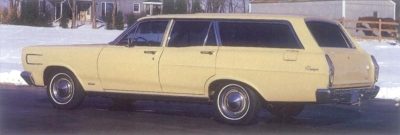
Both Villager and Voyager wagon models have a dual-function tailgate. This was a new feature at the time and was included on full-size Fords and Mercurys, as well as Fairlanes. The two-way tailgate can be opened from above or from the side, which facilitates loading in tight garages.
Villager is standard with this tailgate. Voyager charges an additional fee. Voyager’s body profile is simple. The Villager has “Walnut” di-noc side panels and a tailgate which makes it more stylish.
Underneath the sheet metal, both wagons have a 113 inch wheelbase. Mercury’s other body styles ride on a 116-inch wheelbase, making the wagons slightly shorter overall. With the second row seatbacks folded, the cargo area is 109.5 inches. Total cargo capacity is 85.2 cubic feet and an additional 8.5 cubic feet of space under the rear deck.
Interior options include full vinyl upholstery. Buyers can add a rear-facing third seat with seat belts. Other options include a roof rack and an electric rear window. It was sensible transportation. Nothing fancy. Just space.
The mystery of stacked headlights
Collectors have always wondered why the 1965 Ford and Mercury Comet had stacked headlights. Why don’t the larger Mercurys and Ford Fairlanes use the same design?
At Motor Trend, we research new cars every time they go on sale. The answer can be found in studio politics and timing.
Bill Shenk, a designer in the Comet studio during the

The Great Headlight Debate
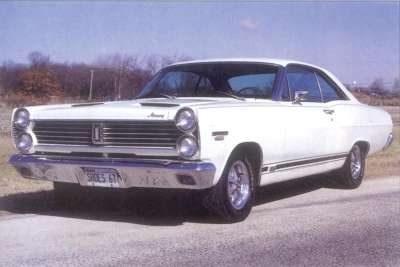
There are several theories as to why the Cyclone had stacked headlights. Shenk went on to say that changing the look of the 1965 Ford and Mercury became a challenge after Iacocca forced Ford to replace the stacked headlights. Bordinat insisted that the Mercury use side-by-side quad headlights and a traditional grille. However, the front fenders of the 1965 Comet were already equipped with stacked headlights, which caused this problem.
A.B. (Buzz) Grisinger, who was Lincoln Mercury’s design director for the past decade, confirmed this story. Mr. Grisinger, who sharp in the ’90s, admitted that Mercury did indeed develop the 1965 model with stacked headlights. But he added that at the time, not only Dearborn but the entire industry was working on the concept of vertical headlights. He remembers Bordinat coming in one day and asking for a different theme so the 1965 Mercury wouldn’t look like a 1965 Ford.
The head of the Ford division was Joe Oros, Ford’s design director at the time. Oros’ story is different from Shenk’s. According to his notes from the time, the 1965 Ford stacked headlights were made at the Ford studio, not Mercury, and work on the 1965 Ford headlights began in January 1962. This date answers the second question. Are Ford’s upright headlights inspired by the 1963 Pontiac Grand Prix? Apparently not, unless Ford designers somehow get a glimpse of a pre-production Pontiac.
Former Ford engineering chief Gale Halderman confirmed the story. Halderman also believes the stacked headlights came from Ford, not Mercury Studios. He recalled that the 1965 program had a lot going on at the same time, including the Mustang and Galaxie, so tooling costs were very important.
Halderman explains that Bordinat was a genius at minimizing tooling costs, and the 1965 Ford creased, squarish front fender was designed specifically to minimize tooling costs. Ford used a shallow stamping die and bent each fender along a horizontal crease, so the 1965 Ford stacked headlights were installed for economic reasons: volume lines.
Mr. Halderman recalls that Ford’s big project in 1965 was not an urgent undertaking, and he does not recall Iacocca or Petersen insisting that Ford use the Mercury-developed theme. He said it was likely that Ford and Mercury were pursuing the same themes at the same time, corroborating Grisinger’s statement that Bordinat discouraged of the Mercury version to keep Ford and Mercury visually separate.
Vertical headlights became popular in the 60s. It was established with the 1965 Comet and remained for the next two model years. Ford’s equivalent midsize car, the Fairlane, also featured stacking lights in 1966–1967, and in addition to the aforementioned Pontiac and full-size Fords, several Cadillac, Buick, Plymouth, and AMC models also featured stacking lights through 1969.
On the next page you will learn how Mercury Comet’s performance.
**More information about different types of cars can be found at: **
-
muscle car
-
sports car
1966 Mercury Comet Performance
Car Life magazine tested the performance of the 1966 Mercury Cyclone GT and didn’t think much of it. Car Life noted the car’s 56.4/43.6 weight distribution and its barely adequate Goodyear Power Cushion tires. marginal drum brakes; and slow, overboosted steering that negatively affected the performance of the 1966 Mercury Comet.
The magazine found the GT’s drivability to be average. Car Life magazine was also unimpressed with the 390-cubic-inch engine, saying “…the 390/4-barrel was by no means the most powerful engine. It produced plenty of usable torque lower reaches and enough horsepower for nominal purpose, but it was just doesn’t deliver.”

Why the GT’s 390 V-8 failed to impress Car Life
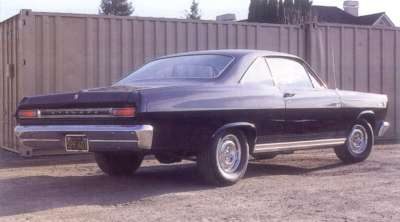
The numbers look good on paper. The Mercury Cyclone GT’s 390 cubic inch V-8 engine produces 335 horsepower. But Car Life magazine didn’t buy it. Their testers discovered that there was a fundamental flaw in the engine. They point directly to the cylinder heads.
“Restrictive valve passages prevents the engine from ‘breathing,'” the tester wrote. Hydraulic lifters make the situation even worse. They limited how high the revs could climb. You couldn’t push past 5,000 rpm. Even with an open exhaust system. The lifters pumped up too much oil pressure at high speed. The engine itself choked.
The performance data reflects this limitation. Top speed is 120 mph with an automatic transmission and 3.25:1 rear axle ratio. The quarter-mile time is 15.2 seconds at 90 mph. 0-60 is fast in 6.6 seconds. That gap is a testament to the 390’s ability to handle low-end torque. There was nothing left.
Leadership shifts at Lincoln-Mercury
In 1967, the Comet lineup remained largely unchanged. However, the people running of Lincoln Mercury has changed. In 1964, Ben D. Mills was promoted to corporate vice president of purchasing. His assistant, Paul F. Lorenz, took over as general manager.
Lorenz was replaced in 1966 by Gar Laux. Lux was the sales manager of the Ford division under Lee Iacocca. Lorenz oversaw the 1966 sales season. In 1967, Laux took the wheel.
Without the Cougar, Mercury might have been irrelevant by the mid-1960s. The new sports coupe saved the brand.
Sales slump and the Cougar effect
Looking back, the big Mercurys sold just under 123,000 units in 1967. That’s down 29% from 173,000 units in 1966. It’s also 32.5% below its 1965 peak of 182,000 units.
Starting in 1965, full-size cars again became Mercury’s best seller. Comets stayed competitive, but the outlook is not bright.
In 1966 Comet was in high demand. 170,000 sold. By 1967, the number had dropped to 81,000. The same year’s labor strike affected all car manufacturers. But the Cougars stole thunder. Mercury produced approximately 151,000 Cougars in 1967. The new coupe led them to record sales. But it clearly drew buyers away from upmarket Comets.
Marketing “The Man’s Car”
On the following pages you will find more information about comet Mercury 1966 and its 1967 successor.
In the 1967 model year, Lincoln-Mercury management abandoned “durability” as a major selling point. They rebranded the Comet “the man’s car”. A dealer brochure that year proclaimed, “Men who love high-performance thrills will naturally appreciate the Cyclone two-door hardtop or convertible. The Cyclone 289 V-8 is Man-powered…This is a man’s car with high performance. Mercury Cyclone – For men who like a lot of action.”
And so it went.

Marketing failure
Let’s be honest about the Man’s Car campaign. In 1967, Mercury priced the Cyclone GT hardtop at $3,034, an increase of $143, which probably wasn’t a good deal for someone looking to buy a lifestyle. This ad campaign was a deliberate middle finger to the emerging feminist movement. The women’s liberation movement was not just a trend, it was a threat. in the eyes of the establishment, it was as threatening as the anti-Vietnam protests. bras burning and draft cards smoldering.
Madison Avenue’s message to Mercury buyers is simple. “In chaotic times, buy from institutions you can trust.” question? This campaign likely tanked Comet’s sales among women. Who would want to drive a car that specifically excludes them? The division was already walking back the Comet name anyway. Only the 202 sedan and Voyager wagon retained the badge. The others are just “series names”. However, the stylistic consistency remained. A full-width unit grille replaces the split look of the ’66. Vertical taillights replaced the horizontal taillights. The rear bumper lengthens the car by 0.5 inches.
Engine specs and 427 Revelation
Behind the scenes, things remain mostly static. The 200-cubic-inch six and 289-cubic-inch V-8 remain unchanged. The two-barrel 390 consolidated into a 270 horsepower version. You can still get a manual transmission or the new Select-Shift Merc-O-Matic automatic transmission. But at the top of the Cyclone GT Performance Group is a detuned four-barrel 390. Its output is down to 320 hp from the previous 335 hp, but torque and compression remain the same.
The real story was the 427.
In 1966, the 427 V-8 was a ghost. The sales brochure modestly stated that the product would be available to order on January 1. after. It was rare in Ford intermediates. By 1967, Mercury was no longer hiding. The catalog openly listed two versions.
The Cyclone 427 produces 410 horsepower at 5,600 rpm and 476 lb-ft of torque at 3,400 rpm. It used one four-barrel carb. The Cyclone 427 Super features a twin four-barrel engine that produces 425 horsepower at 6,000 rpm and 480 lb-ft at 3,700 rpm. Both engines were solid-lifter with a six-quart oil pans and a compression ratio of 11.1:1.
This is where it gets interesting.
These engines cost $1,129 more. They were only available with a 4-speed transmission. These can be installed on closed two-door 1967 Comet two-door model. Even the 202 sedan. Yes, the Bobtail 202 could take a 427. This is a technical marvel that anyone would bother doing so.
The 427 shares 352-cubic-inch of Y-block DNA with the 390. But unlike the street-biased 390, the 427 is designed for drag racing. The castings were heavier. The pistons, connecting rods, forged steel crankshaft and cross bolt main bearing caps are all reinforced. Despite the high profile, the Mercury did not sell well.
Internal fluff and the end of an era
If you didn’t want a race car, there are other options. The Grande four-door sedan has a diamond pattern knitted nylon upholstery for $105. You can add an 8-track stereo tape player or power front disc brakes. Old favorites remain, including a vinyl roof, Whisper-Aire air conditioning and remote decklid releases.
By 1968 the Montego and Cyclone nameplates replaced most of the Comet range. That’s a completely different story. Model year 1966 and especially Model Year 1967 marked the peak.
The following page lists models, prices and serial numbers.
More detailed information about other categories:
– muscle car
– sports car
1966-1967 Mercury Comet data
The comet starts moving here. Its size has increased. Its performance has increased. The information below covers the flowering period.
Mercury Comet GT and Cyclone Dominance
In 1967, the GT-equipped Cyclone again led the Comet line-up. It also topped the charts in 1966. These are more than just badges. These are performance levels. Ford built them to compete with the Mustang and Falcon. But the numbers tell a different story about what buyers really want.
The base model 202 is still cheap. It stays light. In 1966, Mercury sold 56,402 units. By 1967, sales had dropped to 24,532 units. Prices for the two-door will rise from $2,206 to $2,284. There is almost no change in weight. The four-door sedan sheds a few pounds but costs $52 more. People are moving away from the basics.
Change of Capri and Caliente
The number of units in Capri decreased by almost 10,000. In 1966, 30,666 units were sold. By 1967, the number had dropped to 20,963 units. Sales of four-door sedans decreased by 6,000 units. The hardtop coupe is slightly higher. Prices have risen slightly. Weight gain. It feels like the middle ground is being squeezed.
The Caliente’s fared was better than the Capri, but worse than the 202. Total production fell from 47,717 to 20,658. Coupe sales have halved. The convertible disappeared. Mercury stopped building them. 4-door sedans still perform well. Prices have gone up. Weight remains stable. This is a practical option for families looking for style.
Cyclone Sales Crash
The number of cyclones is brutal. Total production dropped sharply from 24,164 to 6,910. That’s a 71% decrease. In fact, only the GT coupe survived. An increase of 737 units. The standard hardtop was crash. The sales volume decreased by 4,207 units. The price has increased by $37. Weight remains stable.
The convertible disappeared. The number of GT convertibles went from 2,158 to 378 convertibles. The number of standard convertibles went from 1,305 to 431 convertibles. Why build a soft top if no one is going to buy it? The GT hardtop became the only viable performance option. It weighs 3,372 pounds. The price was $3,034. It was expensive.
Wagon Woes
Station wagons have also become smaller. Total wagon sales fell from 11,475 units to 8,070 units. Voyager units decreased from 7,595 to 4,930. The number of villagers decreased from 3,880 to 3,140. Prices are going up. Slight weight gain. The wheelbase is still 113 inches. These are utility vehicles. Utility don’t sell like they used to.
The Big Picture
Comet total sales in 1966: 170,426 units.
Comet total sales in 1967: 81,133 units.
The market has halved. Has the economy crash? No. Is Mercury crazy? Maybe. But look at the Cyclone GT. It is the only high-performance model that grew. It weighs 3,372 pounds. The price was $3,034. It had the GT equipment package. For enthusiasts, here is the answer to the question “Which Mercury Comet GT is the best?”
The rest of the lineup is dead. Capri has faded. Caliente stopped. 202 has become a memory. The wagons decreased. Only the GT hardtop has remained intact. This is the last stand of the muscle car boom. After 1967, things changed. Comet will never be the same again. GT is the peak. Then it’s just a number in the history book.


