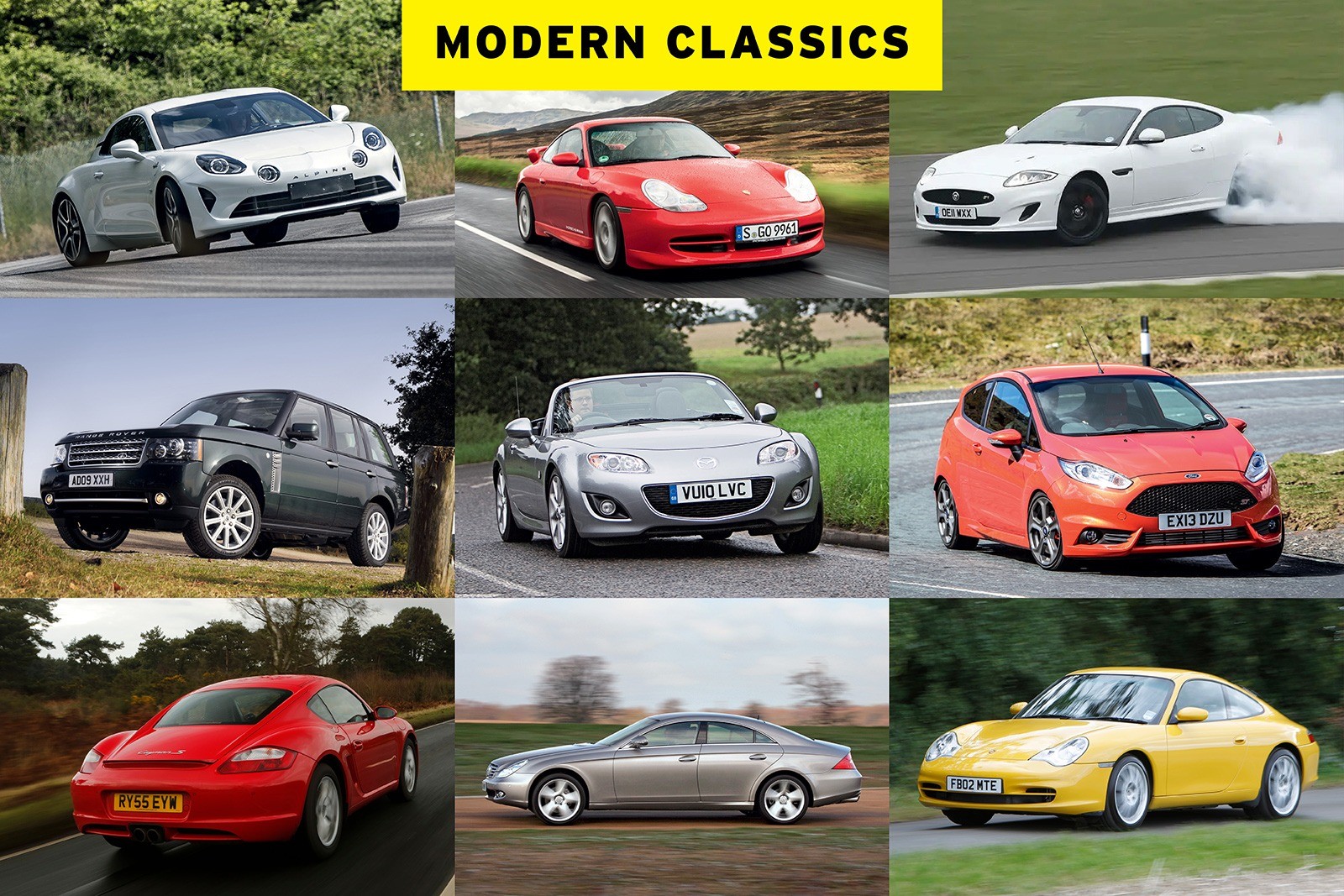
‘Modern classic’. It’s a weird phrase. An oxymoron? Maybe. To anyone not in the know, these cars just look like… cars. Normal ones you’d see on the high street.
Penguin Books did it for novels so why can’t we do it for automobiles.
Back in the day? The word ‘classic’ meant old guys in MGBs driving to jumble sales. Modern mags hated it. They thought it smelt of mothballs. Meanwhile, classic car magazines were too busy curating their brand image. They didn’t want their readers thinking about stuff that belonged in a McDonald’s car park.
Things have changed. Clean air zones, electric everything, and speed cameras have pushed everyone together. The enthusiast in the vintage Bentley and the guy who loves new tech are meeting in the middle. That middle is the modern classic.
What counts as a modern classic?
It’s vague. Good for the market. Bad for precise definitions.
Ed Callow from Collecting Cars puts it bluntly:
“I think at their core, Modern classics are the ‘democratis’ part of the collector market. There aren’t strict start/end dates. We mean vehicles from the 80s and 90s into the very early 200s.”
For this list though we are being strict. We only look at cars built after 2000.
Mercedes-Benz CLS (2003-2024)
£2,500 – £10,000
Here’s the oxymoron personified: a four-door coupé.
It sat on an E-Class chassis but looked like nothing else. Sleek. Fast. Expensive values packed into a body style people barely understood. All versions got rear-wheel drive and a 7G-Tronic automatic.
Air suspension? Optional. Part-leather, electric seats, climate control, parking sensors? Standard stuff for the era.
Today these prices have tanked. Cheap doesn’t always mean easy though. Early petrols had balancer shaft issues. One owner said avoid them entirely. Gearbox sensors fail. Diesel owners fight the inlet port shut-off motors.
If you spot one? Check the service history. Hard. But cheaper mistakes might be worth it.
Porsche Cayman 987 (2005-12)
£7,500 – £30,000
Every enthusiast has this on a wishlist. The 987.
Why? Because the engine is where it should be. Middle. Not in the back burning your knees like in the 911s of the same age. This lets you drive harder, push angles you never would otherwise.
The six-speed manual is the joy. Real gears. Heavy clutch. Pedals that actually give you feedback. The PDK auto box exists. It’s fast. Shift times are blindingly quick.
But you have to touch the buttons on the steering wheel to use them fully. Feels wrong sometimes. Why pay for a Porsche to tap little plastic bits instead of pulling a lever.