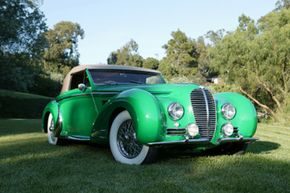
Art Deco wasn’t just a trend. It was a total takeover of culture between the World Wars. You saw it in the Chrysler Building. You saw it in furniture. It was everywhere. The style married extreme extravagance with clean, functional lines. It defined an era.
That aesthetic didn’t stop at skyscrapers. It bled into the automotive world, specifically targeting the ultra-luxury European market in the 1930s. The Great Depression was wrecking economies. Most people were broke. But a tiny elite remained untouched by the downturn. They wanted cars that screamed wealth. They wanted machines that reflected the opulence of the Art Deco movement.
Car manufacturers like Bugatti, Delahaye, Delage, Talbot-Lago, and Voisin built these dreams. Coachbuilders such as Chapron, Figoni et Falaschi, Gangloff, and Vanvooren turned raw chassis into rolling sculptures. These bodies are still considered inspiring today.
Why Art Deco Cars Looked Different
The design language was distinct. Think swooping fenders. Long, aggressive hoods. Highly streamlined shapes that cut through the air. These weren’t just transportation devices. They were bold statements. High style. A declaration of power.
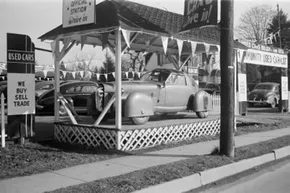
This look didn’t stay confined to the upper crust. The styling cues trickled down to more affordable American cars. The Chrysler Airflow is the most famous example. It brought Art Deco flair to the mainstream.
The Rise of Art Deco Automobile Design
What exactly is Art Deco automobile design? It’s a fusion of geometric precision and organic flow. It emerged from the 1925 Exposition Internationale des Arts Décoratifs et Industriels Modernes in Paris. The name came from that event. By the 1930s, it had evolved into a dominant force in industrial design.
For car enthusiasts, the Art Deco era cars represent the peak of pre-war automotive luxury. These vehicles weren’t mass-produced. They were bespoke. Each one was unique. The focus was on craftsmanship. On materials. On making a statement.
The impact of Art Deco on automobiles was profound. It shifted the focus from mere utility to aesthetics. Engineers and designers collaborated to create cars that were both beautiful and functional. The streamlined shapes weren’t just for show. They reduced drag. They improved speed. But they also looked fast. Even when stopped.
Where to Find Art Deco Cars Today
Where can you see these machines now? Many reside in private collections. Others are in museums. The Petersen Automotive Museum in Los Angeles has a strong collection. The Louvre in Paris displays some of the most exquisite coachbuilt examples. You can also find them at auctions. RM Sotheby’s and Gooding & Company often feature these rare vehicles. Prices can reach into the tens of millions.
The luxury cars of the 1930s remain highly sought after. They represent a time when cars were personal. When every detail was considered. When speed and style were inseparable.
The Geometry of Speed
Art Deco wasn’t just paint on a wall or a font choice. It was a shift in how humanity viewed luxury. Before the chrome splashed across fenders, the movement had already reshaped Paris. It grew out of Art Nouveau, that flowery, organic mess of the late 19th century, but cut the vines. No more whiplash curves mimicking lilies. Instead, you got sharp angles. Stepped forms. Sunbursts.
It was the roaring twenties screaming for structure. The austerity of WWI was over. People wanted excess, but controlled excess. Think Egyptian motifs. Aztec geometry. They took the old world’s mysticism and filtered it through a modernist lens. This aesthetic didn’t just stay in galleries. It built skylines. The Empire State Building? Pure Art Deco verticality. Radio City Music Hall? That’s the style in concrete and steel. Miami and Los Angeles are basically open-air museums for this mid-century look, specifically during the Old Hollywood era when glamour needed a physical form.
Furniture followed suit. High-end pieces used rare woods, thick leather, and polished metals. The goal was simple: look expensive, function well, and look forward. But by the 1940s, war rationed resources. You can’t chrome-plate a tank the same way you plate a sedan. The style faded, though it never really died. It just went dormant.
Metal Sculpture on Wheels
Then came the cars. And they were different.
When designers started applying these principles to automotive bodies, they weren’t just decorating. They were engineering the silhouette. The transition from the boxy, functional designs of the early 1920s to the sculpted bodies of the late 1930s mirrors the broader Art Deco shift. You stop seeing separate, bolted-on parts. You start seeing flowing surfaces.
The hood became a prow. The grille became a shield. Chrome wasn’t just an accent anymore; it was the skeleton. This wasn’t accidental. It was about aerodynamics disguised as art.
The Phantom of the Roaring Twenties
Rolls-Royce understood the assignment early. The 1929 Rolls-Royce Phantom II is often cited as the first true Art Deco automobile. It wasn’t fast by modern standards, but it was a statement. The chassis was rigid, but the coachwork was fluid. It featured the classic “pillarless” design where the B-pillar was hidden, creating a seamless glasshouse. The grille was upright, vertical, and imposing. It spoke of power without noise.
The Streamline Moderne Shift
By the mid-1930s, the style evolved into what is often called “Streamline Moderne.” This is where the car becomes a missile. The focus shifted from heavy geometry to wind-shear reduction. The goal was to slice through the air.
The 1934 Cord 810 is the poster child for this. It had front-wheel drive, which was radical, but more importantly, it had a low, wide stance. The headlights were hidden behind sliding doors when not in use. The body was a single, smooth skin. There were no running boards. The fenders were integrated. It looked like it was moving even when parked.
American Luxury and the V-16
Cadillac didn’t just
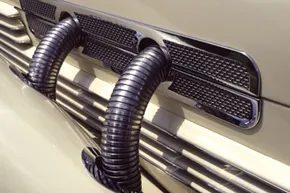
The 1920s and 1930s didn’t just bring back flapper dresses; they gave us cars that looked like they were moving before you even turned the key. Art Deco automotive design was about grandeur wrapped in simplicity. These weren’t commutes. They were statements. Two-door coupes and roadsters dominated the scene, defined by long hoods, tiny rounded trunks, and fenders that swooped over the wheels like liquid metal. Chrome was everywhere. Round headlights pierced the gloom. And then there was the streamlining. Smooth, sleek curves made stationary machines look like they were tearing down a highway, even when parked outside a hotel lobby.
This era was the golden age of coachbuilding. A manufacturer like Bugatti might supply the bare chassis and engine. Then, a specialist bodybuilder would step in. They crafted the exterior and interior to match the owner’s exact whims. You didn’t buy a car. You commissioned a rolling sculpture.
Many of these Art Deco cars hail from France, the birthplace of the movement. For the ultra-wealthy, these vehicles were essentially land-going yachts. Massive engines were non-negotiable. Take the Hispano-Suiza J12 Cabriolet. It hid a 9.0-liter 12-cylinder engine under that long hood, derived directly from aircraft technology. The Delahaye 165 convertible also carried a V-12. The Delage D8-120 Cabriolet was another contender. At launch, it cost $200,000. An average American home in the 1930s cost roughly $3,800. The math doesn’t lie. These were toys for the top 0.001%.
But the style didn’t stop at the hyper-luxury gate. As the movement matured, it began influencing more affordable bodies. The Chrysler Airflow was the poster child for this shift. Its designers embraced flowing shapes, rounded fenders, and a distinctive curved “waterfall” grille. Sales? They were sluggish. The exotic styling was too much for the average buyer who just wanted reliable transportation. Today, however, the Airflow is revered as a design classic. It proved that Art Deco aesthetics could scale down without losing their soul.
Where are the art deco cars today?
Most of these survivors live in private collections or museums that specialize in pre-war automotive history. Finding one for sale is rare. When they do hit the auction block, prices reflect their status as rolling art. They are preserved not just for their mechanics, but for their defiance of function. In a world that increasingly values efficiency over expression, these cars remain stubbornly, beautifully impractical. They sit in climate-controlled garages, waiting for an owner who understands that a car should be felt, not just driven.
The Vanishing Era of Art Deco Automobiles
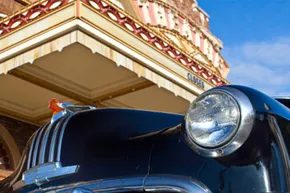
The glamour of the 1920s and 30s faded fast. Art Deco cars didn’t stick around. Styling shifted from flamboyant curves to conservative lines as decades passed. The vehicles themselves are now incredibly rare. Bugattis and Delahayes were built in limited numbers back then. Plus, many manufacturers didn’t survive World War II.
Today, these machines command huge premiums at auction. But only if they’re real. And only if they’re in top shape. A 1937 Bugatti 57SC sold for nearly $8 million in 2008. That’s not pocket change.
Museums Keep the Legacy Alive
Many surviving Art Deco cars now live in museums. The Mullin Automotive Museum is a prime example. Located in Oxnard, California, it celebrates French cars from the 1930s. Peter Mullin, a Los Angeles businessman, built the collection. It includes vehicles once owned by Otis Chandler, former publisher of the Los Angeles Times.
The museum houses serious treasures. A 1934 Voisin C27 Grand Sport Cabriolet once belonged to the Shah of Persia. There’s a restored 1938 Delahaye 165 convertible. And a burgundy 1938 Talbot-Lago T150C SS Speciale Teardrop Coupe. Each piece tells a story of an era that valued excess and elegance.
Echoes in Modern Design
Does Art Deco styling still exist? In some ways, yes. The Bugatti Veyron supercar echoes its predecessors. The curves are there. The eye-catching design is present. But those details serve a purpose: hitting 200 mph (321.9 km/h). Function drives form now.
Other cars borrow cues too. The Chrysler PT Cruiser references Art Deco years. It’s not extravagant. Not even close. The opulence that defined Delahaye and Panhard is gone forever. We don’t build cars like that anymore. Or do we? Maybe we just forgot how.