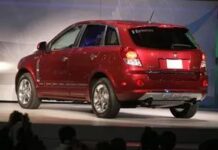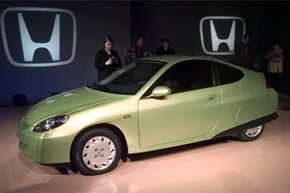
You probably think of the Toyota Prius when you hear the word hybrid. That is fair. Since the late 1990s, the Prius defined the category, spurring rivals like the Honda Insight and Ford Fusion Hybrid to compete. But the idea of mixing a gas engine with an electric motor is old. Very old. The first hybrid car predates the Model T by a decade.
The history of the hybrid electric vehicle (HEV) begins in 1900.
The 1900 Paris Debut
Ferdinand Porsche, working for Austrian manufacturer Lohner-Kessburg, unveiled the Lohner-Porsche Elektromobil at the Paris Exposition. It looked like a box on wheels, but the engineering was radical.
Most cars of that era ran on steam, electricity, or gasoline. Porsche did something different. He built a car that ran on electricity for city driving. But it had a trick.
The Lohner-Porsche Elektromobil was the first vehicle to use an internal combustion engine to recharge its battery pack.
That is the definition of a hybrid. A gas engine generates power to charge the battery, which then drives the wheels. Before this, you had to plug the car into a wall socket. Porsche solved the range anxiety problem that still haunts pure EVs today. He used a small gasoline engine to keep the batteries charged while driving.
Why It Matters Now
You might ask, why did this early experiment fade away?
For one, gasoline became cheap and abundant. Pure electric cars struggled with range. Pure gas cars won the market. The hybrid concept sat dormant for decades.
Then, the oil crisis and later environmental regulations brought it back.
- 1968: General Motors built the XP 512, an experimental hybrid that used electricity at low speeds and gas at high speeds.
- 1973: Victor Wouk built a prototype on a 1972 Buick Skylark. The EPA didn’t fund it, so it died.
- 1989: Audi showed the Audi Duo, pairing a 12-hp electric motor with a 139-hp gas engine.
- 1997: Toyota launched the Prius in Japan.
The modern era is really just a revival of that 1900 idea. The Lohner-Porsche proved that you could decouple the engine from the wheels. You can run on one source, then the other. That flexibility is the core of every hybrid since.
The next section breaks down the Lohner-Porsche’s specific mechanics and why it was so far ahead of its time.
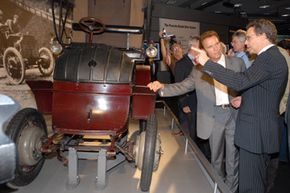
How the Lohner-Porsche Elektromobil solved the range anxiety of 1900
The engineering hurdle for early automakers was simple but stubborn. Batteries drained fast. In 1900, driving range was measured in blocks, not miles. Porsche’s solution wasn’t a bigger battery. It was a gasoline engine acting as a generator.
This setup made the Elektromobil the first practical early gas-electric hybrid car. The combustion unit didn’t drive the wheels directly. It spun a generator to recharge the battery pack. The electric hub motors handled the actual propulsion. Top speed capped at 23 mph. In 1900, that was fast enough for urban commuting. It wasn’t enough for touring, but it solved the immediate problem of dead batteries in the middle of a city street.
Why E.W. Hart’s order changed automotive history
The first customer was E.W. Hart from Luton, England. He didn’t just want a hybrid. He wanted traction. He requested motors on all four wheels.
Porsche obliged. The result was a four-wheel-drive hybrid. This was a massive technical leap. Before Hart’s order, the Elektromobil was a two-wheel-drive experiment. After it became a four-wheel-drive machine, the concept expanded from a niche curiosity to a robust drivetrain solution. You can argue Hart bought the first AWD hybrid. He also helped prove that electric drive could handle complex steering and weight distribution challenges that early gas cars struggled with.
Comparing the 1900 Elektromobil to the 1997 Toyota Prius
The gap between these two vehicles is nearly a century. The technologies are different. The intent is similar.
| Feature | Lohner-Porsche Elektromobil (1900) | Toyota Prius (1997) |
|---|---|---|
| Primary Power Source | Electric hub motors | Electric motor + gas engine |
| Role of Gas Engine | Generator only | Generator + direct drive |
| Top Speed | 23 mph (37 km/h) | ~112 mph (180 km/h) |
| Production Volume | ~300 units | 1,000,000+ units by 2008 |
| Market Impact | Niche luxury item | Mass-market mainstream |
The Prius didn’t invent hybridization. It industrialized it. The Lohner-Porsche proved the concept worked. The Prius proved it could be cheap enough for millions of people.
Where you can still see the first hybrid
Most Elektromobils are gone. Only a handful survive. They show up at antique auto shows, usually in pristine condition, drawing crowds that assume they are static displays. They aren’t. They run. The hub motors still spin. The generator still hums.
The reason they faded from public memory is simple. They were expensive. They were slow. And then the internal combustion engine got better, cheaper, and quieter. The hybrid idea didn’t die because it failed. It died because the gasoline engine became good enough.
Why the hybrid concept took 100 years to return
You might ask why it took so long. The answer is economics. In 1900, electricity was expensive and infrastructure was sparse. By the 1990s, oil prices were volatile, and emissions regulations were tightening. The Prius launched in Japan in 1997 because the regulatory and economic landscape finally aligned.
Porsche and Lohner built the proof of concept. Toyota built the business case. The Lohner-Porsche Elektromobil remains a footnote in most car history books. But if you look closely at the drivetrain of any modern hybrid, you’ll see the same basic logic: use electricity for low-speed efficiency, use gasoline for range and power. That logic was born in a Viennese workshop in 1900.
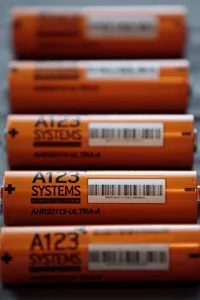
How hybrid battery manufacturing actually works
The assembly line for a hybrid vehicle looks deceptively similar to the line building a standard sedan. Conveyor belts shuttle components, elevators lift subassemblies into position, and a mix of robotic arms and human hands tighten the bolts. If you stood in the factory without a sign telling you what was being built, you might not know it was a fuel-saver.
The real divergence happens at the battery stage. These packs are large, heavy, and space-hungry. They don’t come off the same production line as the rest of the car. Specialty manufacturers, primarily based in Japan like Panasonic and Sanyo, build them. Depending on the model and era, you’re looking at either nickel metal hydride (NiMH) or lithium-ion (Li-ion) cells.
Take the lithium-ion route. The process starts with a lithium ingot. Under massive pressure, it’s extruded into a sheet just .01 inches (0.254 mm) thick. Precision machinery winds these sheets into tight coils, creating individual cells.
Then comes the heat.
Those wound cells get baked at high temperatures. Automated equipment sprays molten metal onto the sheets in a step called metalizing. Once that coating cures, several of these metalized cells are stacked into a single module. That module is what eventually ends up under your trunk or seat, managing the electrical load while the gas engine handles the heavy lifting.
Does manufacturing a hybrid negate its environmental benefits?
There’s a persistent myth that the carbon footprint of building a hybrid is so large it cancels out the savings from driving one. It makes intuitive sense to a skeptic: bigger battery, more rare earths, more energy to produce. But the math doesn’t hold up.
Consider the Toyota Prius. One common counter-argument suggests that shipping the nickel required for the NiMH battery across the globe burns more energy than you’d save by driving a Prius instead of a Hummer. Analysts have dismantled this specific claim as relying on faulty assumptions. The energy spent in logistics is a fraction of the fuel saved over the vehicle’s life.
Toyota’s own data paints a clearer picture. A Prius needs to cover approximately 13,000 miles (20,921 kilometers) for the CO2 reductions to outweigh the emissions generated during its manufacture. For most owners, that break-even point passes within the first year or two of ownership.
Which hybrid battery technology is better for efficiency?
NiMH and Li-ion aren’t interchangeable upgrades. They serve different engineering goals.
- NiMH : Older, heavier, and less dense in energy storage. It was the standard for early hybrids because it was robust, cheap, and safe. It requires less thermal management than its successor.
- Li-ion : Lighter and packs more energy per pound. This allows for smaller battery packs, freeing up space for cargo or passengers. However, it demands sophisticated thermal management to prevent degradation or thermal runaway.
If you’re looking at used hybrids, the battery type dictates maintenance. NiMH packs fail more gradually, often showing voltage discrepancies in individual cells. Li-ion packs can suffer from sudden capacity loss if the cooling system fails.
Where do hybrid cars fit in the broader automotive history?
Hybrids aren’t a 21st-century invention. The concept dates back over a century. The Woods Dual Power car from 1917 is one of the earliest documented examples, combining an internal combustion engine with an electric motor.
The technology stalled for decades because battery technology wasn’t up to the task. Lead-acid batteries were too heavy to make a hybrid practical for daily driving. It wasn’t until the refinement of NiMH in the 1990s that the architecture became viable for mass production.
Now, the conversation has shifted from “do they work?” to “how do they compare to pure EVs?” and “how do they handle cold weather?” The manufacturing process remains complex, but the engineering challenges are no longer about proving viability. They’re about optimizing range, reducing cost, and integrating solar-assisted charging where applicable.
The assembly line still hums. The batteries still get baked. And the skepticism? It’s still there, just armed with better data now.