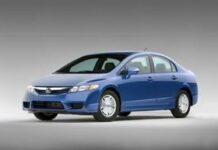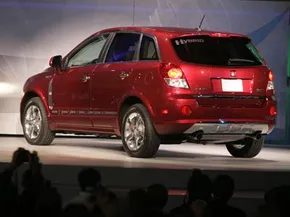
When automakers slap “hybrid” on a badge, you already have a mental checklist. You expect better fuel economy. You expect an internal combustion engine sharing duties with an electric motor. This assumption sticks because advertising hammered it into our heads. Gas-electric hybrids dominate the market, so that’s what we think “hybrid” means.
There is no standard hybrid.
Technically, a hybrid vehicle uses two or more distinct power sources. They might work together or separately to move the car. You can categorize them by power source. Diesel-gas-electric combinations exist, though they are rare. You can categorize them by drivetrain structure. Parallel hybrids have the engine and motor both connected to the wheels. Series hybrids use the engine only to generate electricity for an electric motor. Most modern cars use a mix.
You can also classify hybrids by their degree of hybridization. This term refers to how much the vehicle relies on its electric systems. One specific category often gets overlooked. It’s called a mild hybrid.
The name sounds contradictory. You buy a hybrid for savings and high MPG. “Mild” implies less performance. It implies less efficiency. So what is it? How does a mild hybrid system actually function? And why shouldn’t you expect the same benefits as a full hybrid?
Understanding Mild Hybrid Architecture
A mild hybrid sits in a gray area. It isn’t a traditional hybrid. It isn’t a conventional gas car either. The key difference lies in what the electric motor can do.
In a full hybrid, the electric motor can propel the car on its own. The gasoline engine can shut off entirely at stops. It can even help accelerate the car from a standstill. The battery is larger. The system recaptures more energy during braking.
A mild hybrid is different. The electric motor cannot drive the car independently. It cannot move the vehicle without the gasoline engine running. Its job is strictly supportive.
Think of the electric motor as an assistant. It helps the main engine. It smooths out acceleration. It reduces the load on the gasoline engine. This is why the term “engine assist” is often used to describe mild hybrid systems.
How the System Works
The hardware in a mild hybrid is simpler than in a full hybrid. You still get an electric motor. You still get a small battery. But the battery is much smaller. It doesn’t need to store enough energy for long-distance electric driving. It only needs enough for short bursts of assistance.
The electric motor is usually integrated into the vehicle’s starter system. It helps crank the engine. It starts the combustion process faster and smoother. You won’t feel the traditional lurch of an engine turning over. It’s quieter. It’s more efficient.
During acceleration, the motor provides a torque boost. This is where the “assist” comes in. When you press the gas pedal, the motor adds power to the engine’s output. This reduces fuel consumption because the engine doesn’t have to work as hard to produce the same power. The gasoline engine operates closer to its most efficient RPM range.
Regenerative braking works here too. When you lift off the gas or hit the brakes, the motor acts as a generator. It captures kinetic energy that would otherwise be lost as heat. This energy charges the small battery. The stored energy is then used for the next assist cycle.
Why Manufacturers Use Them
The push for mild hybrids comes from tightening emissions regulations. Governments want lower CO2 outputs. Automakers want better fuel economy numbers without the high cost of full hybrid systems.
A full hybrid requires a large, expensive battery pack. It needs more complex power electronics. It adds significant weight. A mild hybrid avoids much of this. The battery is small. The system is lighter. The cost is lower.
This makes mild hybrids an attractive option for entry-level models. They offer a step up in efficiency. They don’t
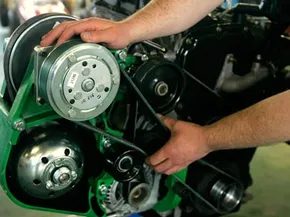
The Truth About Mild Hybrids: What They Are and What They Aren’t
Let’s cut through the marketing noise. Mild hybrids don’t have much in common with the commercial hybrid cars you see everywhere. Not the kind we generally think of. In reality, they are much closer to conventional gasoline cars than the ubiquitous gas-electric hybrids that dominate the conversation.
To understand the difference, you have to look at the degrees of hybridization. The vehicle type most people know is the full hybrid, or strong hybrid. These machines use a 30- to 70-kilowatt electric motor paired with a gasoline engine. That electric motor is likely in use the entire time the car is running. It draws power from a large battery pack. The Toyota Prius and Ford Escape are textbook examples.
Mild hybrids sit on the other end of the spectrum. They are still classified as gasoline-electric vehicles. But the extent of how little the car uses the electric motor is what defines the classification. Here is the big difference between a mild hybrid and a full hybrid. The electric motor in a mild hybrid cannot propel the vehicle on its own. It does not try. The gasoline engine does all the heavy lifting. The electric motor serves only to assist.
So, what does that electric motor actually do? It acts as a power booster. The real benefit of the mild hybrid system is fuel savings through engine shutdown. The gas engine cuts off when the vehicle is stopped. It shuts down during braking or while cruising. The electric motor also helps the gas engine restart with improved efficiency. This is far more efficient than a driver manually switching the ignition on and off. Depending on the specific architecture, some systems even capture mechanical energy during braking.
“The electric motor in a mild hybrid cannot (and does not) actually propel the vehicle on its own.”
You won’t get the same fuel efficiency numbers as a full hybrid. But the savings at the pump are still real compared to a conventional gas-powered car. Because the system doesn’t burn gas at certain points during your drive, a mild hybrid can improve fuel efficiency between 10 and 15 percent.
There is another positive side to this technology. The price tag is lower. Because these systems are not as sophisticated as a full hybrid setup, they cost less to produce. That translates to a lower price at the dealership. Several major companies have produced mild hybrid cars. BMW. Chevy. Honda. General Motors. They are out there. You just have to know where to look.