Fordoror didn’t just change its lineup for 1941, it reorganized it.
The company is preparing to introduce a new top model 1941 Fordoror Super DeLuxe. This is not your grandfather’s ordinary sedan. This is a premium tier designed to separate the affluent buyers from the rest.
The definition of a luxurious body
The Super Deluxe is available in several special body options.
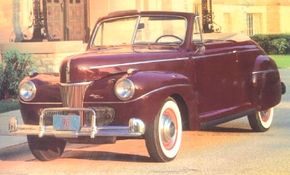
You can buy a standard Tudor or a Fordoror. Coupe is available. The convertible coupe is back, but this time it comes with a electrically operated top. This looks nice. No more fighting with the hand crank in the rain.
Next was a station wagon with a wooden-bodied. Solid wood. heavy. expensive.
The coupe sedan is finally back. Fordoror abandoned this style after 1938. The reintroduction of this model shows that they understood that buyers wanted more space in the back seat without compromising on the elegant silhouette of the coupe.
Chrome, Clock, Kelobra
You can easily tell which car is better just by looking at it.
The 1941 Fordoror Super Deluxe contained more chrome and stainless steel than other models. This is not subtle.
The interior has also received radical updates. A clock is standard equipment. You can choose the upholstery fabric. The dashboard and door trims are finished with Kelobra wood grain. This is a special type of veneer. Looks expensive.
The horn ring is designed to match the Super DeLuxe brand. It’s a small detail, but it’s important for drivers.
A crank-type ventilation window is also standard equipment. You don’t need a motor to crack the glass. You turned the crank. Simple. Reliable.
Palette
Fordoror offers special colors for the Super Deluxe. They are not fundamental.
- Lochaven Green
*Mayfair Maroon - Paradise Gray
black
Harbor Gray
*Cayuga Blue
Each name sounds like it belongs more on a luxury fabric than a car.
Mid-level luxury compromise
There’s a mid-level DeLuxe line, but no top-of-the-line styling.
It came in Tudor, Fordoror, coupe and wooden wagon forms. No coupe sedan. There are no convertibles. If you want these, you have to pay more.
Color options are limited to black, harbor gray and cayuga blue. You have fewer options. There will be less luxury.
The bright decorations are not noticeably abundant. There are no trim rings for the wheel. Only the central grille is chrome.
This is a predictable hierarchy. 1941 Fordoror Super Deluxe shines. Standard deluxe with practicality. Buy what suits your budget and your ego.
The factory prepared the place. The model is now ready. The chrome is polished.
Now all you have to do is convince someone to part with enough cash to take home.
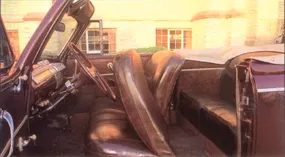
Ford’s product line hierarchy doesn’t just dictate price. It defines character. The luxury model maintains a premium feel with dual wipers, a sun visor and unique ebony trim, but the real deal is in the engine choice. The V-8 is standard on Super Deluxe and Standard Deluxe models. You can remove the V-8 and install a new six-cylinder engine for $15, but why would you? delete option in a sea of power.
Next, a special series.
This is not an trim level. This is a warning. The special edition is only available on the Tudor Sedan, Fordor sedan or Coupe and is available in one color: Harbor Grey. What if you want a Super DeLuxe hues? This will cost an additional $20. But the real heresy, the kind that would make Henry Ford turn in his grave, was under the hood. The Special was a true stripper. The new six-cylinder engine is standard and the only option. There is no V-8. You have no choice.
This is an economy car built on a budget. Special only got one horn. Single rear light. One wiper and visor. This is the starting point. floor. If you want luxury treatment, pay for luxury treatment. If you want a special offer, you accepted the compromise.
Cost of Entry
So why did Ford do it? Why risk the brand image when you want a car that looks like a luxury car but handles like a go-kart. The answer is not complicated. It’s about market penetration.
The special edition is not intended for enthusiasts. Not suitable for people who care about dual wipers. This is for people who need a car. Period. The reason for using single horn is to reduce costs. The single taillight was a safety compromise accepted by buyers at the time. The six-cylinder engine was the only option because it was the cheapest.
There is no “perfect balance” here. There is no all-inclusive package. It is a machine that stripped-down. That’s the point.
Which model is right for you?
If you were shopping in 1937, the choice was not difficult for most people. The Super Deluxe and Deluxe are equipped with a V-8. Special offered… well, it offered a car.
But let’s be clear. The Special is not a bad car. This is a “minimalist” car. It was the automotive equivalent to a studio apartment. No frills. No extras. Just a roof and four wheels.
Still, it sold. You may not need a V-8. Sometimes you need to get from point A to point B.
The special edition is a proof of concept. This showed that Ford could make cars cheaper than anyone else. This is a master class in subtraction. Remove the wiper blade. Remove the horns. Remove the option. All that remains is the core.
Is this convincing? Maybe it’s not for you. But to the market? That’s all you need.
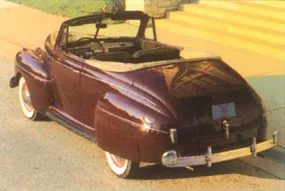
Last information about the pre-war Ford
The special coupe just doesn’t sit there. Therein lies the secret. The backrest opens and closes with a hinge from below, and when lifted, the luggage compartment is revealed. Practical. clean.
The Deluxe and Super Deluxe models are even more advanced. It has a split back design. Twist the middle part, flip it forward and suddenly you have two places to jump. There were two other passengers. Space efficiency more than luxury.
Pricing tells the story of time. Prices for the special six-door coupe start at $684. Upgrade to the ultimate luxury Ford V-8 for $859. But what about horse-drawn carriages? It’s crossing the line. The Ford Super Deluxe V-8 Wagon is priced at $1,013.
It’s the first Ford car to break the $1,000 mark since the 1930 Model A town car.
Psychological threshold. milestone. The new Super Deluxe model costs about $50 more than the Deluxe model. The overall mechanics remained largely unchanged, but they were important to buyers in 1941.
The market has changed. War is imminent. The 1942 Super Deluxe would face a completely different situation.