Roy D. Chapin, the president of Hudson, saw the writing on the wall back in 1933. The Essex Terraplane was a hit, selling like hotcakes. So, for the 1934 model year, he made a clean cut. He dropped the “Essex” prefix. The new junior model was just Hudson Terraplane. It was a bold move that literally kept the company afloat.
The engineering changed, too. Hudson swapped out the older 193-cid six and the 244-cid eight for a brand-new long-stroke six. That engine displaced 212 cubic inches. It pushed out 80 to 85 horsepower initially. By 1935 and 1936, that figure climbed to 88 bhp. Then in 1937, power jumped to 96 or 102 horsepower, depending on the tune. This wasn’t just a badge change. It was a fundamental shift in how Hudson competed in the entry-level market.
Pricing and Model Lineups
You might think keeping the name “Terraplane” meant keeping the price low. Not quite. While Essex Terraplanes had dipped to $425, the new standalone models moved upmarket. Prices ranged from $565 to $880. You were paying for a slightly more upscale product.
The 1934 lineup was complex. You had the Special and the midline Challenger sitting on a 112-inch wheelbase. Then there were the Major models, which rode on a longer 116-inch chassis. Things got simpler in 1935. Hudson killed the Major line. The Challenger was rebranded as the DeLuxe. By 1936, the platform had shifted again. DeLuxes sat on a new 115-inch wheelbase, joined by the uplevel Customs. The 1937 DeLuxe and Super models stretched that platform by two more inches.
Body Styles and Design
Most companion brands at the time went over the top with styling. The 1934-1937 Hudson Terraplane resisted that urge. It followed the era’s design cues without drowning in chrome or excess. The 1936-37 “fencer’s mask” grille? Debatable. Some loved it. Most people just thought it looked odd.
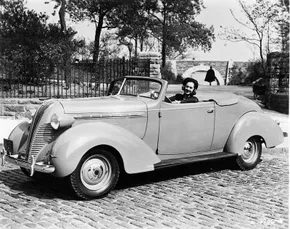
The body roster was practical. No roadsters. No phaetons. Hudson stuck to what sold. You could get brougham and coach sedans in regular or trunkback “touring” versions. Fixed-roof coupes and convertibles were standard fare. There was a brief flirtation with a smart Victoria body style in 1934 only.
In 1936, Hudson offered a DeLuxe wood-bodied station wagon. It was exclusive to that year. The following year, they took some Terraplane chassis and turned them into commercial vehicles. Small numbers, sure, but it showed the platform’s versatility.
Real-World Performance
Specs on paper don’t always translate to feel. A British road test of a 1936 Terraplane sedan gave it a 0-60 mph time of 26.6 seconds. Top speed hit 82 mph. For a car weighing around 2,800 pounds, those numbers are respectable. It wasn’t a sports car. It was a daily driver.
The reviewer noted something important about the six-cylinder engine. It ran with a suppleness and quietness typical of American designs of that era. “Even at 70 there is no special fuss,” the report stated. The car could cover long distances quickly enough. It was easy to handle. And most importantly, it delivered significant value for the price.
Sales Volume and Legacy
The Terraplane nameplate was the volume driver for Hudson. In its four years as a separate make, it accounted for nearly 280,000 total sales.
- 1934: ~51,000 units
- 1935: ~51,000 units
- 1936: ~87,000 units
- 1937: 90,253 units
These numbers were massive. They dwarfed most other junior editions of the time.
Then 1938 arrived. Hudson consolidated its lineup. The 1938 Terraplanes got Hudson badges. The model range expanded to include standard, DeLuxe, and Super versions. Power increased by eight horsepower across the board. But Hudson had