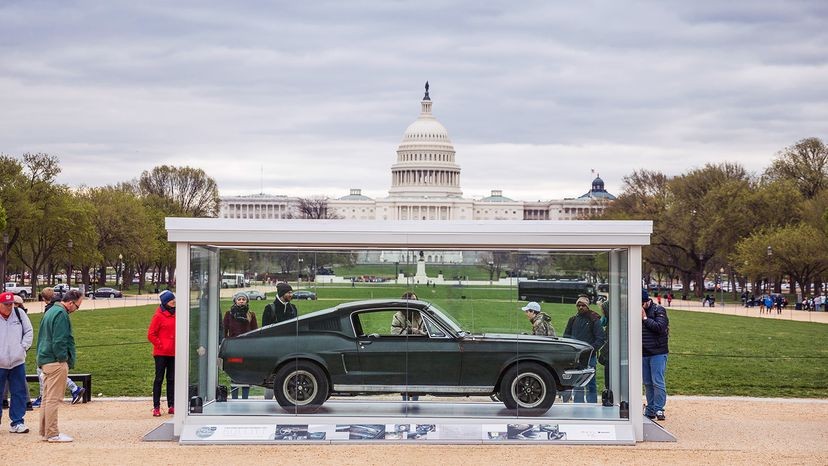
The 1968 Ford Mustang GT that Steve McQueen chased through San Francisco has nothing in common with the first Plymouth Voyager minivan. At least, that is what you would think if you only looked at their shape or their intended use. One is a muscle car built for speed. The other is a family hauler built for sliding doors. Yet both sit on the same exclusive list: the National Historic Vehicle Register.
You probably haven’t heard of it. That is by design.
Think of it as the National Register of Historic Places, but instead of listing old barns or battlefields, it catalogs cars. The Historic Vehicle Association (HVA), a government-backed agency, launched this registry in 2013. They partnered with the U.S. Department of the Interior to archive significant automobiles in the Library of Congress. The goal is simple. Preserve the stories. Celebrate the metal.
Right now, there are only 24 vehicles on the roster. Twenty-four cars. That is a tiny fraction of American automotive history. But these aren’t just any cars. They are the ones that changed how we drive, work, and dream.
Why the Bullitt Mustang and First Minivan Share a Registry
The inclusion of the Bullitt Mustang is obvious. It is cinema history. The inclusion of the 1984 Plymouth Voyager is not. But both are National Historic Vehicle Register members. Why? Because they represent cultural shifts.
The Mustang changed how Americans viewed performance. The Voyager changed how families moved. One is a symbol of rebellion. The other is a symbol of suburban life. Both are significant. Both are archived.
How to See These Rare Cars in Person
For most enthusiasts, the Cars at the Capital exhibition is the only chance to get close. This annual event, hosted every April by the HVA, takes place on the National Mall in Washington, D.C. A rotation of vehicles from the register is displayed.
The 2018 lineup included:
– The original 1968 Ford Mustang from Bullitt
– The 1985 Modena Spyder Ferrari from Ferris Bueller’s Day Off
– A 1927 Ford Model T
– A 1918 Cadillac U.S. 1257X
– The first 1984 Plymouth Voyager
These aren’t museum pieces sitting in climate-controlled darkness. They are out in the open. For a day. Then they are gone.
Where Are the Other Listed Cars?
You cannot just drive to a museum and see them all. Most of the 24 vehicles are privately owned. Some are in museums. Some are in private garages. Some are on loan. The HVA website lists where each car is currently exhibited. If you are lucky, you might see the Ferris Bueller Ferrari. Or the Bullitt Mustang. Or maybe a car you have never heard of.
The registry is small. The access is limited. But the stories are real.
“Preserve and celebrate the stories of our nation’s most significant vehicles.”
That is the HVA’s mission. It is not about horsepower. It is about history. And history is messy. It is not always fast.
The Filter for the 24
There are exactly 24 cars on the National Historic Vehicle Register. Getting one of those slots is not a popularity contest. It is a rigorous filtering process. The bar is set high. A vehicle must prove an undeniable tie to American history. It has to pass at least one of four specific significance tests.
First, the car must be linked to events that shaped automotive or American history. Think big moments. Second, it must be associated with people who mattered in those same fields. Third, the design, engineering, craftsmanship, or aesthetic value has to be distinctive. Finally, it can be a pioneer. A first. A last. A rare survivor. Or simply one of the best-preserved examples left.
Casey Maxon, a historian with the Historic Vehicle Association, notes that timing matters. Once the core criteria are met, the team looks for anniversaries or current events. They want buzz. They want public attention on automotive history.
The selection isn’t done in a vacuum. Staff members make the call. But they don’t work alone. They pull input from advisers in academia. Museum experts. Collector car veterans. Restoration specialists. Preservationists. Conservationists. It is a chorus of voices.
The Library of Congress holds the archives. They keep the material accessible to the public. That part is straightforward. The reality of what that means is often misunderstood.
Not Every Model Year Makes the Cut
Selecting a vehicle does not grant blanket status to its entire lineage. This is a critical distinction. President Ronald Reagan’s 1962 Willys “Jeep” CJ-6 is on the list. It is one of the 24. But not every 1962 Willys CJ-6 is listed. The registry recognizes specific units. It does not endorse the model as a whole.
The Cost of Documentation
Five to ten vehicles are chosen annually. That sounds manageable. The work that follows is intense. And expensive.
Documentation is not just a photo album. It is forensic. The process follows guidelines from the Historic American Engineering Record. The result is a comprehensive archive.
- Extremely detailed photography
- A written report outlining the vehicle’s history
- Historic images from the era
- Scale drawings derived from laser scan data
- A short documentary film
This level of detail requires resources. The work usually happens at the Historic Vehicle Association’s National Laboratory. Sometimes, location is relevant to the vehicle’s story, so the team moves the work there.
Funding is the bottleneck. The HVA has partners in the automotive industry. But for major projects, additional money must be raised. The bar is high. The cost is higher.
Global Impact, American Soul
The list leans heavily American. But it is not exclusive. Cars built outside the U.S. that impacted American culture have found a spot.
A 1938 Maserati.
A 1954 Mercedes-Benz.
The 1985 Modena Spyder Ferrari from Ferris Bueller’s Day Off.
These vehicles earned their place through cultural resonance. Not just through manufacturing origin.
No Public Submissions
You cannot apply. The National Historic Vehicle Register does not accept public submissions. If you own a collector car and want it documented alongside film stars and groundbreaking minivans, the path is closed to you.
The HVA maintains a database of vehicles that met the criteria but were passed over. Why? Other vehicles were chosen. The competition is fierce. The criteria are strict. The result is a curated list of 24 icons.
“Cars are chosen by our staff with input from a number of HVA advisers within academia, the museum and collector car community, as well as experts in restoration, preservation and conservation.” – Casey Maxon