Motos are, by design, terrible at moving through air. They are blunt instruments in a fluid medium. The rider is rarely the solution to this drag problem. Even when you tuck, your body remains a large, inefficient obstacle. The bike itself doesn’t help. It catches air from every angle. This generates significant drag. Energy efficiency takes a hit.
A fairing helps. It slices the wind. But it also ruins the look. Most riders refuse to trade style for a slight gain in aerodynamics. White Motorcycle Concepts (WMC) disagrees. Based in the UK, this manufacturer builds the future of motorcycling. They partnered with Pininfarina. The Italian design house is legendary. Together, they are solving the aero-yoga of motorcycle design.
The Engineering Behind the Concept
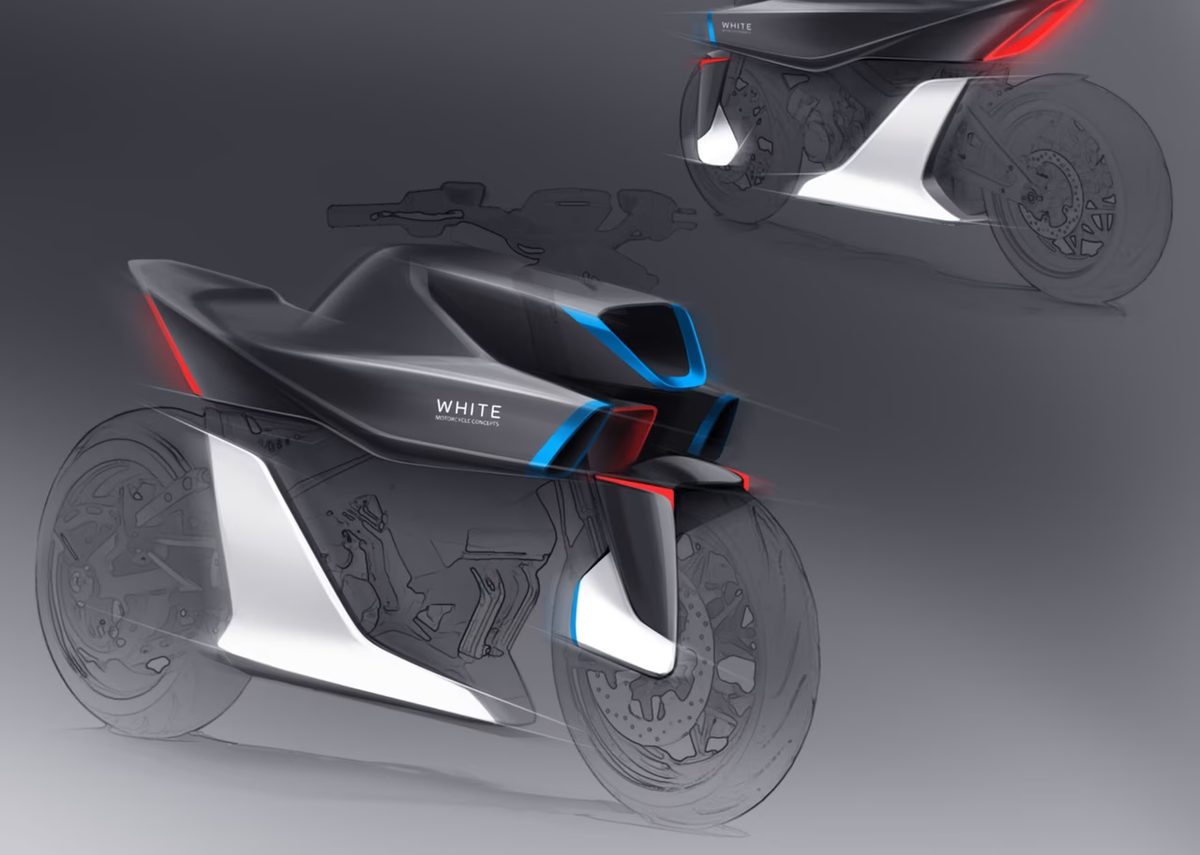
Pininfarina has always prioritized form and function. The designer uses a dedicated wind tunnel. This allows for precise evaluation of air flow. WMC has a different goal. They want speed records. Their WMC250EV already looks like a jet engine intake. It features a Venturi tunnel. This design accelerates air. It reduces pressure.
The new collaboration bridges these worlds. The result is a roadster with advanced aerodynamics. It maintains elegance. It does not sacrifice performance. The concept focuses on airflow management. Air enters through three specific intakes. This ensures smooth flow along the bike’s length. The air is then directed over the rear wheel. This minimizes drag at the rear.
Hybrid Powertrain Potential
The concept currently exists only as sketches. There are no prototypes yet. But the engineering logic is sound. The tubular frame provides rigidity. The air intake aids in cooling. This setup is ideal for a compact hybrid powertrain. A smaller engine could suffice. This would reduce weight. Efficiency would increase.
Kawasaki is the only major brand currently commercializing this type of hybrid technology. If this WMC-Pininfarina project moves forward, it could set a new standard. The technical hurdles are significant. But the aesthetic appeal is undeniable.
The Human Factor Limit
The design is complete on paper. The airflow is calculated. The frame is rigid. There is one variable left. It is not in the metal or plastic. It is the rider.
“If this project succeeds, there remains one constraint to solve: the aerodynamics of the motorcyclist.”
You cannot design away the human body entirely. The rider will always create turbulence. This partnership pushes the boundaries of what is possible. But the final efficiency depends on who sits on the seat. The future of fast, efficient two-wheelers is here. It just needs a better pilot.